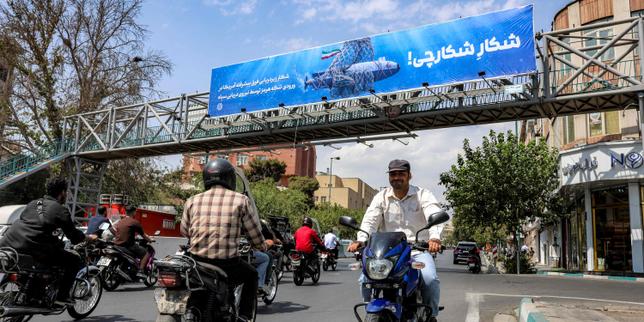
Another day, another breathless dispatch from mainstream foreign policy desks warning that Tehran is redrawing the geopolitical map. The latest panic centers on Iran declaring a brand-new exclusion zone right outside the Strait of Hormuz, matching the outer perimeter of the US Navy blockade. Media outlets treat this like a masterstroke of asymmetric warfare, a chess move that corners Washington and signals a terrifying escalation in the Gulf.
It is absolute theater.
If you spend twenty minutes looking at the actual logistics of maritime choke points instead of parroting state media press releases from Tehran or Centcom, a very different reality emerges. This isn't a strategic expansion of Iranian power. It is a desperate legalistic fiction designed to save face while the commercial value of their maritime leverage burns to the waterline.
Let us dismantle the lazy consensus.
The Geography of Desperation
The core misconception parroted across international headlines is that drawing a line on a map outside a chokepoint grants an asymmetric actor functional sovereignty over international waters. It does not.
To understand why this new zone is hollow, look at the mechanics. A blockade or an exclusion zone requires persistent sea denial—the actual capability to stop, board, inspect, or sink commercial traffic consistently without getting your own infrastructure turned into scrap metal. When the Islamic Revolutionary Guard Corps Navy announces that any ship entering this newly minted perimeter gets placed on a sanctions list or targeted by drones, analysts hyperventilate about closed shipping lanes.
They ignore the scorecard.
When the US military responds to skirmishes by wiping out multiple tankers in a single operational window, the asymmetry flips. Iran can launch saturation attacks with cheap drones and fast attack craft, but persistent sea denial against a modern carrier strike group is a mathematical impossibility. You cannot control a zone if your own export terminals are burning and your tankers are sitting at the bottom of the Gulf.
Imagine a scenario where a high-stakes poker player has lost ninety percent of his chips, throws his remaining handful of plastic tokens across the entire table, and declares the whole room is now his personal pot. That is what this exclusion zone represents. It is a legal gesture masking military impotence.
The Myth of Proportionality is Dead
The mainstream narrative loves to frame these escalations as a tit-for-tat dance governed by predictable rules of engagement. Politicians in Tehran boast that the era of proportional response is over, claiming that if Washington hits two vessels, Iran will strike three.
This framing treats military conflict like a corporate dispute over market share. Real-world naval logistics do not care about political rhetoric. The economic penalty for closing Hormuz—even partially—boomerangs directly back onto Iran’s primary remaining economic lifeline: crude buyers in Asia who cannot afford tankers soaked in insurance premiums or targeted by anti-ship missiles.
When regional states like Kuwait, Qatar, and the UAE get dragged into the collateral crossfire, Tehran isn't projecting strategic depth; it is alienating the very neutral intermediaries who previously helped bypass Western sanctions. I have seen corporate boards blow millions on PR campaigns trying to rebrand a failing product line as a luxury pivot. This exclusion zone is the geopolitical equivalent of that corporate panic.
People Are Asking The Wrong Question
The most frequent query on search engines right now is: "Will the Strait of Hormuz closure trigger a global energy shock?"
That question starts from a fundamentally flawed premise. It assumes the strait is actually closed.
The strait is not closed; it is restricted, heavily taxed by risk, and patrolled by jittery warships from opposing sides. Tankers are still slipping through under various flags or dark activities, because the global energy market is too liquid and desperate to stay completely dry. The real question you should be asking is: How long can Iran sustain the cost of maintaining a paper-tiger exclusion zone while its state budget bleeds dry from an effective US counter-blockade?
The answer is measured in weeks, not years.
Actionable Takeaways For Risk Analysts
If your investment thesis, supply chain strategy, or geopolitical risk model relies on the permanence of this Iranian zone, you are setting yourself up for a rude awakening.
- Ignore the Perimeter Lines: Do not re-route global logistics solely based on declared maritime boundaries that lack persistent radar and surface control. Sovereignty in international waters belongs to those with air and sea dominance, not those with the loudest state television broadcasters.
- Watch the Insurance Markets, Not the Press Releases: Marine hull war risk insurance rates tell the exact truth. When underwriters stop pricing out total closure and start trimming premiums, the zone has collapsed.
- Trace the Crude: Iran’s leverage depends entirely on keeping oil prices high enough to fund its proxy network. If regional export terminals in neighboring states bypass the bottleneck successfully, Tehran’s box canyon becomes inescapable.
Stop treating paper declarations like naval victories.
The next time an official in Tehran announces a sweeping new restriction on global commerce, look past the bold typography on the map. Underneath the bluster, you will find a regime frantically trying to fence off a puddle while the ocean drains out from under them.