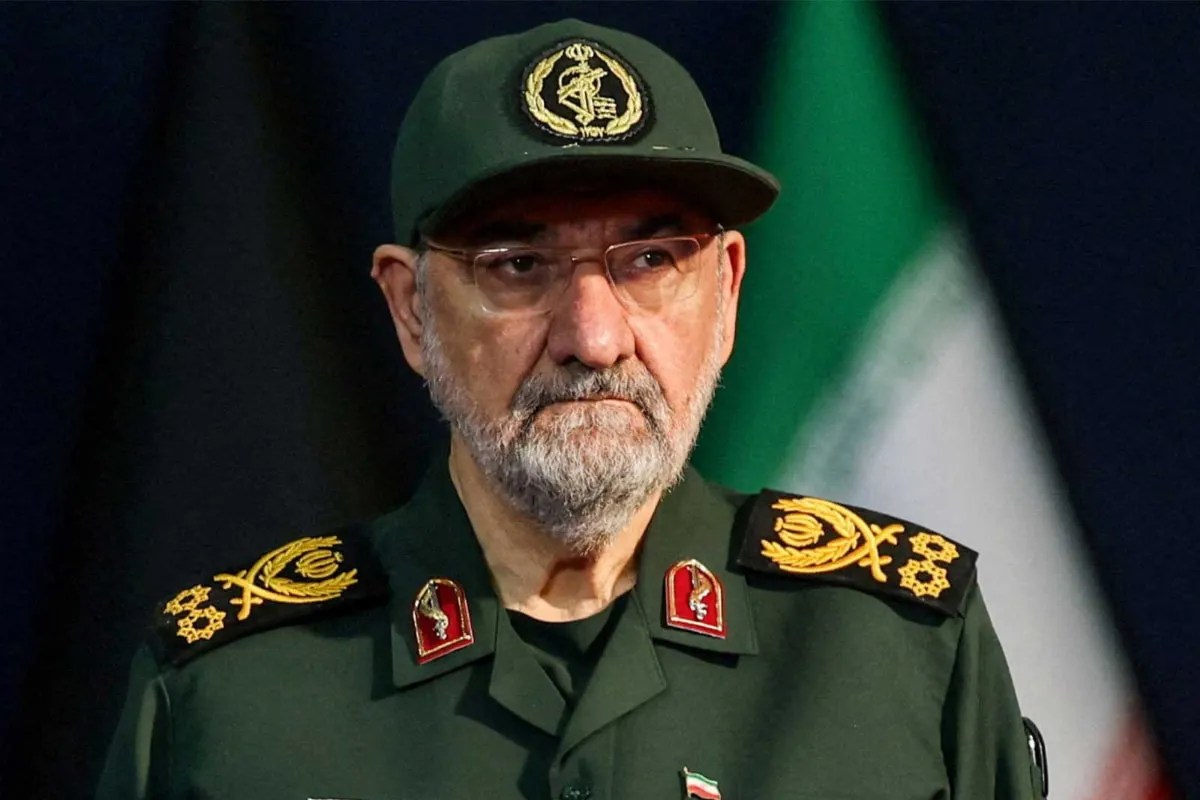
State announcements asserting the destruction of US-backed navigation systems in the Strait of Hormuz while simultaneously claiming a halt to oil smuggling conflate two distinct operational domains—electronic warfare and maritime contraband enforcement—that do not automatically govern one another. A claim that a navigation system has been destroyed does not by itself prove that illicit oil transfers have stopped, because maritime smuggling relies on layered evasion tactics rather than a single navigation node. Separating verified facts from unverified claims and educated hypotheses is essential to evaluate what actually changes in one of the world's most sensitive chokepoints.
Separating Verified Facts from Unverified Claims
When a state actor announces that an adversary's navigation infrastructure has been neutralized and illicit fuel trade has been halted, an analyst must treat the statement as an information operation until independent evidence corroborates it. Headlines compress complex naval and electronic events into simple cause-and-effect stories. In the Strait of Hormuz and surrounding Persian Gulf waters, commercial shipping, naval patrols, electronic signal interference, and covert fuel movements overlap constantly. Read more on a connected topic: this related article.
A known fact in this context is the existence of the headline claim itself—that Iran has stated a US-supported navigation system in the Strait of Hormuz was destroyed and oil smuggling curtailed. Another established baseline is that the Strait of Hormuz is a narrow maritime corridor connecting Persian Gulf producers with open ocean trade routes, making it a focal point for naval surveillance, commercial transit monitoring, and sanctions-evasion activity.
An educated hypothesis, by contrast, is that a claim of destroying a navigation system may refer to localized electronic disruption, damage to a specific sensor or buoy, or a broader strategic narrative aimed at projecting deterrence. Similarly, asserting that oil smuggling has stopped is a strong operational claim that requires verification across physical vessel movements, port activity, and market flows before being accepted as complete or permanent. Because exact battlefield telemetry, classified system architectures, and real-time covert vessel counts are not publicly available in full, rigorous analysis must focus on the underlying mechanisms that drive both navigation and smuggling. More reporting by TIME explores related views on the subject.
The Structural Disconnect Between Navigation Systems and Oil Smuggling
Headline framing often implies a direct chain: destroy a navigation system, and oil smuggling stops. In practice, maritime navigation and illicit oil trade operate through different technical and economic mechanisms.
Navigation in congested waters typically combines multiple layers:
- Satellite-based positioning: Global navigation satellite systems provide positional fixes that can face spoofing, jamming, or regional degradation.
- Transponder broadcasts: Automatic identification systems broadcast vessel identity, course, and speed, though smugglers routinely disable, alter, or spoof transponders to obscure movements.
- Radar, visual piloting, and local knowledge: Coastal captains operating in familiar regional waters rely heavily on radar returns, shoreline bearings, depth soundings, and established routes that do not depend on a single external beacon.
Oil smuggling in the Persian Gulf operates through its own set of incentives and adaptations. Illicit or sanctions-evading fuel movements persist when price differentials between subsidized or discounted supply and international market prices create high profit margins. Smugglers adapt to interdiction pressure by shifting transfer zones, using smaller vessels, transferring cargo between ships at sea, falsifying documentation, or routing through secondary hubs. Disrupting a navigation aid can complicate traffic or create hazards for ships that rely heavily on automated systems, yet experienced regional operators can often navigate using alternative methods unless broader denial measures are sustained.
Why Headlines Compress Multi-Variable Systems
Media summaries favor sharp causal links because readers want immediate clarity on who gained advantage and what changed on the water. Yet maritime security is a multi-variable system. A single claim bundles together:
- Attribution and capability: Whether a system was physically struck, electronically degraded, or merely claimed as targeted.
- Operational scope: Whether an effect applies to one specific asset, a localized sector, or the entire strait.
- Enforcement reach: Whether authorities actively intercepted smuggling vessels or deterrence shifted behavior temporarily.
Conflating these dimensions hides potential blind spots. Even if local enforcement tightens in one corridor, smuggling networks frequently relocate rather than disappear overnight.
The Four Pillars of Maritime Chokepoint Control
To evaluate any claim of dominance or disruption in the Strait of Hormuz, assess control across four operational pillars instead of relying on a single announcement.
Signal and Sensor Contestation
Modern maritime awareness depends on tracking vessels and guiding transit. Contestation can occur through kinetic strikes on physical installations, electronic warfare that degrades signal reliability, or deceptive signals that misdirect receivers. Assessing this pillar requires distinguishing between temporary signal noise, localized hardware loss, and persistent area denial.
Physical Interdiction and Patrol Presence
Electronic claims do not replace hulls on the water. Stopping smuggling physically requires patrol craft, boarding teams, coastal radar coverage, and rapid response capability in shallow and congested waters. A crackdown is far more credible when paired with visible enforcement actions, vessel seizures, or documented changes in port and anchorage behavior.
Economic Incentives and Supply Chains
Smuggling is an economic activity governed by supply, demand, risk premiums, and transit costs. When enforcement raises the cost of moving illicit fuel—through seized vessels, higher bribes or crew risk, or longer routes—margins shrink. If price gaps remain wide and enforcement is intermittent, networks tend to absorb the friction and continue operating.
Information and Signaling Dynamics
Statements about destroying adversary systems and halting illicit trade serve strategic signaling purposes. They communicate resolve to domestic audiences, regional neighbors, shipping insurers, and rival forces. Separating genuine operational shifts from strategic messaging requires looking for secondary indicators, such as changes in commercial routing, insurance risk assessments, or diplomatic reactions.
Second-Order Effects and Strategic Blind Spots
When analysts take a headline claim at face value, they often miss second-order consequences that affect commercial shipping, regional stability, and enforcement credibility.
The first operational friction involves navigation safety and commercial risk. Any real or perceived degradation of navigation aids in a busy waterway increases collision and grounding risks for commercial tankers and cargo ships. Even if a disruption targets a specific military or monitoring asset, commercial mariners and insurers react to uncertainty, which can raise transit caution and compliance costs.
The second friction involves enforcement displacement. Suppose authorities genuinely crack down on oil smuggling inside the strait or along a specific stretch of coast. Smuggling networks rarely vanish on command; instead, they test adjacent routes, alter vessel sizes, or shift transfer points further out or into less-monitored channels. A temporary drop in one sector can mask displacement to another.
The third friction involves credibility asymmetry. If a state claims a major blow to an adversary's navigation architecture and a complete halt to smuggling, any subsequent evidence of continued illicit fuel flows or intact maritime traffic erodes the credibility of future announcements. Conversely, if an adversary actually suffers a capability loss or smuggling network disruption, overstating the scope can obscure which specific vulnerabilities were exposed.
Limitations of This Analytical Framework
No analytical framework is a silver bullet, and this one carries clear boundaries. Open-source analysis cannot verify classified military capabilities, covert naval engagements, or hidden financial arrangements behind illicit oil sales. Furthermore, maritime conditions in the Persian Gulf shift rapidly, meaning an assessment valid under one patrol posture can become outdated quickly. Treating this framework as a diagnostic checklist—rather than a final verdict—helps prevent overconfidence when hard data is scarce.
Tactical Verification Workflow for Analysts and Operators
When evaluating similar claims in high-stakes maritime corridors, follow a disciplined sequence to separate signal from noise:
- Deconstruct the claim into distinct propositions: Split compound statements (such as system destruction plus smuggling halt) into separate claims that each require independent evidence.
- Identify the exact mechanism: Determine whether the described outcome relies on physical destruction, electronic interference, patrol interdiction, regulatory pressure, or narrative signaling.
- Check for corroborating operational indicators: Look for supporting signals across vessel tracking anomalies, enforcement reports, market price shifts, and regional responses while noting where data is absent.
- Map likely adaptations and counter-moves: Ask how commercial operators, rival forces, and smuggling networks would adjust if the claim is true, partially true, or overstated.
- Update confidence incrementally: Assign provisional weight to each hypothesis and revise only when new, credible evidence emerges.
Strategic Recommendation
Treat claims of navigation system destruction and halted oil smuggling in the Strait of Hormuz as two separate hypotheses requiring independent verification, and structure monitoring around physical enforcement and commercial routing indicators rather than headline assertions. For decision-makers, shipping risk managers, and analysts, the most effective posture is to pair baseline chokepoint surveillance with clear distinction between verified operational changes and strategic messaging, preparing contingency plans for both localized navigation hazards and adaptive smuggling routes.