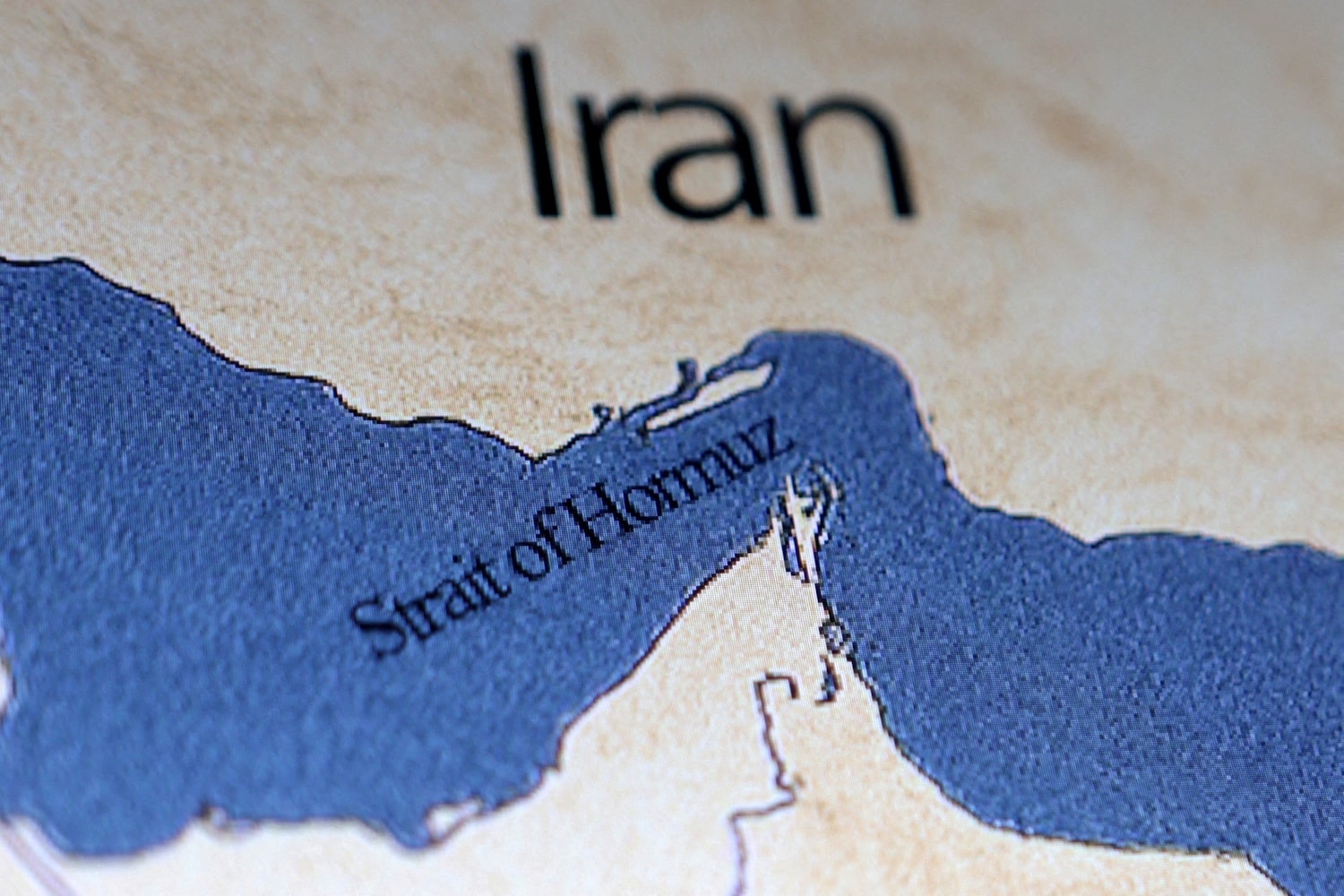
Geopolitical analysts love a good apocalypse. They look at a map, see a twenty-one-mile-wide choke point, and start predicting the end of global energy markets. The narrative is always the same: Iran threatens to close the Strait of Hormuz, oil prices will hit $200 a barrel, and the global economy will collapse into a heap of rusted gears and empty gas tanks.
It is a tired, shallow script. It ignores the fundamental reality of modern naval power, the actual mechanics of global trade, and the desperate economic situation of the very country making the threats.
The "vow" to attack ships in the Strait isn't a military strategy. It is a marketing campaign for a regime that cannot afford the war it’s selling.
The Myth of the Hard Close
The media treats the Strait of Hormuz like a door you can simply lock. It isn't. Closing the Strait isn't a one-time event; it is a sustained military operation that requires total sea and air superiority. Iran has neither.
I have spent years watching regional players posture. I’ve seen boards of directors panic over "Strait risk" while ignoring the actual supply chain vulnerabilities right in front of them. The reality is that the U.S. Fifth Fleet, based in Bahrain, exists for one singular purpose: ensuring that the oil flows.
To actually "close" the Strait, Iran would have to do more than harass a few tankers with speedboats. They would have to:
- Maintain a constant minefield in high-current waters where mines drift and are easily swept by modern MCM (Mine Countermeasures) vessels.
- Sustain anti-ship missile batteries against a coalition that would prioritize their destruction within the first six hours of engagement.
- Willingly commit economic suicide by cutting off their own primary source of revenue.
The math doesn't work. The Strait handles roughly 20% of the world's liquid petroleum. If Iran closes it, they aren't just attacking the "West." They are attacking China, their biggest customer and only significant geopolitical lifeline. You don't bite the hand that feeds you when your own economy is already starving under sanctions.
The Tanker War Lesson Everyone Forgot
We have seen this movie before. During the Iran-Iraq War in the 1980s, the "Tanker War" saw over 450 ships attacked. Global headlines screamed about the end of the world.
What actually happened? Shipping didn't stop. It got more expensive.
Insurance premiums spiked, and ship owners started using "Operation Earnest Will" to reflag tankers under the U.S. banner. The oil kept moving. Even in a pre-shale world, the market's capacity to absorb disruption was higher than the "experts" predicted. Today, with the U.S. as a net exporter and global reserves at strategic highs, the leverage Iran thinks it holds is a shadow of its former self.
Why the Market Doesn't Care
Look at the Brent crude charts every time a new "vow" is issued from Tehran. You might see a $2 bump for forty-eight hours. Then, it fades.
The smart money knows that the Strait is a rhetorical device. Professional traders don't trade on Iranian rhetoric; they trade on Chinese demand and OPEC+ quotas. If the threat were real, you wouldn't see oil sitting in the double digits. You’d see a permanent risk premium baked into the price. It’s not there because the market understands that an actual closure of the Strait is the "Nuclear Option" that leaves Iran with nothing left to lose—and the Iranian leadership is many things, but they aren't interested in losing their grip on power.
The Real Vulnerability Is Not the Water
If you want to worry about something, stop looking at the Strait and start looking at the processing plants.
An attack on the Abqaiq processing facility in Saudi Arabia—which we saw in 2019—did more to disrupt global supply than years of threats in the Strait. It is far easier to knock out a fixed, land-based target than it is to stop the flow of traffic through a massive body of water.
The obsession with the "choke point" is a relic of 20th-century naval theory. In the 21st century, the threat is asymmetric, digital, and precise. A drone swarm hitting a refinery is a problem. A threat to block a 21-mile wide channel is a headline for people who don't understand how difficult it is to actually sink a modern VLCC (Very Large Crude Carrier). These ships are essentially floating steel cathedrals. They don't go down because someone shot a rocket-propelled grenade from a dinghy.
Dismantling the "Oil at $300" Fantasy
Let’s run a thought experiment. Imagine a scenario where Iran actually manages to sink three tankers in the narrowest part of the shipping lane.
The immediate reaction is a price spike. But then what?
- Strategic Reserves: The U.S. and IEA members hold enough oil to cover months of disruption.
- Alternative Routes: Pipelines like the East-West Pipeline in Saudi Arabia and the Abu Dhabi Crude Oil Pipeline can bypass the Strait, moving millions of barrels per day directly to the Red Sea or the Gulf of Oman.
- Military Reaction: Within seventy-two hours, the coalition would establish an escorted convoy system.
- Political Blowback: Iran would find itself at war with not just the U.S. and Israel, but with India and China, who cannot sustain their economies without a stable energy supply.
The "closure" is a suicide note. Tehran knows it, and the market knows it.
What You Should Actually Be Watching
If the Strait of Hormuz is a paper tiger, where should your attention be?
- Red Sea and the Bab al-Mandeb: Far more volatile and harder to control via conventional naval power.
- The South China Sea: Where real global conflict over energy and freedom of navigation is actually simmering.
- The Permian Basin: Because the only thing that actually keeps Iranian threats from mattering is American production.
The news cycle loves a "vow" to attack. It’s dramatic. It’s scary. It’s also irrelevant. The Iranian regime has made this "vow" every single time they’ve been backed into a corner for forty years. If they were going to do it, they would have done it when the sanctions were at their height in 2012, or when Soleimani was killed in 2020.
They didn't. They won't.
Stop pricing in a threat that isn't coming. The only thing closing the Strait of Hormuz is the imagination of a terrified analyst looking for clicks.
The Real Advice for Energy Investors
Don't buy the "Strait Risk" premium. If you see oil jump because of an Iranian headline, that’s your signal to sell. The spike is artificial. The reality is that the Strait is too big to close, too vital to abandon, and too dangerous for Iran to actually touch.
The global economy doesn't run on Iranian permission. It runs on the physics of supply and the cold, hard logic of naval power. If you’re still worried about a "vow" from Tehran, you’re reading the wrong news.
Stop treating a regional bluster like a global catastrophe.
The Strait is open. It’s going to stay open.