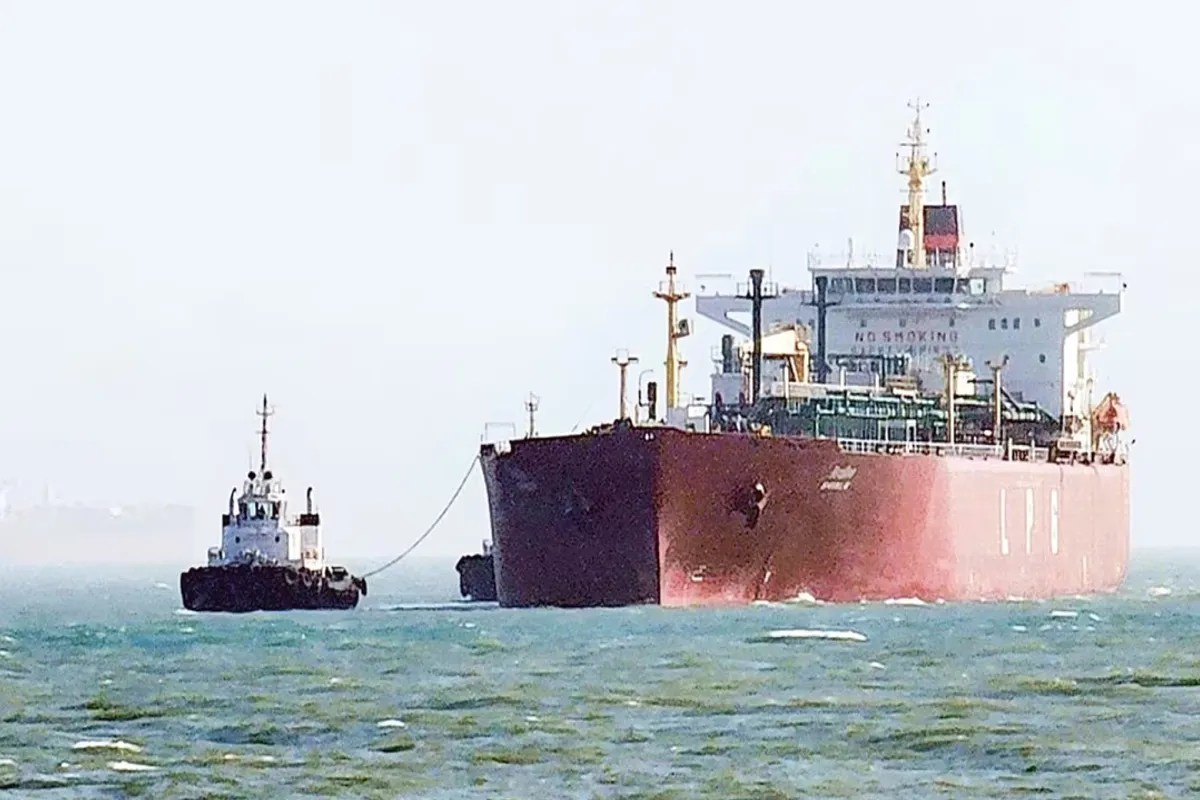
The maritime corridor known as the Strait of Hormuz is currently the most dangerous stretch of water on the planet. Following recent declarations from the Trump administration regarding a "maximum pressure" blockade or intensified surveillance, Tehran has responded with a chillingly familiar script. The Iranian military’s warning that a single "mistake" by the "enemy" will lead to "fatal consequences" is not merely empty rhetoric. It is a calculated survival strategy designed to remind the global economy that Iran holds a knife to the jugular of the world’s energy supply.
While mainstream coverage often focuses on the immediate verbal sparring between Washington and Tehran, the reality on the water is far more complex. We are witnessing a collision between American domestic political posturing and Iran’s asymmetric naval doctrine. This is not about a conventional war that Iran knows it would lose. It is about the cost of entry. Tehran is betting that the global tolerance for $150 oil is lower than the American appetite for another Middle Eastern conflict.
The Geography of Total Leverage
To understand why the Iranian Revolutionary Guard Corps (IRGC) feels confident making these threats, you have to look at the map. The Strait of Hormuz is a narrow choke point. At its tightest, the shipping lanes are only two miles wide. Through this tiny gap flows roughly one-fifth of the world’s total oil consumption.
If Iran decides to make good on its "fatal consequences" threat, they won't use a traditional navy. They don't have one that can stand up to a U.S. carrier strike group. Instead, they rely on swarming tactics. Hundreds of fast-attack boats, armed with Chinese-designed anti-ship missiles and naval mines, are stationed along the jagged coastline. In a confined space, volume outweighs sophistication. You can have the best radar in the world, but if fifty boats are screaming toward a tanker from different directions, the math stops working in your favor.
Trump’s Calculation vs. Iranian Reality
The current administration views the Strait as a leverage point to force Iran back to the negotiating table on nuclear terms. By threatening to choke off Iranian exports entirely, the U.S. hopes to bankrupt the regime. However, this strategy assumes the Iranian leadership acts as a rational economic player. They do not.
For the IRGC, the Strait of Hormuz is the ultimate insurance policy. Their logic is simple. If they cannot export oil, no one else in the Persian Gulf will either. This "all or nothing" approach is what makes the current tension so volatile. When Trump speaks of "total control" or "decisive action," he is playing to a domestic base that wants strength. But in the Persian Gulf, every word is a potential spark for a captain on a small Iranian patrol boat who has been told that the Americans are coming to end his way of life.
The Hidden Risk of Miscalculation
War rarely starts because someone decides to launch a full-scale invasion on a Tuesday morning. It starts because of a "mistake"—exactly what the Iranian generals are talking about.
Consider a scenario where a U.S. drone enters what Iran claims is its territorial airspace. Or imagine a commercial tanker, spooked by IRGC maneuvers, takes defensive action that is interpreted as an act of aggression. In the high-tension environment of the Strait, the window for human error is wide. Communication channels between the two militaries are virtually non-existent. We are operating in a vacuum where silence is filled by suspicion.
The Myth of Energy Independence
There is a common misconception in American discourse that because the U.S. produces more domestic oil than it used to, a crisis in the Middle East won't hurt the average consumer. This is a dangerous fallacy. Oil is a globally traded commodity. If the Strait of Hormuz is closed for even forty-eight hours, insurance premiums for every ship on the ocean skyrocket. The price at the pump in Ohio or Florida isn't determined by how much oil is in Texas; it's determined by the global supply. A disruption in the Strait would trigger a global recession faster than any central bank policy ever could.
The Asymmetric Arsenal
Iran has spent decades preparing for this specific fight. They have invested heavily in unmanned aerial vehicles (UAVs) and submersible mines that are difficult to detect in the shallow, noisy waters of the Gulf.
- Smart Mines: These aren't the floating balls from old movies. Modern Iranian mines can be programmed to ignore small vessels and only detonate when the acoustic signature of a large oil tanker passes overhead.
- Shore-to-Ship Missiles: The Iranian coastline is a natural fortress. Mobile missile batteries can be hidden in caves and moved within minutes, making them incredibly difficult to take out via preemptive air strikes.
- Cyber Warfare: The threat isn't just physical. Iran has shown an increasing capability to disrupt maritime GPS and communication systems, potentially leading ships into hazardous waters or causing collisions that would effectively block the lanes.
The Failure of Traditional Diplomacy
The reason we are back at this cliff-edge is a fundamental breakdown in how the West perceives Iranian power. For years, the approach was to treat Iran as a rogue state that could be contained through sanctions. But sanctions have a shelf life. Eventually, the sanctioned party has nothing left to lose.
We are approaching that point. When the Iranian military says the consequences will be fatal, they are speaking to an audience that has already been pushed to the brink economically. For the hardliners in Tehran, a conflict might actually be preferable to a slow, grinding collapse under the weight of U.S. Treasury restrictions. It gives them a "rally round the flag" moment and a chance to prove their relevance.
The Role of Global Players
China and India are the quiet observers in this drama, and their patience is wearing thin. China is the largest buyer of Iranian oil, often through back-channel ship-to-ship transfers that bypass U.S. eyes. If the U.S. moves to actually "shut down" the Strait or interfere with these shipments, it isn't just an Iranian problem anymore. It becomes a direct confrontation with Beijing.
Washington’s "maximum pressure" ignores the fact that other superpowers have a vested interest in keeping the oil flowing. By forcing a confrontation in the Strait, the U.S. risks isolating itself from its allies who are more concerned with energy security than with the specific nuances of the Iran nuclear deal.
Tactical Reality vs. Political Posturing
The IRGC’s recent threats are a direct response to the perception that the U.S. is preparing for a naval blockade. From a tactical standpoint, a blockade is an act of war. If the U.S. Navy begins stopping and searching every vessel leaving the Gulf, the Iranians have already signaled they will escalate.
They won't attack the U.S. Fifth Fleet directly. They will target the "soft" infrastructure. They will target the desalination plants in Saudi Arabia. They will target the loading terminals in the Emirates. They will make the cost of staying in the Gulf so high that the American public begins to question why we are there in the first place.
The "fatal consequences" mentioned by the Iranian military are not just about deaths in a battle. They are about the fatal blow to the current global order. The era of cheap, reliable energy depends entirely on a few miles of water that neither side truly controls.
The escalation cycle is now self-sustaining. Each American tweet or policy memo regarding the Strait is met with an Iranian military exercise or a new missile test. We have moved past the stage of "deterrence" and into the stage of "provocation." In this environment, the word "mistake" takes on a heavy, physical weight. It is the only thing standing between the current uneasy peace and a localized conflict that would have immediate, devastating global effects.
The strategy of pushing a cornered opponent further into the wall only works if that opponent has no way to fight back. Iran has shown, through forty years of proxy wars and maritime harassment, that it knows exactly how to fight back where it hurts most. The Strait of Hormuz is not a trophy to be won; it is a trap that is currently being set.
Watch the insurance rates for VLCC (Very Large Crude Carrier) tankers over the next thirty days. Those numbers tell the truth that politicians and generals will not. When the cost of moving oil through the Strait becomes higher than the profit of selling it, the "fatal consequences" have already arrived, regardless of whether a single shot has been fired.