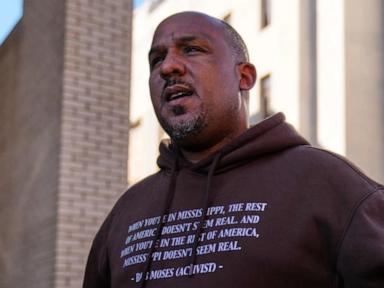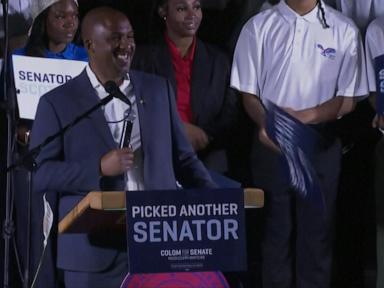
Political acceptance speeches in statewide Southern races rarely fail because of poor delivery; they fail because of structural misalignment between the candidate’s local base and the statewide electorate's median voter. When Scott Colom stepped to the podium in Jackson, Mississippi, the event functioned as more than a standard media photo opportunity—it served as an operational stress test for whether a reform-minded prosecutor from Mississippi’s Golden Triangle can scale his political messaging to the state’s demographic and economic epicenter. Standard local news coverage treats such an address as a chronological sequence of applause lines. A rigorous strategic audit reveals a calculated exercise in coalition engineering, risk mitigation, and geographic repositioning.
The Structural Deficit of Standard Political Coverage
Broadcast and digital news outlets covering a campaign milestone typically default to descriptive reporting: noting the venue in Jackson, summarizing high-level themes, and embedding raw video. This approach obscures the underlying mechanics of why a candidate chooses specific rhetorical frames at a specific geographic coordinate. You might also find this connected story insightful: Why Mississippi Electing a Black Senator Actually Proves the Political Machine Is Broken.
In political strategy, an acceptance speech is a capital allocation decision. Every minute of podium time spent on criminal justice reform is a minute not spent on economic infrastructure, healthcare access, or rural broadband. By analyzing the speech through the lens of resource allocation and audience segmentation rather than surface-level sentiment, three distinct operational layers emerge:
- Geographic Legitimacy Acquisition: Establishing operational credibility in Hinds County (Jackson) for a candidate whose primary institutional footprint lies in the 16th Circuit Court District (Lowndes, Oktibbeha, Clay, and Noxubee counties).
- Ideological Friction Reduction: Translating prosecutorial reform metrics into language acceptable to both progressive urban voters and traditional law-and-order moderates.
- Institutional Contrast: Framing executive competence against entrenched state-level administrative bottlenecks without triggering partisan alienation among persuadable independents.
Geographic Arbitrage and the Jackson Imperative
Mississippi politics operates on rigid regional fault lines. A candidate originating from Columbus or Starkville faces an immediate awareness and trust deficit in the Jackson metro area, which represents the single largest concentration of Democratic primary voters and independent swing voters in the state. Delivering a major address in Jackson is a deliberate act of geographic arbitrage—importing political capital earned in a smaller, distinct media market into the state's primary media hub. As highlighted in latest articles by Associated Press, the effects are widespread.
The operational logic behind selecting Jackson rests on three demographic and infrastructural realities:
- Media Multiplier Effect: Jackson houses the primary statehouse press corps and major broadcast affiliates. A speech delivered in Lowndes County generates local print coverage; the exact same speech delivered in Hinds County enters the statewide news cycle and forces immediate engagement from statewide political operatives.
- The Urban Governance Crisis as a Foil: Jackson’s ongoing struggles with municipal infrastructure, water systems, and violent crime rates create a high-stakes backdrop. Speaking in the capital requires a candidate to implicitly or explicitly address urban governance failures without alienating the municipal leadership or local voters who bear the brunt of those failures.
- Turnout Concentration: Statewide viability for any non-incumbent or reform candidate in Mississippi depends on maximizing turnout margins in Hinds, Madison, and Rankin counties while holding serve in the Delta and the Golden Triangle.
The limitation of this geographic strategy is over-indexing. If a candidate’s rhetoric becomes too tailored to Jackson-specific municipal grievances, rural voters in the Pine Belt or North Mississippi perceive the campaign as exclusively urban-focused. Colom’s rhetorical task required anchoring his identity in his 16th District prosecutorial record while validating Jackson’s specific institutional needs.
The Three Pillars of Prosecutorial Framing
Scott Colom’s core political asset is his tenure as District Attorney—a role that inherently carries institutional authority while allowing him to champion systemic efficiency. In an acceptance speech setting, translating a prosecutorial track record into a broader statewide platform requires a precise conceptual framework. Standard political rhetoric often falls into a binary trap: either sounding overly punitive (alienating reform-oriented base voters) or overly permissive (creating immediate vulnerability to "soft on crime" attack advertisements).
To bypass this binary, the messaging architecture relies on three interlocking pillars:
1. Outcome-Based Accountability over Retributive Metrics
Traditional prosecutorial messaging relies on conviction rates and sentence lengths as primary indicators of success. Modern reform-oriented messaging shifts the metric to recidivism reduction, case backlog clearance, and resource prioritization. By emphasizing the rapid prosecution of violent offenders alongside diversion programs for non-violent offenses, the narrative reframes justice reform as a fiscal and operational efficiency play rather than an ideological concession.
2. Institutional Modernization
State bureaucracies in Mississippi frequently suffer from legacy administrative drag—paper-heavy workflows, underfunded public defender systems, and slow judicial dockets. Framing a candidacy around modernizing public institutions appeals directly to business-minded moderates who evaluate public officials through the lens of executive management. The cause-and-effect relationship is straightforward: clearing court backlogs reduces county jail overcrowding, which directly lowers local taxpayer expenditures.
3. Constitutional and Procedural Integrity
In a state with a complex legal and civil rights history, referencing constitutional fidelity serves a dual purpose. To Black voters—who form the indispensable core of the Mississippi Democratic electorate—it signals an intent to dismantle structural disparities in sentencing and policing. To conservative-leaning independents, strict adherence to constitutional limits signals restraint against government overreach.
The Cost Function of Coalition Building in Mississippi
Every political speech carries an opportunity cost, governed by the mathematical reality of Mississippi’s electorate. According to historical voting patterns and demographic breakdowns, a winning statewide coalition in Mississippi requires near-unanimous support from Black voters combined with a statistically significant threshold—typically between 20% and 25%—of white voters, alongside high enthusiasm among younger, urban professionals.
When a candidate delivers an acceptance speech in Jackson, the speech acts as a balancing equation across these distinct voter blocs:
- The Base Mobilization Variable: If the rhetoric lacks explicit commitments to voting rights, healthcare expansion (specifically Medicaid expansion, a persistent fault line in Mississippi politics), and public education funding, base enthusiasm drops. Low enthusiasm depresses turnout in Hinds and Holmes counties, making statewide victory mathematically impossible regardless of swing-voter performance.
- The Persuasion Variable: If the rhetoric relies heavily on nationalized progressive terminology, it triggers immediate partisan sorting among white suburban voters in neighboring Madison and Rankin counties. Once a candidate is successfully labeled through national partisan proxies, local credentials—such as Colom’s specific prosecutorial record or business background—lose their persuasive utility.
The strategic mechanism at work in a high-stakes Jackson speech is localization. By tying broad themes (economic opportunity, public safety, institutional trust) to hyper-local Mississippi realities—such as rural hospital closures, brain drain among college graduates from Ole Miss, Mississippi State, and Jackson State, and county-level tax burdens—the speaker insulates the message against nationalized partisan attacks.
Distinguishing Empirical Reality from Strategic Hypothesis
Evaluating the effectiveness of an acceptance speech requires separating verifiable structural facts from predictive hypotheses regarding voter behavior.
Established Operational Facts:
- Jurisdictional Scope: Colom’s established electoral victories occurred within the 16th Circuit Court District, a four-county region with a specific demographic and economic profile anchored by Mississippi State University and Columbus Air Force Base.
- Media Dynamics: Delivering the address in Jackson successfully secured placement in statewide media ecosystems, shifting the coverage frame from regional politics to statewide viability.
- Historical Baseline: Statewide non-incumbent candidates in Mississippi face an entrenched structural disadvantage due to straight-ticket partisan voting habits and fundraising asymmetries.
Strategic Hypotheses (Unverified Until Electoral Execution):
- Scalability of the Golden Triangle Model: The assumption that a political brand forged in Oktibbeha and Lowndes counties can seamlessly transfer to the Jackson metro area and the Gulf Coast remains a hypothesis. The Gulf Coast (Harrison, Jackson, and Hancock counties) operates as a distinct cultural and economic ecosystem with different media consumption patterns than Central Mississippi.
- Resistance to Negative Framing: While framing criminal justice reform around efficiency and violent-crime focus mitigates "soft on crime" attacks in theory, its durability under multi-million-dollar opposition media buys is untested at the statewide level. In high-spend environments, nuance rarely survives 30-second television spots without massive counter-spending.
Operational Limitations of the Podium Strategy
Relying on high-visibility speeches in the state capital carries distinct strategic vulnerabilities that campaign leadership must actively manage.
First, the rhetoric-to-field gap often undermines strong launch or acceptance moments. A compelling address in Jackson generates earned media for 48 to 72 hours. If that earned media is not immediately captured by a digital fundraising apparatus and converted into county-by-county field organizing, the momentum dissipates entirely. Earned media without a conversion funnel is a vanity metric.
Second, Jackson’s local political friction can inadvertently attach itself to visiting candidates. Hinds County and the City of Jackson frequently experience sharp internal disputes between municipal leadership, state lawmakers, and regional authorities over control of infrastructure, policing, and tax revenue. Standing on a podium in Jackson requires walking a tightrope: praising the city’s resilience without endorsing municipal administrative failures that suburban voters despise.
Third, the expectation trap escalates immediately following a well-received statewide address. Once a candidate signals statewide ambition or secures a high-profile nomination in the capital, opposition research teams shift from passive monitoring to active deployment. Every past prosecutorial decision, campaign contribution, and public statement is audited for inconsistencies.
Tactical Execution for Statewide Scaling
For a campaign transitioning from a Jackson acceptance speech into full-scale statewide operations, relying on continued podium appearances yields diminishing returns. The strategic imperative shifts immediately from message definition to structural execution across four specific fronts:
- Decentralize Media Generation: Immediately follow the Jackson address with targeted, policy-specific appearances in non-central media markets—specifically Biloxi/Gulfport, Hattiesburg, Tupelo, and Meridian. Each appearance must anchor the overarching campaign thesis to a localized economic metric (e.g., port infrastructure on the Coast, healthcare logistics in Hattiesburg, manufacturing supply chains in Northeast Mississippi).
- Pre-empt Opposition Framing with Hard Data: Release granular, county-level performance metrics from the 16th Circuit Court District—specifically disposition rates for violent felonies and cost-savings from diversion programs—before opposition networks can define the candidate's record through anecdotal outliers.
- Construct a Suburban Persuasion Firewall: Deploy targeted digital and direct-mail messaging in Madison, Rankin, and DeSoto counties focused exclusively on fiscal accountability, judicial efficiency, and workforce retention, deliberately stripping out partisan buzzwords.
- Convert Earned Media into Recurring Small-Dollar Liquidity: Utilize the 72-hour post-speech visibility window to aggressively acquire low-dollar recurring donors, building the financial runway required to withstand late-cycle negative broadcast saturation.
The Jackson acceptance speech establishes the theoretical viability of a reform-minded, institutionally grounded candidacy in Mississippi; however, electoral success depends entirely on whether the campaign converts that capital-city visibility into disciplined, data-verified execution across the state's eighty-two counties before opposition framing hardens.