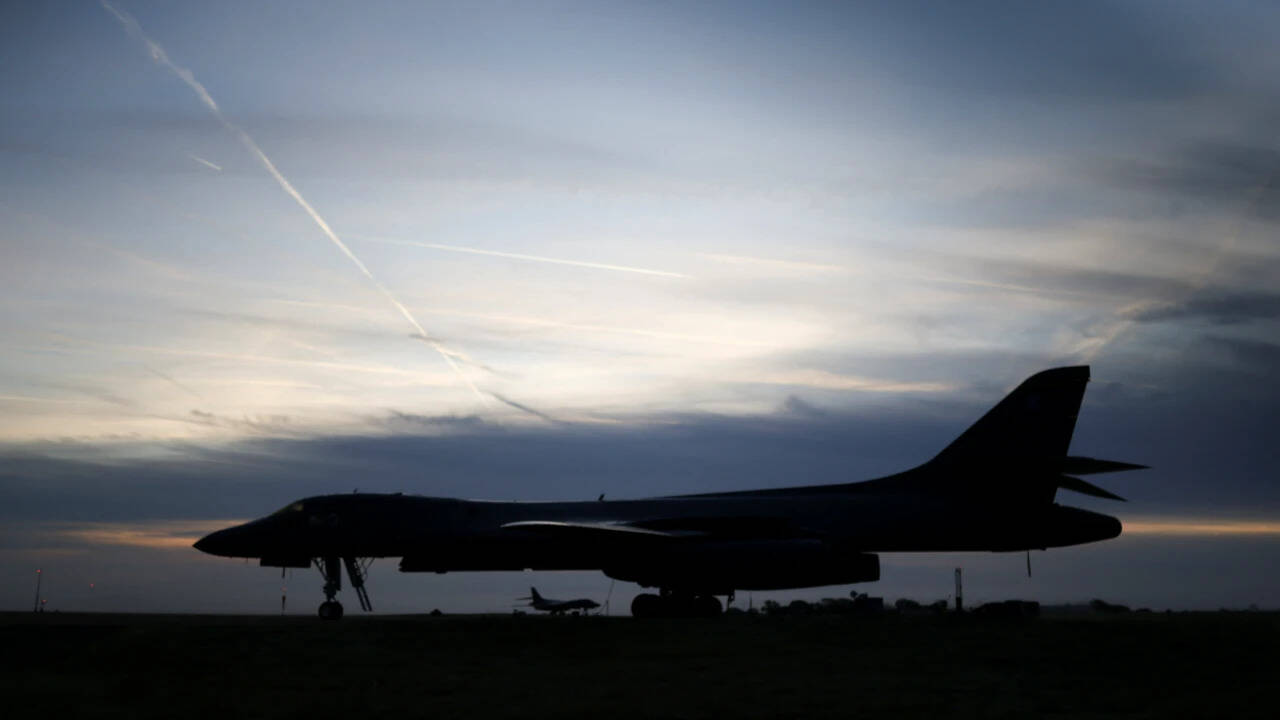
The hasty redeployment of a dozen United States Air Force B-1 Lancer heavy bombers from RAF Fairford back to domestic American installations laid bare an uncomfortable reality for Western defense planners. When a state-backed hostile network orchestrates a security breach on allied soil, the response is rarely a display of bravado. It is calculated self-preservation. Following the arrest of multiple suspects tied to an Iran-linked surveillance and terror plot targeting the Gloucestershire facility, Washington did not wait for a formal diplomatic inquiry or a joint committee report. The aircraft moved out.
This operational withdrawal reveals a structural vulnerability that goes far beyond a single breach in rural England. For decades, the Anglo-American defense architecture operated on the assumption that European host nations offered a secure rear echelon. Logistics hubs like Fairford and Mildenhall were treated as sanctuaries, places where strategic assets could stage missions without localized force-protection anxiety. That posture is finished.
The Anatomy of a Hybrid Threat
To understand why a handful of low-level operatives conducting reconnaissance outside a high-security fence can trigger the evacuation of multi-million-dollar strategic bombers, one must look at how modern asymmetrical warfare functions. The objective was never to overrun the airfield in a conventional infantry assault. That is a cinematic fantasy.
Instead, the operation relied on reconnaissance, asset acquisition, and local proxies to map vulnerabilities. Court documents and counterterrorism charges revealed a network orchestrated via external handlers, utilizing local operatives to acquire vehicles, test perimeter responses, and gather surveillance data. In the calculus of modern force protection, a heavy bomber parked on an open ramp is a stationary target. When intelligence indicates that hostile actors have mapped the perimeter and established communication lines with foreign handlers, the risk profile changes instantly.
A multi-billion-dollar airframe cannot be left exposed to a localized asymmetric strike, whether through improvised devices, insider collaboration, or coordinated drone penetrations. The Pentagon's decision to pull the B-1 fleet back to the continental United States reflects a blunt military assessment. If the host nation cannot guarantee absolute perimeter security against determined hybrid cells, the assets will be removed from the chess board entirely.
The Cost of Perimeter Complacency
British security officials have faced heavy scrutiny from allied counterparts and parliamentary committees following the incident. Critics within military intelligence point out that relying on traditional civilian policing boundaries and standard base defense protocols is no longer adequate when dealing with sophisticated state-sponsored intelligence services.
The UK Ministry of Defense responded by tightening patrols, deploying specialized units, and reviewing security frameworks across all installations housing American service members. Yet these measures arrive after the fact. The damage to the strategic deterrence posture is already done. When adversaries observe that the mere threat of a localized attack can force the relocation of strategic air assets, it validates a dangerous doctrine of disruption on foreign soil.
Consider the operational friction this creates. Operating heavy bombers from domestic US bases on long-range rotations instead of forward-deployed UK stations introduces immense logistical overhead, increased tanker dependencies, and extended response timelines. The adversaries know this. They do not need to destroy an aircraft to achieve a strategic victory; they only need to make the hosting environment untenable.
The Broader Shift in Transatlantic Defense
The Fairford incident does not exist in a vacuum. It is part of an escalating campaign of hybrid warfare spanning cyber intrusions, infrastructure probing, and targeted operations across Europe and North America. State actors like Iran and their proxies have learned that asymmetric leverage can be exerted far from primary theaters of kinetic conflict.
By cultivating localized cells and utilizing cutouts to bypass traditional counter-intelligence screens, foreign intelligence agencies test the seams of alliance commitments. They probe for administrative inertia, police-jurisdiction gaps, and complacency among base personnel. When those seams tear, the political fallout hits the capitals with force.
The alliance must now confront a difficult pivot. Securing a major military installation requires more than chain-link fences, perimeter cameras, and routine military police patrols. It demands an active, counter-intelligence-driven defense ecosystem that neutralizes hostile reconnaissance networks long before they reach the perimeter wire. Until Western security agencies adapt their domestic intelligence sharing to match the speed and agility of hybrid networks, the vulnerability remains.
The bombers flew west because the threat came from within the shadows of civil society, utilizing the open societies of the West to weaponize proximity against power. The next time a security alert flashes across a terminal screen in Whitehall or the Pentagon, the response may not be a temporary redeployment. It may be a permanent reassessment of where forward-based air power can actually survive.