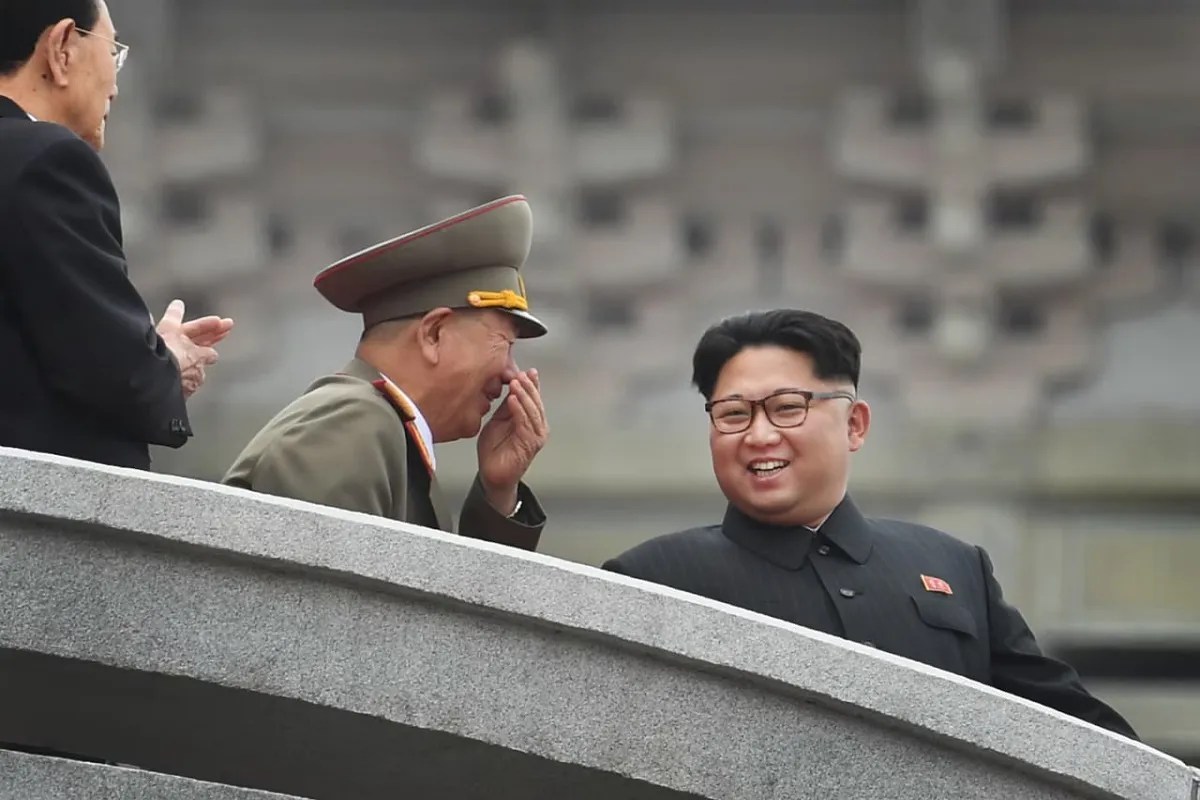
The removal of Defense Minister No Kwang Chol and the concurrent elevation of Kim Song Gi during the Central Military Commission meeting signal a calculated administrative calibration rather than a random administrative purge. Observers frequently misinterpret top-tier personnel changes in authoritarian regimes as mere indicators of political instability. A rigorous institutional breakdown reveals a mechanical optimization of state resources, disciplinary control, and production logistics.
The Mechanics of Leadership Reassignment
Evaluating structural shifts inside the Korean People Army requires mapping the precise flow of authority between the Workers' Party of Korea and operational military organs. The recent decree executed three distinct vertical adjustments:
- The Defense Portfolio Transition: Kim Song Gi transitioned from directing the General Political Bureau to assuming the role of Minister of National Defense. This move places an institutional administrator with deep ideological oversight experience directly into the formal military administrative apparatus.
- The Logistics Realignment: The former defense minister, No Kwang Chol, was reassigned downward horizontally to the Munitions Industry Department as first vice director. This demotion-in-title paired with an assignment to weapons manufacturing indicates an urgent state priority: aligning military command oversight directly with defense procurement output.
- The Return of Strategic Hardliners: Pak Jong Chon resumed high-level command as vice-chairman of the Central Military Commission. Pak’s recurring integration underscores a functional reliance on seasoned artillery and operational planning strategists whenever regional friction escalates.
Administrative Friction Versus Combat Readiness
Public disclosures from state organs point toward internal disciplinary enforcement, specifically targeting corruption vectors within administrative ranks. In centralized command economies, corruption acts as a direct tax on state capability, diverting material resources away from authorized defense lines. By reallocating compromised figures and elevating bureaucratic enforcers, the central leadership establishes an operational bottleneck reduction.
Internal oversight adjustments ripple through secondary administrative layers:
- Yu Kwang-u shifted from leading the Security Bureau into the General Political Bureau.
- Om Ju-ho advanced from air force political commissar to head the military Security Bureau.
These localized swaps tighten the feedback loop between political loyalty verification and physical troop monitoring. Counterintelligence and operational security now operate under unified supervisory parameters, minimizing the variance between central command directives and field-level execution.
The Technological Imperative and Resource Allocation
Parallel to the personnel restructuring, state recognition of defense scientists highlights the primary resource drain and focal point of the regime. Modernizing combat weapon systems requires centralized resource protection, leaving zero tolerance for logistical embezzlement or administrative drift. When complex technological vectors—such as strategic missile engineering and automated reconnaissance upgrades—demand absolute priority, the defense ministry must function as a frictionless conduit for manufacturing output.
Placing No Kwang Chol inside the Munitions Industry Department translates directly to weaponizing his administrative background to solve production bottlenecks. Conversely, filling the defense ministry vacancy with an internal security specialist stabilizes command compliance.
Operational Forecasting
Future structural moves will depend entirely on the velocity of technological integration and the stability of external deterrence pressures. External joint military exercises on the peninsula historically trigger reactive posture adjustments, but internal structural rotations are driven by efficiency targets rather than seasonal drills alone. Expect tighter institutional audits across regional commands, accompanied by a strict alignment of production output metrics with front-line tactical units.