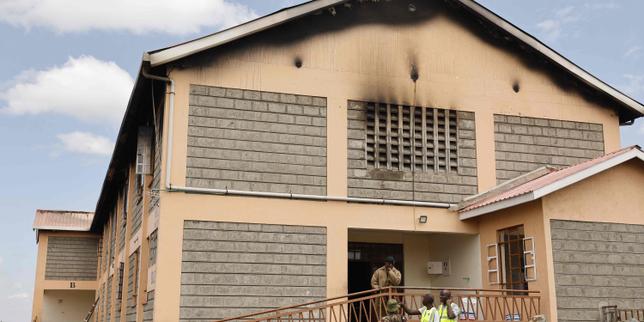
The fatal dormitory fire at Hillside Endarasha Academy in Nyeri County, Kenya—which resulted in the deaths of at least 21 pupils in September 2024—is not an isolated failure of vigilance; it is a predictable outcome of systemic infrastructure deficit. When twenty-one children perish in a single residential node, the tragedy must be analyzed not as a series of unfortunate accidents, but as a critical failure within a coupled socio-technical system.
To prevent the recurrence of such mass casualty events, policymakers and structural engineers must move past emotional rhetoric and deconstruct the physical, regulatory, and operational bottlenecks that turn localized ignition points into catastrophic thermal events.
The structural vulnerability of educational institutions in developing economies can be mapped across three distinct failure vectors: physical containment architecture, regulatory enforcement deficits, and operational emergency readiness. By dissecting these vectors, we can establish a blueprint for systemic hardening that transitions schools from high-risk environments to resilient infrastructure.
The Triad of Thermal Catastrophe: Ignition, Propagation, and Entrapment
A fatal structural fire requires three sequential phases to achieve maximum lethality. In institutional settings, each phase is accelerated by specific material and architectural vulnerabilities.
+------------------+     +-----------------------+     +-----------------------+
|  Phase 1:        |     |  Phase 2:             |     |  Phase 3:             |
|  Ignition        | --> |  Rapid Propagation    | --> |  Structural Entrapment|
|  (Electrical/    |     |  (Combustible Beds,   |     |  (Barred Windows,     |
|  Arson Vectors)  |     |   Timber Framing)     |     |   Locked Exits)       |
+------------------+     +-----------------------+     +-----------------------+
1. The Ignition Vector
Initial thermal triggering in boarding school environments typically stems from two sources: electrical system overloads or intentional arson. In rapidly expanding rural schools, electrical infrastructure is frequently scaled without upgrading core distribution panels or circuit protection. The introduction of unauthorized consumer electronics, combined with sub-standard wiring executed by uncertified contractors, creates localized resistance heating. This thermal buildup eventually breaches polyvinyl chloride (PVC) insulation, igniting adjacent building materials.
2. The Propagation Matrix
Once ignition occurs, the rate of fire spread is dictated by the fuel load density within the dormitory. Standard boarding school layouts optimize for bed space maximization, often utilizing wooden bunk beds packed in high-density configurations.
- Fuel Load Density: The mass of combustible materials per unit floor area. High-density polyurethane foam mattresses represent an extreme hazard; when ignited, they undergo rapid pyrolysis, releasing dense, toxic hydrogen cyanide and carbon monoxide gases while generating high-intensity radiant heat flux.
- Structural Materials: Many rural dormitories employ timber roof trusses, unrated plywood ceilings, or semi-permanent timber walling. These materials possess low fire-resistance ratings, contributing directly to the thermal feedback loop that drives a room toward flashover—the point at which every exposed combustible surface ignites simultaneously.
3. The Entrapment Bottleneck
The transition from a localized fire to a mass casualty event is almost always determined by egress architecture. In many historical instances, including the Hillside Endarasha tragedy, structural elements designed for security actively prevent escape.
- Fixed Window Grilles: Anti-theft iron bars permanently welded across window frames eliminate secondary emergency egress points, turning windows into impassable barriers.
- Locked Primary Exits: Operational protocols that dictate locking dormitory doors from the outside overnight to prevent unauthorized student movement create single-point-of-failure choke points when supervisors are absent or incapacitated during an evacuation.
The Regulatory Gap: Enforcement Asymmetry and Economic Choke Points
The existence of safety manuals does not equate to structural resilience. The Kenyan Ministry of Education maintains clear guidelines—such as the Safety Standards Manual for Schools—which mandate 1.2-meter-wide pathways between beds, double-door exits opening outwards, fitted fire extinguishers, and the elimination of window grilles. The breakdown occurs in the enforcement mechanics.
The primary driver of regulatory non-compliance is an economic mismatch between mandated safety standards and the capital expenditure capabilities of local communities. Schools operating on razor-thin margins prioritize bed capacity over fire-rated compartmentalization.
This creates an asymmetric risk profile:
| Risk Factor | Standard Requirement | Common Field Reality | Operational Consequence |
|---|---|---|---|
| Egress Width | Minimum 1.2m clear pathways | Obstruction by additional bedding | Fluid dynamics of evacuation stall; human crushing occurs |
| Ventilation & Egress | Unbarred windows, easy-open latches | Permanently welded iron security bars | Complete elimination of secondary escape routes |
| Active Suppression | Serviced ABC dry powder extinguishers | Empty, expired, or absent units | Inability to suppress fire during the critical 180-second ignition window |
Compounding this asset-deficit model is the corruption and optimization gap in municipal inspections. Regulatory compliance audits are frequently treated as bureaucratic checkbox exercises rather than rigorous risk assessments. Inspectors often lack the specialized training required to evaluate structural fire loads, emergency egress fluid dynamics, or the integrity of electrical distribution systems.
Operational Human Factors: Panic Mechanics and Leadership Failures
When a fire breaches the containment phase, human behavior dictates the survival rate. In school environments, this variable is complicated by the age of the demographic and the lack of structured disaster training.
During a nocturnal fire event, occupants experience acute physiological stress: disorientation from smoke inhalation, severe visibility reduction, and cognitive impairment due to carbon monoxide exposure. Without rigorous, repetitive muscle-memory training—such as unannounced nighttime fire drills—the collective response defaults to panic-driven herding behavior. Occupants rush simultaneously toward the primary familiar exit, causing physical jamming at the doorway.
This bottleneck is exacerbated by a severe supervisory deficit. The ratio of adult dorm wardens to students is frequently highly skewed. If the designated warden is asleep in a separate structure, lacks keys to secondary exits, or is not trained in basic incident command protocols, the organizational structure of the dormitory collapses instantly upon ignition. Survival is then left to chance and individual physical capability rather than a coordinated evacuation plan.
Systemic Hardening: A Pragmatic Retrofitting Strategy
Resolving this infrastructural crisis requires shifting from reactive mourning to proactive, data-driven engineering interventions. Because complete demolition and reconstruction of sub-standard dormitories is economically unfeasible at scale, a phased, high-impact retrofitting framework must be deployed.
              [Step 1: Eliminate Fixed Window Grilles]
                                 │
                                 ▼
         [Step 2: Install Mechanical Quick-Release Latches]
                                 │
                                 ▼
         [Step 3: Mandate Flame-Retardant Mattress Covers]
                                 │
                                 ▼
      [Step 4: Decentralize Key Management via Break-Glass Boxes]
Phase 1: Low-Cost, Immediate Structural Interventions
The highest-yield, lowest-cost intervention is the immediate removal of fixed window grilles. These must be replaced with hinged, impact-resistant security screens that can be opened easily from the inside without a key, but remain secure against external entry.
Simultaneously, all primary exit doors must be retrofitted with mechanical panic hardware (push-bars) that automatically unlatch when body weight is applied from within, completely neutralizing the risk of locked-door entrapment.
Phase 2: Material and Fuel Load Mitigation
To slow the rate of thermal propagation, institutions must mandate the use of flame-retardant mattress covers. Treating existing polyurethane mattresses with boric acid or ammonium polyphosphate barrier encasements significantly delays ignition and reduces the peak heat release rate during the critical first five minutes of a fire. Furthermore, timber ceiling panels must be coated with intumescent fire-retardant paint, which expands when exposed to heat to form an insulating layer, protecting the underlying structure and delaying roof collapse.
Phase 3: Decentralized Lifesaving Infrastructure
Active suppression systems like automated water sprinklers are ideal but require pressurized municipal water connections that many rural schools lack. The pragmatic alternative is the strategic deployment of localized, decentralized suppression:
- Break-Glass Key Boxes: Installed directly adjacent to every exit door, ensuring that even if a warden is missing, any senior student can access the emergency keys to unlock gates.
- Aerosol Fire Extinguishers: Low-maintenance, self-activating dry chemical or aerosol canisters suspended from ceilings over high-risk zones (such as electrical distribution boards) can suppress fires automatically before human intervention is required.
- Battery-Operated Photoelectric Smoke Detectors: Independent of the main electrical grid, these units provide early acoustic warnings during the nocturnal deep-sleep window, giving occupants the vital minutes needed to clear the building before toxic gas concentrations reach lethal thresholds.
The Operational Playbook
National governments and regional educational boards must immediately halt the practice of issuing post-disaster edicts that lack funding or execution mechanisms. The strategic imperative is to establish a mandatory, independent Infrastructure Safety Corridors program.
Every boarding school must be legally required to clear and certify an unblocked, unbarred path from the center of any dormitory room to an open-air safe zone.
Funding for these retrofits must be structurally carved out of national educational infrastructure budgets, treating fire resiliency not as an optional structural upgrade, but as a core operational requirement for institutional licensing. Schools failing to verify these physical safety parameters within a strict ninety-day auditing window must face immediate closure of their residential facilities, transferring students to day-school status until structural compliance is verified by a certified third-party engineer.