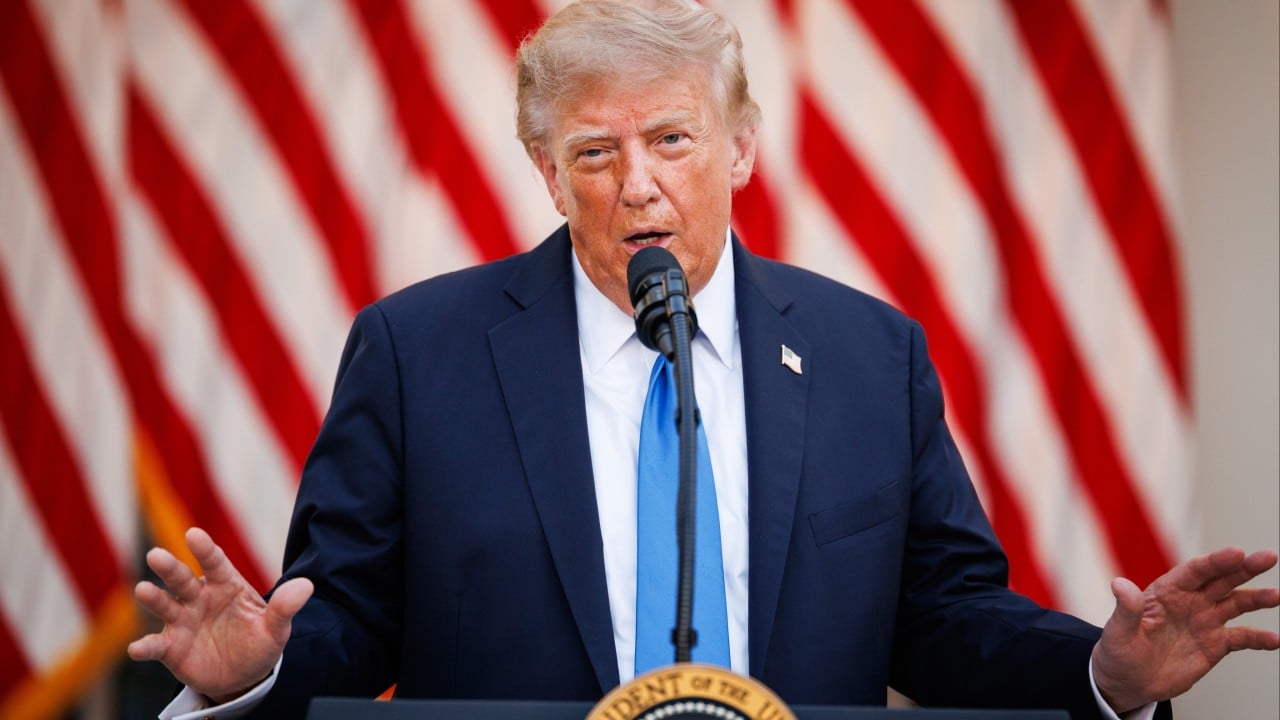
Geopolitical competition routinely distorts domestic industrial policy, turning long-term resource procurement into a theater of partisan accusation. When political factions weaponize mineral supply chains, the underlying debate rarely centers on the mechanical realities of extraction, processing capacity, and capital allocation. Instead, public discourse devolves into allegations of corruption, cronyism, and preferential deal-making. This dynamic defines the ongoing friction surrounding United States critical mineral agreements, where legislative scrutiny targets executive-branch resource negotiations under the banner of ethical governance, while national security imperatives demand rapid capacity scaling to counter external supply monopolies.
The Structural Anatomy of Mineral Resource Capture
Understanding the friction between political oversight and industrial strategy requires examining how critical mineral agreements are structured. Unlike traditional commercial procurement, state-backed resource deals operate at the intersection of foreign policy and private capital. For an alternative view, read: this related article.
The primary mechanism involves sovereign guarantees, subsidized financing, and off-take agreements designed to stimulate domestic or allied production. When a administration negotiates these frameworks, it acts as a market maker rather than a passive regulator. This intervention creates an immediate tension between industrial acceleration and transparent market pricing.
Private entities partnering with state initiatives often secure disproportionate advantages, including prioritized access to government-backed capital expenditure loans and expedited permitting. Critics characterize this proximity as systemic corruption. Economic analysts, however, recognize it as a structural necessity of state-directed capitalism. When capital markets refuse to absorb the extreme early-stage risk of critical mineral processing facilities—owing to high capital expenditure requirements and low initial margins—the state must subsidize risk to induce private participation. The resulting friction is not inherently an ethical failure; it is the friction of industrial policy attempting to override free-market capital allocation. Similar reporting on this trend has been published by The New York Times.
The Cost Function of Mineral Independence
To evaluate whether resource deals serve national interests or merely benefit well-positioned political allies, one must analyze the cost function of supply chain relocation. Supply chain independence is governed by three primary variables: time to operational capacity, capital intensity, and environmental externalities.
Total Cost = Capital Expenditure + Regulatory Delay Cost + Environmental Mitigation Cost
Building a domestic or allied critical mineral supply chain requires navigating a multi-year development cycle. Mine discovery, feasibility studies, environmental impact assessments, and facility construction routinely span a decade. Political cycles, by contrast, operate on two-to-six-year horizons. This temporal mismatch forces administrations to shortcut standard regulatory friction to achieve visible milestones before an election cycle concludes.
When oversight mechanisms are bypassed or modified to accelerate processing plants or extraction sites, governance risks escalate. Critics label these shortcuts as corrupt patronage networks. From an operational perspective, they represent an attempt to compress a twelve-year industrial timeline into a single political mandate. The cost of this compression manifests as compromised environmental oversight and concentrated financial gains for early-stage contractors who possess the political capital to navigate the state apparatus.
The Geopolitical Trade-Off Matrix
Policymakers face a constrained choice set when designing critical mineral strategies. The pursuit of supply chain security against external rivals like China inherently requires abandoning pure market efficiency.
| Strategic Variable | Free Market Approach | State-Directed Approach |
|---|---|---|
| Capital Allocation | Lowest cost globally | National security priority |
| Processing Concentration | Monopolized by dominant producer | Distributed across allied jurisdictions |
| Price Stability | Subject to cartel manipulation | Subsidized floor pricing |
| Governance Risk | Commercial insolvency risk | Political capture and cronyism risk |
When domestic political actors challenge mineral deals on ethical grounds, they frequently ignore the baseline alternative: absolute reliance on foreign extraction and refining monopolies. The trade-off is stark. An administration can either accept higher domestic governance risks—including the possibility of politically favored entities capturing subsidies—or accept complete strategic vulnerability to external economic coercion.
Legislative investigations into mining agreements often treat these two realities as mutually exclusive. They evaluate state-backed resource deals through a purely domestic legal lens while ignoring the international security constraints that forced the state into market intervention in the first place.
The Mechanics of Regulatory Capture and Political Patronage
The allegation that political actors leverage national security justifications to enrich specific corporate partners is a persistent feature of resource nationalism. In the context of American critical mineral policy, accusations leveled by political opponents focus on non-competitive contract awards and regulatory waivers granted to firms with historical ties to policymakers.
To separate legitimate oversight from political posturing, analysts must trace the flow of capital and the distribution of operational risk. If a firm receives government-backed financing without demonstrating technical competence or balance-sheet capacity, the arrangement exhibits the classic markers of political rent-seeking. Conversely, if capital is deployed to entities that already control proprietary extraction or refining technology, the intervention functions as an industrial catalyst.
The failure mode of modern resource policy lies in the absence of clawback provisions and performance-based milestones. When state support is front-loaded without stringent operational requirements, recipients capture rents without delivering industrial capacity. This dynamic fuels legislative pushback and bipartisan allegations of corruption. The solution proposed by critics—halting state-backed deals entirely—would paralyze domestic supply chain development. The functional alternative requires codifying transparent, milestone-contingent financing structures that insulate industrial policy from political favoritism while maintaining the speed necessary to counter foreign dominance.
Allocating Capital Under Strategic Constraint
The friction between national security imperatives and ethical governance will intensify as global demand for lithium, cobalt, nickel, and rare earth elements accelerates. Treating every controversial resource agreement as an unmitigated scandal obscures the structural reality of modern industrial policy: states cannot build strategic supply chains using purely passive, laissez-faire mechanisms.
Future capital allocation must decouple industrial acceleration from political discretion. Institutionalizing independent, merit-based screening boards for resource grants and mandating public transparency for all off-take guarantees will mitigate the conditions that give rise to legitimate allegations of corruption. Until procurement frameworks are structurally insulated from political patronage, mineral diplomacy will remain vulnerable to domestic partisan warfare, undermining the very national security it seeks to protect.