The discovery of a fully intact, mudbrick residential city at the Ain El-Sabeel site within the Dakhla Oasis establishes an empirical baseline for analyzing late Roman imperial management. Rather than confirming the standard historical narrative of remote frontier isolation, the archaeological data reveals a highly calculated model of economic extraction, militarized border security, and rapid ideological institutionalization under the Byzantine administrative matrix. The site provides architectural and epigraphic proof of how the central state maintained authority at the extreme periphery of the empire during the highly volatile reign of Emperor Constantius II (337–361 AD).
Understanding the survival of this desert hub requires looking beyond mere geographic proximity to water. Analysis of the urban planning grid, defensive architecture, and economic artifacts reveals a complex operational system designed to turn a hostile geographic buffer zone into a highly productive logistical node.
The Urban Logistics Framework: Spatial Grid Architecture and Resource Security
The urban design of the Ain El-Sabeel settlement disproves the hypothesis that desert outposts grew organically or haphazardly around natural springs. The site displays a rigid, centrally planned grid system defined by primary north-south avenues intersected at precise right angles by minor east-west thoroughfares. This deliberate geometry served a dual objective: maximizing internal administrative control and optimizing airflow to mitigate extreme desert thermal conditions.
The settlement was built with clear zoning, dividing spaces into three core infrastructure tiers:
- The Civic Core: Central public squares positioned at major street intersections to facilitate tax collection, civil assemblies, and market regulation.
- The Defensive Perimeter: A heavily fortified perimeter wall integrated with two stone watchtowers positioned to cover the vulnerable outer approaches of the oasis.
- The Domestic Quarters: Standard mudbrick residential units featuring vaulted roofs and reception halls optimized for thermal massing, which stabilized internal temperatures against the severe diurnal fluctuations of the Western Desert.
The deployment of mudbrick as the primary structural material represents a calculated engineering choice rather than a resource constraint. Mudbrick provided the necessary compressive strength for multi-room structures while delivering superior thermal insulation properties compared to imported limestone. The cost function of transporting stone over hundreds of kilometers of desert terrain would have yielded negative economic returns. By utilizing local alluvial clay, the provincial builders maximized infrastructure velocity while maintaining structural resilience.
The Economic Infrastructure of Oasis Extraction: Quantifying the Micro-Economy
The view that Western Desert settlements were isolated agricultural outposts is contradicted by the discovery of a vast administrative archive within the domestic quarters. Archaeologists recovered approximately 200 pieces of ostraca—pottery shards utilized as durable, low-cost writing surfaces. Inscribed in both Greek (the official administrative language of the Byzantine East) and Coptic (the vernacular language of daily commerce), these documents establish the presence of an institutionalized taxation and retail network.
Analysis of the ostraca reveals three specific economic mechanisms operating within the city:
- The Fiscal Ledger System: Receipts documenting the collection of agricultural surpluses—primarily grain, dates, olive oil, and textiles—destined for regional redistribution or imperial taxation.
- Contractual Protections: Bills of sale and land tenancy agreements showing that the legal frameworks of the Roman legal system were fully operational hundreds of kilometers from the Nile Valley.
- Administrative Correspondence: Circular letters between local officials detailing resource allocation, security updates, and workforce management metrics.
This administrative apparatus operated alongside a dual-currency monetary system. The recovery of bronze coins bearing explicit Christian iconography and Latin inscriptions indicates that the local population engaged in high-volume, low-value daily market transactions.
The discovery of gold coins minted during the reign of Emperor Constantius II indicates a deep integration with the macro-economy of the empire. Gold solidi were typically reserved for state expenditures, such as paying military garrisons, purchasing high-value imperial monopolies, or settling major tax liabilities. The presence of gold coins within a mudbrick desert city shows that Ain El-Sabeel was directly connected to the imperial treasury, serving as a net exporter of wealth rather than an economic drain on the state.
Ideological Subversion and Institutionalization: The Evolution of Early Christian Spaces
The religious architecture at Ain El-Sabeel provides an empirical timeline of the transition from early Christian underground organization to state-sanctioned institutional dominance. This transition is captured structurally by contrasting two residential buildings discovered at the site: the House of Tabibus and the House of Tisous.
The House of Tabibus dates to the early fourth century AD and functions as a structural example of a domus ecclesia, or house church. From the outside, the building is identical to surrounding domestic architecture, utilizing standard vaulted reception rooms to avoid drawing the attention of imperial officials prior to the Edict of Milan. Internally, the floor plan was modified to accommodate communal worship, highlighting a period when Christianity operated within private spaces.
The mid-fourth century saw a massive reallocation of civic space, marked by the construction of a grand basilica at the head of the city's main avenue. The basilica features a central hall flanked by formal side aisles, an architectural style adopted directly from Roman civic administration centers rather than traditional pagan temples. The physical prominence of the basilica—overlooking the main thoroughfares and public squares—signals the complete institutionalization of the church, turning it into the primary administrative and social anchor of the community.
The House of Tisous, explicitly identified as the residence of a church deacon dating to the late fourth century AD, confirms this shift. The scale, central location, and architectural quality of this residence show that church officials had transitioned into elite members of the local bureaucracy. The church was no longer merely a spiritual group; it had become an arm of the state, managing local charity networks, civic disputes, and the collection of ecclesiastical revenues.
Macroeconomic Drivers: The Archaeology-Tourism Capital Loop
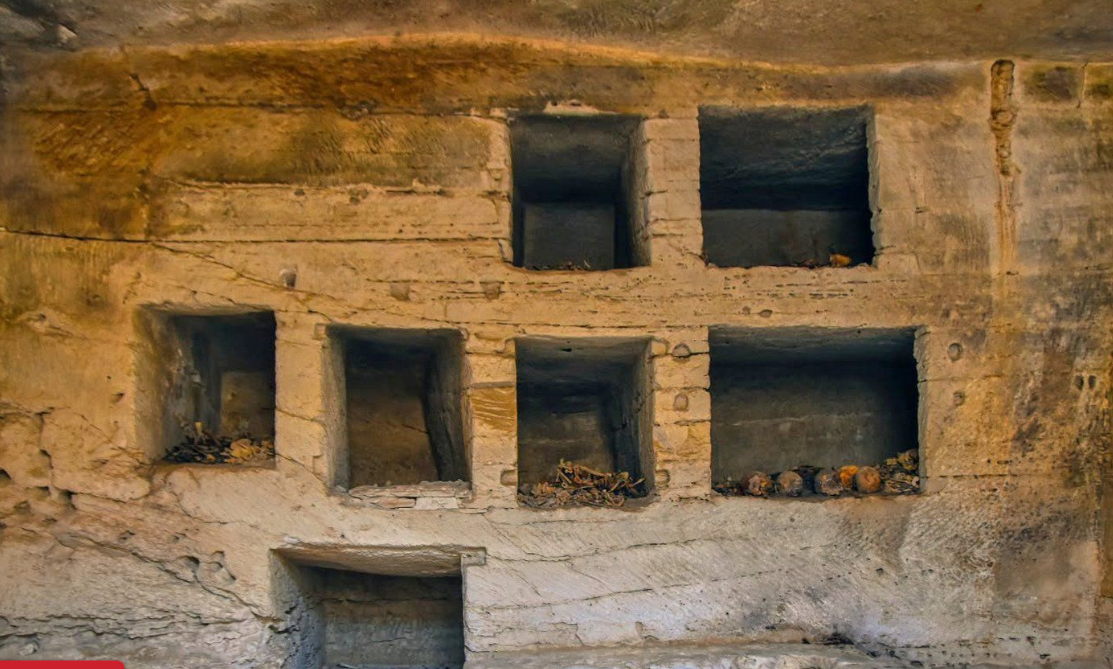
The excavation of Ain El-Sabeel, alongside the simultaneous discovery of seven limestone tombs at the Greco-Roman port of Leukaspis (Marina el-Alamein), reflects a targeted strategy by the Egyptian Ministry of Tourism and Antiquities. Faced with high external debt and a volatile balance of payments, the state is actively expanding its archaeological portfolio to diversify its foreign currency revenue streams.
[Antiquities Excavation] ──> [Global Academic Valuation] ──> [Infrastructure Inflow]
          ▲                                                               │
          └────────────────── [Foreign Currency Reinvestment] ◄───────────┘
The economic survival of the state depends heavily on two structural pillars: the Suez Canal and tourism. While Suez Canal revenues are vulnerable to regional maritime supply chain shocks, historical tourism represents a highly defensible asset class with an inelastic demand curve among high-yield demographics. By opening up the New Valley Province and the Western Desert, the state is trying to relieve structural pressure on the traditional Luxor-Aswan-Cairo corridor.
This expansion serves a clear commercial function:
- Extending the Average Length of Stay: Introducing remote circuit tourism encourages international travelers to stay in the country longer, increasing the average spend per visitor.
- Geographic Diversification: Spreading tourism capital into the Western Desert stimulates regional economies that are completely disconnected from the industrial centers of the Delta.
- Attracting Private Infrastructure Capital: Developing remote archaeological sites requires upgrading roads, regional airports, and hospitality grids, creating opportunities for public-private partnerships.
The primary limitation of this strategy lies in the high operational expenditures required to preserve mudbrick architecture in an active desert environment. Unlike limestone or granite structures, unbaked mudbrick degrades rapidly when exposed to wind erosion and shifting sands once uncovered. The long-term economic returns of the Ain El-Sabeel site depend entirely on implementing advanced stabilization techniques. Without this preservation infrastructure, the asset will degrade before reaching scale monetization.
The state must treat these discoveries as long-term logistical investments rather than short-term public relations wins. The data recovered from the ostraca, the coins, and the urban planning grids provides a clear template for resource optimization under scarcity. Modern efforts to develop the Western Desert will succeed only by mimicking the exact structural discipline displayed by the Byzantine administrators who successfully managed the same terrain 1,600 years ago.