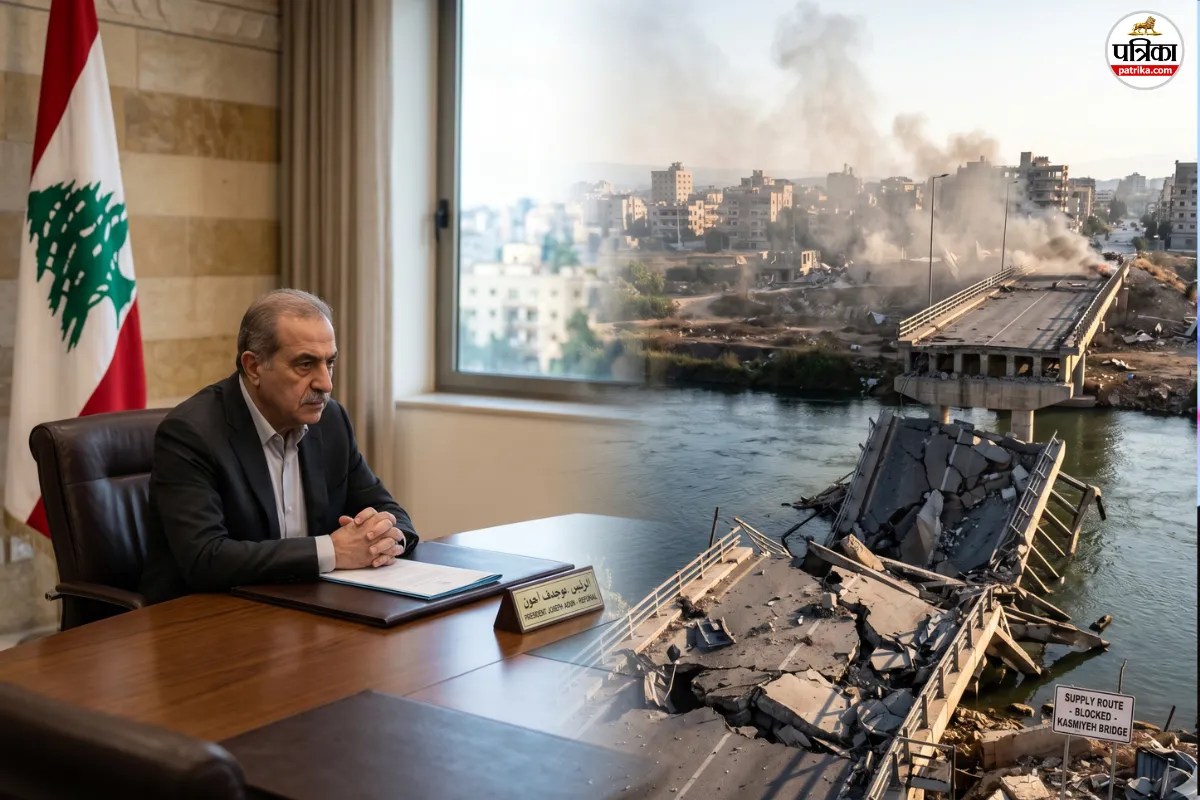
The suspension of maritime and border negotiations between Lebanon and Israel represents a shift from diplomatic posturing to a hard-line strategy of attrition. Lebanon’s recent refusal to engage in further talks without an immediate, unconditional ceasefire—as articulated by President Michel Aoun—indicates that the traditional "negotiate while fighting" model has collapsed. This breakdown is not merely a diplomatic disagreement; it is a calculated reconfiguration of leverage where the perceived cost of negotiation under fire exceeds the potential gains of a mediated settlement.
The Geopolitical Friction Points
Negotiation failure in this theater stems from three distinct structural layers that prevent a stable equilibrium. When these layers collide, the incentive for any party to concede diminishes to zero.
- The Sovereignty-Security Paradox: Lebanon views any negotiation under active military pressure as a violation of sovereign integrity. For the Lebanese administration, agreeing to sit at the table while Israeli strikes continue is interpreted as a "negotiation under duress," which carries a high domestic political cost.
- Asymmetric Objectives: Israel’s primary objective is the neutralization of Hezbollah’s infrastructure to facilitate the return of displaced citizens to the Galilee. Lebanon’s objective, however, is the preservation of state infrastructure and the assertion of territorial boundaries. These goals do not overlap; they are mutually exclusive in the current tactical environment.
- Third-Party Mediation Fatigue: The role of US-led mediation has shifted from proactive facilitation to reactive crisis management. Without a clear "carrot" (such as immediate economic relief for Lebanon’s collapsing banking sector), the US lacks the leverage to bring the parties back to the table.
The Cost Function of Ceasefire Demands
President Aoun’s insistence on a ceasefire prior to dialogue is a strategic move to reset the Cost-Benefit Analysis of the conflict. By refusing to talk, Lebanon is attempting to force Israel into a binary choice: escalate to a full-scale ground war or accept a diplomatic freeze that leaves northern border security unresolved.
The mechanism of this refusal functions as follows:
- Depreciating the Value of Diplomacy: By removing the diplomatic option, Lebanon forces the international community to focus on de-escalation rather than long-term border demarcation.
- Internal Cohesion: In a fragmented Lebanese political environment, "standing firm" against external pressure serves as a rare point of domestic alignment between the presidency, the caretaker government, and non-state actors like Hezbollah.
- Resource Preservation: Negotiations require a degree of transparency regarding military positioning and territorial claims. By halting talks, Lebanon maintains a "strategic fog" that complicates Israeli intelligence and planning.
Strategic Bottlenecks in the Blue Line Dispute
The dispute over the Blue Line—the UN-recognized withdrawal line—is often treated as a simple mapping error, but it is actually a technical bottleneck that prevents broader peace. The logic of the disagreement rests on Thirteen Contested Points.
The "Thirteen Points" represent areas where the 1923 international boundary, the 1949 armistice line, and the 2000 Blue Line do not align. Each point is a micro-theater of conflict. The failure to resolve these points creates a "domino effect":
- If Point B1 (Ras al-Naqoura) is not resolved, the maritime border remains legally unstable.
- If the maritime border is unstable, offshore energy exploration (specifically in Block 9) faces legal and physical risks.
- If energy exploration is paralyzed, Lebanon loses its primary path to debt restructuring and economic recovery.
This chain of dependencies ensures that a breakdown at the top (the presidency’s refusal to talk) freezes the entire economic engine of the country.
The Role of Non-State Actors as Vetos
The Lebanese state’s negotiating position is inextricably linked to Hezbollah’s military posture. This creates a "Dual-Track" reality. Even if the Lebanese presidency wished to proceed with negotiations, they lack the "Monopoly on Violence" required to guarantee the security of any agreed-upon border.
This creates a credibility gap. Israel views the Lebanese government as an entity that lacks the agency to enforce a treaty. Conversely, Hezbollah views the Lebanese government’s diplomatic efforts as a tool to gain time. The result is a Strategic Paralysis where the official state representative (Aoun) must adopt the most rigid possible stance to maintain legitimacy among armed domestic factions.
Economic Implications of the Diplomatic Pause
The cessation of talks has immediate quantitative impacts on the Lebanese Mediterranean potential. The "Risk Premium" for operating in the Levant Basin has spiked.
- Insurance Inflation: Shipping and drilling insurance rates for the Eastern Mediterranean are calculated based on the probability of kinetic conflict. A "pause" in talks is read by markets as an "increase" in the likelihood of strikes, effectively pricing out commercial interest in Lebanese waters.
- Capital Flight: Investors who were betting on a "Gas-for-Peace" deal—where Lebanese gas exports would stabilize the economy—are withdrawing. This accelerates the hyperinflation of the Lebanese Pound (LBP).
- Infrastructure Decay: Without a negotiated border, the infrastructure required to link Lebanese gas fields to regional pipelines (like the Arab Gas Pipeline) cannot be built. The "Sunk Cost" of existing exploration increases every day the talks are stalled.
The Failure of "Incrementalism"
Previous diplomatic efforts relied on Incrementalism—the idea that small agreements on water rights or agricultural land could lead to a grand bargain. This strategy has failed because it ignored the Zero-Sum Nature of the security competition.
In a zero-sum environment, a "win" for Israel’s security is perceived as a "loss" for Lebanon’s deterrent capability. For example, the establishment of a buffer zone—a key Israeli demand—is seen by Lebanon as a de facto annexation. Because neither side can accept a "relative loss," the only stable state is a complete cessation of communication.
The Logic of Preconditions
The Lebanese demand for a ceasefire before talks is a classic "Precondition Strategy." In conflict resolution theory, preconditions are used to test the adversary’s "Sincerity of Intent." However, in this specific context, they function as a barrier to entry.
Israel views the demand for a ceasefire as a way for Lebanon to regroup militarily without offering any concessions. Lebanon views the refusal of a ceasefire as proof that Israel is not interested in a permanent peace, only a tactical pause. This creates a recursive loop of distrust.
Tactical Equilibrium and the Path Forward
The current situation is a "Stale Equilibrium." Neither side has enough power to force a total surrender, but neither has enough trust to offer a compromise.
To break this deadlock, the negotiation framework must transition from a "Security-First" model to a "Development-First" model. This would require:
- Third-Party Guarantees: Moving beyond mediation to active enforcement of border markers by a neutral international body with a more robust mandate than the current UNIFIL (United Nations Interim Force in Lebanon).
- Decoupling Maritime and Terrestrial Disputes: Attempting to solve both simultaneously has led to total failure. Solving the maritime boundary—which has higher economic stakes and lower immediate security risks—could provide the capital necessary to stabilize the Lebanese state before tackling the more volatile land border.
- Direct Economic Off-Ramps: Integrating Lebanon into the Eastern Mediterranean Gas Forum (EMGF) as a silent or secondary partner could provide an institutional framework that bypasses the need for direct bilateral recognition of Israel.
The immediate strategic priority is the management of the "No-Talk" period. During this phase, the risk of "Accidental Escalation" is at its peak. Without a direct line of communication or an active negotiating table, small tactical errors on the border can quickly scale into a theater-wide conflict. The preservation of the "Red Lines"—unwritten rules of engagement—is now the only remaining mechanism preventing a total collapse of the regional security architecture.
The move by President Aoun is a high-stakes gamble that international pressure will eventually force Israel to halt operations. If that pressure does not materialize, Lebanon faces a prolonged period of isolation where its territorial claims remain unverified and its economic resources remain buried under a sea of unresolved litigation and military tension.