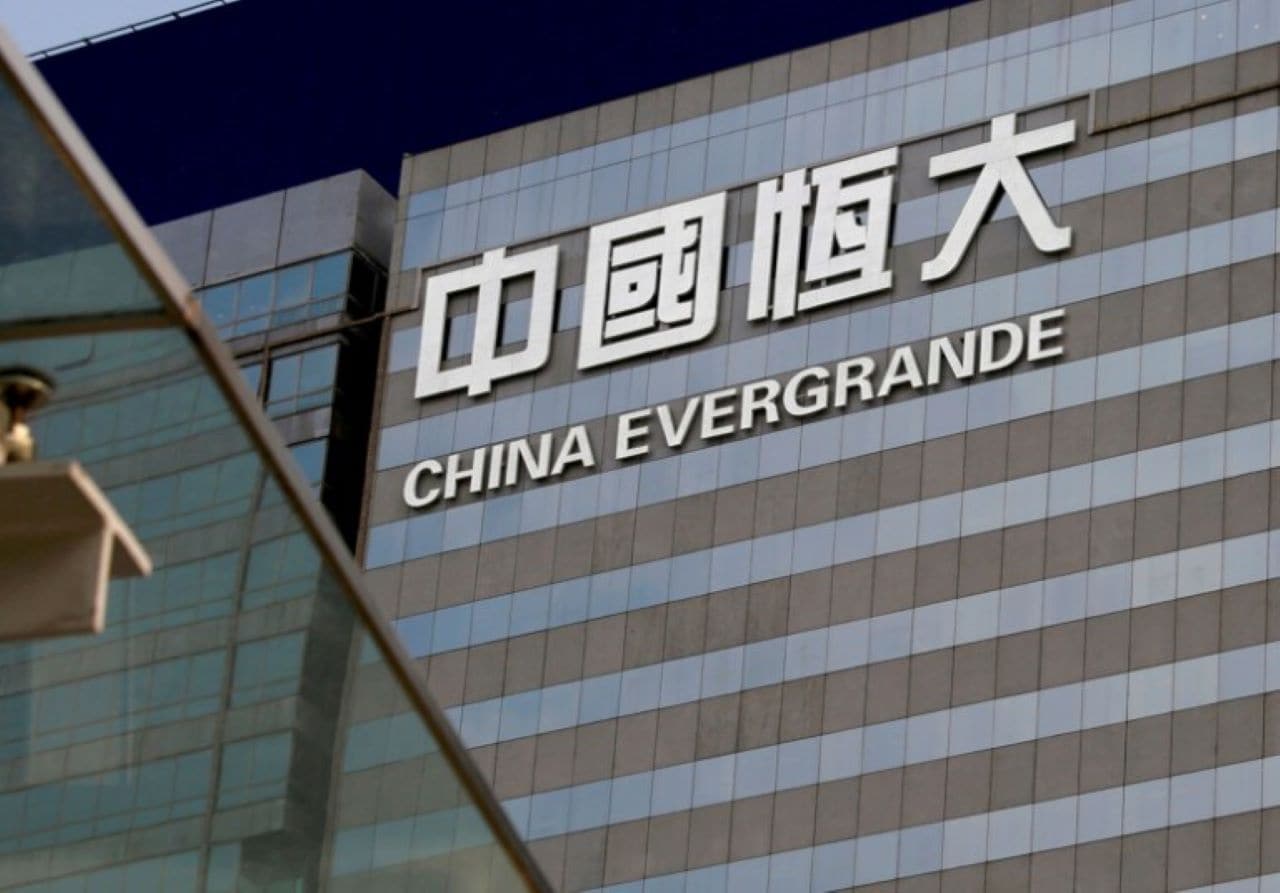
The collapse of China Evergrande Group and the subsequent criminal allegations against its founder, Hui Ka Yan, represent the failure of a specific financial engineering model: the high-turnover, high-leverage, and high-growth "Three Highs" strategy. This collapse was not a singular event of misfortune but the inevitable result of a massive duration mismatch between short-term debt obligations and long-term, illiquid real estate assets. When the Chinese government introduced the "Three Red Lines" policy in 2020—capping debt-to-cash, debt-to-equity, and debt-to-asset ratios—the liquidity spigot was tightened, revealing a balance sheet that was functionally insolvent for years.
The Mechanics of Controlled Implosion
To understand why Evergrande’s boss moved from the heights of political influence to a fraud plea, one must quantify the structural components of the firm’s capital stack. Evergrande operated as a de facto shadow bank, utilizing three primary sources of non-traditional funding that bypass standard banking oversight.
1. The Pre-sale Liability Loop
Unlike Western development models where revenue is recognized upon delivery, Evergrande relied on customer deposits for unbuilt apartments to fund current operations. This created a liability structure where the company owed millions of square meters of housing it had no liquid capital to complete. When the "Three Red Lines" halted new borrowing, the ability to finish existing projects vanished, turning a housing developer into a massive, unhedged short position on the Chinese property market.
2. Wealth Management Products (WMPs) as Internal Financing
Evergrande incentivized employees and retail investors to purchase high-yield WMPs. These were effectively unsecured loans used to plug holes in the company’s operating cash flow. The failure to repay these products triggered the initial public unrest that signaled to Beijing that the Evergrande crisis had transitioned from a corporate balance sheet issue to a systemic social stability risk.
3. Off-Balance Sheet Guarantees
The company utilized a network of subsidiaries and joint ventures to hide debt. By guaranteeing the debt of these entities without consolidating them on the main balance sheet, Hui Ka Yan maintained an illusion of compliance with regulatory ratios while the true leverage ratio escalated toward 20:1.
The Erosion of Political Capital and the Sovereign Pivot
The fall of Hui Ka Yan is a case study in the shifting definition of "too big to fail" within the Chinese political economy. For decades, the implicit guarantee of the state protected major developers because property accounted for approximately 25% of China's GDP. However, the transition toward "Common Prosperity" and the "Housing is for living, not for speculation" doctrine recalibrated the cost-benefit analysis for the central government.
Hui’s descent from a member of the Chinese People’s Political Consultative Conference (CPPCC) to a defendant reflects a strategic decision by the state to prioritize moral hazard correction over short-term market volatility. The authorities identified that the systemic risk of continuing to bail out over-leveraged developers outweighed the localized pain of a controlled bankruptcy.
The fraud plea specifically addresses the inflation of revenue. By booking revenue on projects that were barely underway, Evergrande reported profits that allowed for massive dividend payouts—reportedly totaling billions of dollars—much of which flowed to Hui and his associates. This extraction of capital from an insolvent entity is what transformed a business failure into a criminal investigation.
Quantifying the Liquidation Bottleneck
The liquidation of Evergrande, ordered by a Hong Kong court, faces a fundamental jurisdictional friction. While the court has the authority to appoint liquidators, the vast majority of Evergrande’s assets are located in Mainland China. The recovery rate for offshore bondholders is projected to be in the low single digits, primarily due to the "Waterfall of Claims" established by Chinese law:
- Social Stability Obligations: Unfinished housing units must be completed and delivered to homeowners who have already paid.
- Labor and Vendor Claims: Local contractors and suppliers are prioritized to prevent regional economic contagion.
- Onshore Creditors: State-owned banks and local lenders hold secured positions on land parcels.
- Offshore Creditors: These are structurally subordinated, holding debt in offshore holding companies that have no direct claim on the physical land or assets in the Mainland.
This hierarchy ensures that the liquidation process is less about returning value to investors and more about the orderly redistribution of land and assets to state-linked developers to ensure the physical completion of the housing stock.
The Feedback Loop of Deflationary Pressure
The Evergrande crisis has triggered a secondary effect in the Chinese economy: the destruction of the "wealth effect." Because approximately 70% of Chinese household wealth is tied to real estate, the plummeting valuation of property and the uncertainty surrounding developer solvency have led to a sharp contraction in consumer spending.
This creates a self-reinforcing cycle. Lower demand leads to lower property prices, which reduces the value of the collateral held by banks, which in turn leads to tighter credit conditions for the remaining healthy developers. The "Price-to-Earnings" ratios of property firms are no longer the relevant metric; instead, the market is pricing these firms based on "liquidation value," often with a significant "uncertainty discount."
The Transformation of the Development Model
The era of the "Billionaire Developer" in China is effectively over, replaced by a utility-style model of state-directed construction. The strategic shift is characterized by three fundamental changes in the industry's operating environment:
- De-financialization: Real estate will no longer serve as a primary vehicle for household investment or a primary engine for local government revenue via land sales.
- Asset Concentration: The market is consolidating around State-Owned Enterprises (SOEs) that have lower cost of capital and direct lines to state liquidity.
- Regulatory Granularity: The "Three Red Lines" have been supplemented by a more intrusive "White List" system, where the state decides on a project-by-project basis which developments receive funding.
The criminal proceedings against Hui Ka Yan serve as a definitive signal to the private sector: the state will no longer tolerate the privatization of profits and the socialization of losses. The forensic audit of Evergrande’s books revealed a level of data manipulation that suggests the company’s growth was, in its later stages, a sophisticated Ponzi scheme fueled by the expectation of an eventual state bailout that never came.
Current stakeholders must recognize that the resolution of the Evergrande debt will span years, if not a decade. The focus for analysts should shift from "recovery percentages" to "systemic transition." The goal is no longer to save the developer, but to salvage the underlying economic activity while purging the speculative excesses that Hui Ka Yan came to define. The strategic play is to monitor the speed at which local governments can absorb the land banks of failed developers and the rate at which the central bank can provide liquidity to fill the hole left by the collapse of the shadow banking channels. Only when the "Pre-sale Liability" is cleared from the national balance sheet will the Chinese property sector find a new, albeit lower, equilibrium.