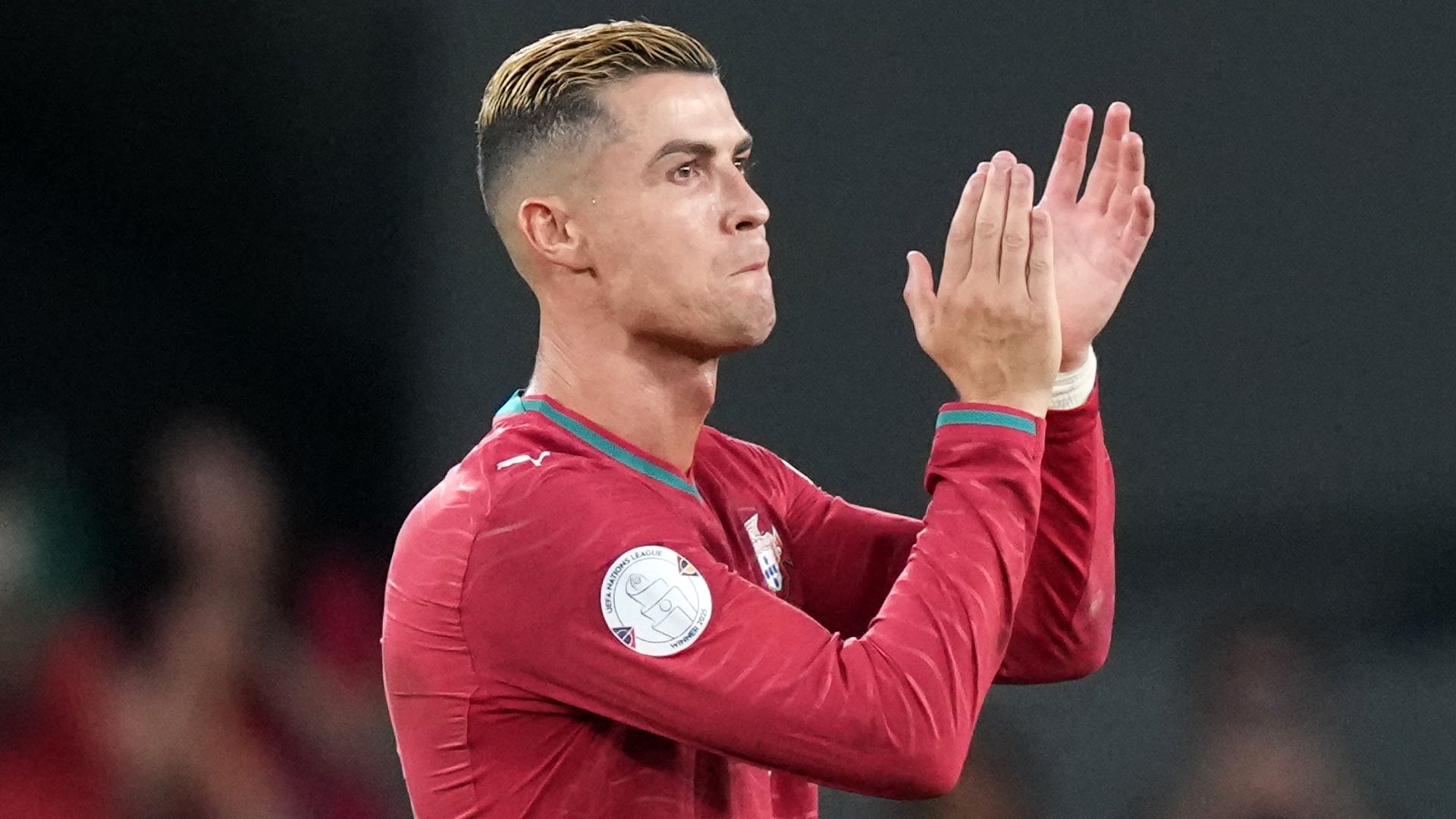
The departure of a generational icon from an international football program is rarely a purely sentimental event; it is an abrupt structural shock to a closed labor market. When Cristiano Ronaldo steps away from the Portuguese national team, the immediate sports media narrative defaults to career retrospectives and emotional tributes. That framing misses the operational reality. International football operates under strict resource constraints—fixed roster sizes, zero transfer windows, and compressed tactical preparation cycles—meaning the removal of a high-usage, high-gravity asset forces an immediate reallocation of tactical bandwidth, commercial equity, and locker-room authority.
To understand the true impact of Ronaldo’s exit from Portugal, analysts must separate brand nostalgia from on-pitch mechanics and organizational governance. The transition alters Portugal’s tactical geometry, redistributes goal-scoring variance across a younger cohort, and forces the Portuguese Football Federation (FPF) to recalibrate its commercial valuation model.
The High-Usage Asset Paradox in International Football
In modern elite football, squad optimization relies on balancing individual output against collective pressing efficiency and spatial fluidity. During the final stages of his international tenure, Cristiano Ronaldo functioned as a classic high-usage, low-mobility penalty-box specialist. In basketball analytics, a high-usage player consumes a disproportionate share of possessions; in football, this manifests as touch concentration in the final third and gravitational pull on defensive lines.
While Ronaldo’s presence guaranteed elite aerial threat and penalty-box positioning, it simultaneously imposed a rigid tactical tax on Portugal’s midfield and wide players.
- Pressing Asymmetry: Modern tournament football rewards compact, synchronized high pressing. Retaining a veteran forward with limited defensive recovery capacity forces the manager to either drop the team’s defensive block deeper—conceding territorial control—or instruct the remaining nine outfield players to overcompensate, increasing cumulative fatigue over a seven-match tournament cycle.
- Pass-Network Centralization: Data from major tournaments consistently demonstrates that teams featuring a dominant, iconic striker exhibit skewed pass networks. Midfielders subconsciously default to feeding the primary star even when higher-percentage progressive passing lanes exist to secondary runners.
- Set-Piece Monopoly: Free-kick and penalty allocation often shifts from an expected-goals (xG) optimization problem to a hierarchy management problem. Removing the undisputed alpha instantly unlocks direct free-kick routines and penalty duties for specialists like Bruno Fernandes, Vitinha, or Rúben Neves, likely increasing conversion efficiency on dead-ball situations.
The removal of this gravitational center does not automatically make Portugal better, nor does it guarantee regression. Instead, it shifts the team from a star-centric deterministic system to a distributed probabilistic system. Rather than funneling chances through a single terminal point, Portugal must now generate goals through fluid positional rotations among players like Rafael Leão, Pedro Neto, Gonçalo Ramos, Diogo Jota, and João Félix.
Tactical Reallocation and Tactical Optionality
The immediate operational benefit of Ronaldo’s retirement is the restoration of tactical optionality for the coaching staff. For over a decade, Portugal’s starting lineup began with one permanent fixture, forcing every tactical system—whether a 4-3-3, a 4-2-3-1, or a back-three wing-back structure—to accommodate his specific spatial preferences.
Without a fixed central focal point, Portugal can deploy three distinct structural profiles depending on the opponent’s defensive block:
The Fluid False-Nine Architecture
Deploying a hybrid forward such as Diogo Jota or João Félix allows Portugal to overload central midfield zones. When the central striker drops into the half-spaces, opposing center-backs face a binary dilemma: follow the runner and vacate central space for inverted wingers like Rafael Leão to attack, or hold their line and allow Portugal to establish numerical superiority in build-up play. This structural fluidity was largely inaccessible when Ronaldo occupied the central corridor.
High-Tempo Vertical Transition
Against possession-dominant opponents, Portugal now possesses the personnel to execute pure counter-attacking football without a pace bottleneck. A front three combining Leão’s ball-carrying velocity, Pedro Neto’s wide acceleration, and Gonçalo Ramos’s relentless channel running creates a uniform sprint profile across the forward line. Every member of the attack can both initiate and finish a 60-meter transition.
Aggressive Counter-Pressing (Gegenpressing)
With younger forwards carrying lower cumulative career mileage, Portugal can sustain intense five-second counter-pressing triggers immediately after losing possession. In knockout tournaments—where fatigue compounds every 72 hours—the ability to win the ball high up the pitch reduces the distance to the opponent's goal and shields Portugal’s aging defensive veterans, such as Rúben Dias and Nuno Mendes, from defending vast open spaces in transition.
The Governance Vacuum and Locker-Room Equilibrium
Beyond tactical geometry, an international squad functions as a high-stakes temporary organization. Unlike club teams, where players interact daily for ten months, national teams assemble for ten-day sprints under intense media scrutiny. In this environment, informal power structures dictate team cohesion.
For twenty years, Ronaldo served as the absolute center of gravity within the Portuguese dressing room. His status created an unambiguous hierarchy: his standards set the cultural baseline, and his media omnipresence absorbed external pressure, shielding younger teammates from tabloid scrutiny during poor runs of form.
His departure creates a governance vacuum that carries two distinct operational risks:
- Pressure Redistribution: When Portugal underperformed previously, media post-mortems centered almost exclusively on Ronaldo’s selection, body language, or tactical fit. Going forward, scrutinizing eyes will turn directly onto the next tier of senior leaders—specifically Bruno Fernandes, Bernardo Silva, and Rúben Dias. Players who previously operated in the slipstream of a global icon must now absorb the full weight of national expectation.
- Leadership Diffusion: Replacing a singular dominant voice with a leadership committee requires deliberate cultural engineering by the manager. Without clear delineation of authority, competing cliques—often divided by club affiliations or generational cohorts—can fracture dressing-room unity during high-stress tournament moments.
However, the removal of an outsized personality also eliminates selection friction. In recent tournament cycles, any decision to substitute Ronaldo or start him on the bench triggered a global media firestorm, turning routine tactical adjustments into existential crises for the manager. The coaching staff now regains full operational autonomy over substitutions, rotation, and squad selection based purely on physiological metrics and tactical matchups.
The Commercial Valuation Reset for the FPF
To view Ronaldo’s retirement purely through a sporting lens ignores the macroeconomic reality of the Portuguese Football Federation. Over the past two decades, the FPF transformed from a mid-tier European governing body into a global commercial powerhouse, largely by bundling its institutional brand with Ronaldo’s personal intellectual property.
In sports economics, this phenomenon is known as the Superstar Externality—a concept formalized by economist Sherwin Rosen, where a single dominant talent generates disproportionate revenue across an entire ecosystem. Ronaldo’s presence inflated the value of Portugal’s broadcast rights, friendly match appearance fees, and corporate sponsorship tiers far beyond what a nation of ten million people would normally command.
The FPF now faces a predictable commercial contraction across three revenue streams:
- Exhibition Match Appearance Fees: International friendly matches are priced based on guaranteed star participation. Promoters in North America, the Middle East, and Asia paid premium rates for Portugal matches explicitly to market Ronaldo’s likeness. Without him, Portugal’s commercial appearance fee reverts to the standard Tier-1 European national team rate—a substantial markdown from the "Ronaldo premium."
- Merchandise and Licensing Velocity: Global jersey sales for national teams are heavily skewed toward marquee names. While players like Bruno Fernandes, Rafael Leão, and Vitinha command strong domestic and club-level followings, none possess the cross-cultural, non-footballing brand equity required to move millions of units in non-traditional football markets.
- Sponsorship Renewal Leverage: Corporate partners negotiating multi-year cycles with the FPF will inevitably apply a discount rate to future sponsorship valuations, factoring in the loss of guaranteed global social media impressions and broadcast viewership spikes.
To mitigate this revenue cliff, the FPF must pivot its marketing architecture from individual hero worship to collective institutional prestige. This requires aggressively promoting the breadth of Portugal’s talent pipeline—framing the nation not as the vessel for one legendary career, but as the premier talent factory in European football, consistently producing elite exports across the Premier League, La Liga, and Ligue 1.
The Historical Precedent of Post-Icon Regression and Renewal
Evaluating the probability of Portugal’s short-term sporting success requires examining historical comparables. When nations lose a transformative, era-defining figure, their subsequent trajectory typically follows one of two paths: Structural Stagnation or Collective Liberation.
Structural Stagnation occurs when a federation fails to update its tactical identity after losing its primary crutch. Argentina’s struggles during the brief periods of Lionel Messi’s absence in the mid-2010s illustrated how a team conditioned to wait for individual brilliance can become paralyzed when forced to generate systemic solutions. Similarly, Sweden’s immediate post-Zlatan Ibrahimović transition required a painful stripping down of their offensive ambitions, reverting to a rigid, low-block 4-4-2 defensive shell to remain competitive because they lacked comparable individual quality.
Collective Liberation, conversely, happens when a deep, technically gifted roster is freed from accommodating an aging legend. When Zlatan Ibrahimović initially retired from international duty in 2016, Sweden qualified for the 2018 World Cup and reached the quarterfinals—their best finish since 1994—precisely because their collective work rate and defensive compactness improved without him. Similarly, France’s triumph at the 1998 World Cup and Euro 2000 followed the quiet phasing out of polarizing 1990s stars like Eric Cantona and David Ginola, allowing Aimé Jacquet to build a balanced, system-first unit around Zinedine Zidane.
Portugal possesses the demographic profile to execute Collective Liberation, provided they avoid the trap of searching for a direct one-for-one replacement. No single Portuguese player can replicate Ronaldo’s historical goal volume, physical dominance, or psychological aura. Attempting to force Gonçalo Ramos or Rafael Leão into a "Ronaldo role" will guarantee failure by highlighting their deficiencies rather than amplifying their native strengths.
Limitations of the Post-Ronaldo Optimization Model
While the analytical case for tactical renewal is compelling, assuming a seamless upward trajectory ignores critical vulnerabilities inherent to Portugal’s current squad construction.
First, clinical finishing variance remains an unresolved risk. In knockout football, matches are frequently decided by thin margins where a team generates 1.2 expected goals and must convert at least one under extreme psychological duress. Ronaldo’s greatest value in his later years was not his open-play build-up, but his abnormal psychological immunity to pressure in decisive moments. Portugal’s younger forwards—particularly João Félix and Rafael Leão—have historically exhibited high variance in their finishing efficiency at the international level.
Second, aerial vulnerability increases sharply. Removing a 6-foot-2 striker with an elite vertical leap diminishes Portugal’s threat on offensive set pieces and removes a critical defensive asset when defending opponent corners in the final ten minutes of close matches.
Third, refereeing and psychological intimidation cannot be quantified on a tactical board, yet they operate as real variables on the pitch. Opposing defenders routinely altered their positioning out of fear of Ronaldo’s reputation, and match officials often treated him with the deference afforded to sport’s highest-status figures. Portugal loses that intangible edge immediately.
The Strategic Imperative for Portugal’s Coaching Staff
Managing the post-Ronaldo era requires decisive structural intervention rather than incremental adjustments. The Portuguese coaching staff and federation leadership must execute three immediate operational plays to prevent transitional drift:
- Establish a Clear Set-Piece and Leadership Hierarchy Before the Next Competitive Window: Eliminate ambiguity immediately. Formally designate the primary penalty taker, direct free-kick specialists, and a three-man on-field captaincy group (such as Bruno Fernandes, Rúben Dias, and Bernardo Silva) prior to the next international camp. Publicly ratifying this structure prevents on-pitch disputes and signals a clean break from the past.
- Commit Exclusively to a High-Pressing, Positional-Play Model: Reject tactical compromises. Build the starting eleven around the midfield control of Vitinha, João Neves, and Bruno Fernandes, paired with dynamic, interchangeable forwards. If a player cannot sustain the defensive pressing metrics required by the system, exclude them regardless of club reputation.
- Reposition FPF Commercial Strategy Around Talent Density: Restructure sponsorship pitches to highlight Portugal’s unmatched depth across Europe’s top five leagues. Shift marketing budgets toward behind-the-scenes, multi-player storytelling that builds equity in the next generation—specifically targeting emerging pillars like João Neves, António Silva, and Nuno Mendes—to insulate federation revenues from single-player dependency.
The end of Cristiano Ronaldo’s international career closes the most productive individual chapter in Portuguese sporting history, but it simultaneously removes the final structural constraint holding back the country's deepest generation of collective talent. Portugal’s success over the next two tournament cycles will be determined entirely by how quickly the coaching staff replaces individual dependency with systemic precision.