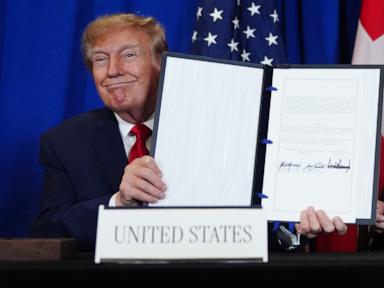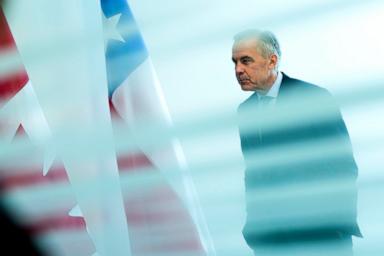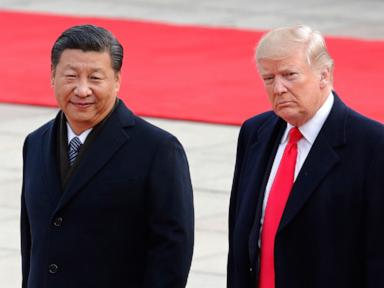
When a head of state receives a planeside greeting on a tarmac, international relations theorists rarely evaluate the event through the lens of aesthetic pageantry. Instead, they examine it as a costly signal. In diplomatic game theory, high-visibility symbolism serves as a mechanism for leaders to lock themselves into political positions, signal private information about their intentions to domestic and foreign audiences, and absorb political costs to prove credibility. The arrival of Chinese President Xi Jinping in Washington, marked by an unexpected tarmac welcome from President Donald Trump, provides a textbook case study in asymmetric signaling, trade truce enforcement, and the rigid structural constraints governing the world's most critical bilateral relationship.
To understand why this summit occurred under specific operational parameters, one must first deconstruct the mechanics of bilateral friction that preceded it. For months, the primary point of friction centered on a temporary trade truce scheduled for expiration. Trade truces between sovereign superpowers function as perishable assets. Without continuous enforcement mechanisms, structural divergence between state-managed industrial policies and market-driven economies reasserts itself. Beijing entered these negotiations seeking a prolonged extension of the existing truce to stabilize export channels and maintain predictability for domestic manufacturing sectors facing industrial overcapacity. Conversely, Washington utilized the imminent expiration date as a compressed enforcement window. By restricting the extension timeline, the United States engineered a structured bottleneck designed to test whether Chinese authorities would fulfill outstanding commitments regarding critical mineral exports and agricultural commodity purchases.
The decision to shorten the extension period reflects an operational shift from broad diplomatic communiques to verifiable, transaction-based milestones. In economic terms, this creates a high discount rate on future promises. When a superpower shortens a compliance window, it forces counterparties to accelerate physical deliveries and policy adjustments or face immediate tariff re-escalation. This approach alters the traditional bargaining space. Beijing desired a multi-year horizon of predictability, whereas Washington preferred a rolling probationary model where compliance must be continuously re-earned. This fundamental divergence exposes the core challenge of modern bilateral economic statecraft: how to manage interdependence without institutionalizing dependency.
Beyond the trade architecture, the optics of the welcome ceremony generated immediate friction within domestic political markets. Chairman of the Senate Armed Services Committee Roger Wicker publicly criticized the lavish reception, arguing that red carpets and military honors project unwarranted deference toward an adversary accused of aggressive regional positioning and systemic economic infractions. This critique highlights a recurring divergence between executive branch diplomacy and legislative branch posture. While the executive branch prioritizes direct leader-to-leader rapport and short-term tactical stabilization, the legislative branch operates through a lens of statutory deterrence and long-term security competition.
This tension creates a distinct political cost function for the administration. By extending high-level hospitality, the executive branch absorbs domestic criticism from congressional hawks who view such pageantry as a diplomatic concession. To rationalize this cost, the executive must extract tangible concessions or public commitments that can be marketed domestically as proof of strength. However, the open secret of high-level summits is that substance often trades inversely with pomp. When pageantry scales upward to match prior receptions hosted abroad—such as the elaborate red carpet deployed in Beijing earlier in the year—observers both foreign and domestic interpret the exchange through the framework of relative prestige. Former diplomats note that extreme public deference provides Beijing with valuable rhetorical capital, which state-controlled media utilizes internationally to project Xi's growing global stature and parity with American leadership.
The strategic necessity of maintaining open communication channels, however, transcends partisan optics. As articulated by senior foreign policy officials, interactions at the apex of government remain mandatory simply because the United States and China represent the two largest economic aggregates and military superpowers on the global stage. Avoiding high-level engagement does not eliminate structural competition; it merely removes the safety valves designed to prevent miscalculation in contested maritime zones or financial markets. Thus, the summit operated under a dual mandate: manage immediate flashpoints while establishing a baseline floor beneath a deteriorating security architecture.
The second tier of the Washington itinerary shifted from macroeconomic statecraft to industrial ecosystem integration. The inclusion of major technology figures—including executives from leading artificial intelligence and semiconductor firms—at the black-tie dinner underscores the reality that modern geopolitical competition is fundamentally tethered to technological supply chains. Modern state visits no longer rely exclusively on traditional diplomats and trade negotiators; they require direct interfaces with the architects of foundational technologies. Semiconductor fabrication, computational infrastructure, and critical mineral processing constitute the modern levers of state power.
When tech executives sit across from heads of state, the dialogue moves beyond abstract trade deficits into the granular details of export controls, intellectual property protections, and market access. China's industrial strategy relies heavily on achieving technological self-sufficiency to insulate its economy from extraterritorial sanctions, while the United States implements targeted export restrictions to preserve asymmetrical advantages in advanced computing and dual-use technologies. The presence of private sector leaders at these state dinners acts as a barometer of corporate anxiety. Corporations caught in the crossfire of great power competition require visibility into regulatory trajectories that traditional diplomatic channels often obscure. Yet, corporate participation also introduces principal-agent complications. While national security apparatuses prioritize strategic containment, multinational corporations prioritize revenue preservation and market share within the world's second-largest consumer base.
Further complicating the summit's architecture was the deliberate inclusion of cultural and historical touchpoints, such as the private tour of the National Archives to inspect foundational constitutional documents. From a strategic perspective, these curated historical excursions serve a dual purpose. For domestic audiences, they project institutional continuity and democratic durability. For foreign delegations, they frame the bilateral relationship within the context of historical epochs rather than transient electoral cycles. However, foreign policy realists view these historical interludes as diplomatic theatre designed to pad an itinerary that lacked substantive breakthroughs.
Indeed, expectations regarding concrete breakthroughs were intentionally suppressed prior to the arrival of the Chinese delegation. Structural mistrust between Washington and Beijing is too deeply entrenched to be resolved through a single three-day visit, regardless of whether the itinerary includes military honor guards, B-1 bomber flyovers, or private tea ceremonies. The institutional architecture of the Chinese Communist Party and the pluralistic, politically volatile environment of the United States generate incompatible decision-making timelines and divergent definitions of compliance. Beijing views bilateral relations through the prism of historical grievance and long-term national rejuvenation, while Washington often operates through short-term electoral horizons and transactional policy shifts.
This structural divergence guarantees that any agreement reached during high-level summits remains fragile. The extension of the trade truce until January does not resolve structural imbalances regarding state-directed industrial subsidies, intellectual property transfer requirements, or market access barriers. It merely establishes a temporary suspension of hostilities, pushing the deadline for structural confrontation further down the calendar. Each iteration of this cycle demonstrates that bilateral stabilization is not a permanent destination, but a continuous management process characterized by periodic crises followed by calibrated de-escalation.
As the diplomatic caravan departs Washington, the analytical takeaway is clear. The pageantry of the planeside welcome and the curated interactions at state dinners mask a hardened reality of systemic rivalry. Future stability will not be determined by the warmth of leader-to-leader relationships or the grandeur of arrival ceremonies, but by the enforcement mechanisms embedded within trade agreements and the resilience of supply chains against geopolitical shocks. The strategic imperative for policymakers moving forward is to abandon the illusion of permanent rapprochement and instead construct predictable guardrails for an era of protracted, managed competition.
Trump welcomes China's Xi to Washington with planeside ceremony
This video provides a direct visual record of the planeside welcome ceremony and red-carpet arrival that set the tone for the bilateral summit discussions.