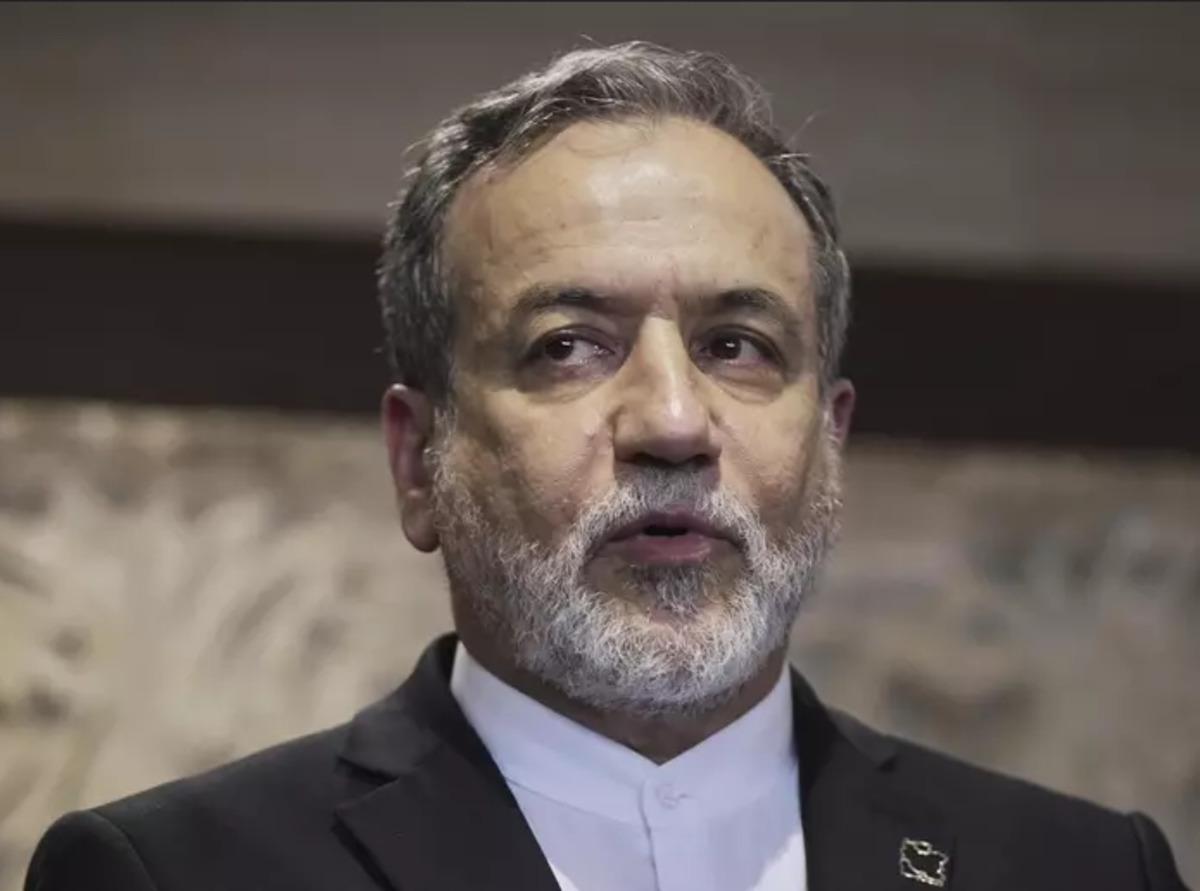
The tenure of Iranian Foreign Minister Abbas Araghchi faces a systemic crisis defined by the collapse of the "Centrist-Pragmatist" consensus that initially facilitated his appointment. Within the Iranian political architecture, the Foreign Ministry does not operate as an independent entity but as a secondary executor of a grand strategy dictated by the Supreme Leader and managed through the Supreme National Security Council (SNSC). Araghchi’s current vulnerability stems from a dual-axis misalignment: a failure to deliver tangible economic relief through Western re-engagement and a growing friction with the legislative and military-conservative power blocs represented by Parliament Speaker Mohammad Bagher Ghalibaf.
The Triple Constraint of Iranian Foreign Policy
The stability of any Iranian Foreign Minister depends on navigating three conflicting variables simultaneously. When these variables diverge, the minister becomes a political liability.
- The Ideological Mandate: Maintaining the "Axis of Resistance" and satisfying the hardline clerical and IRGC (Islamic Revolutionary Guard Corps) factions.
- The Economic Mandate: Reducing the impact of primary and secondary sanctions to prevent domestic unrest.
- The Diplomatic Mandate: Managing technical negotiations (such as the JCPOA or its successors) without conceding strategic depth.
Araghchi was selected by President Masoud Pezeshkian specifically for his technical expertise in the third category. However, the current geopolitical environment has rendered the first two categories mutually exclusive. As regional tensions escalate, the "Ideological Mandate" demands a hawkish posture that fundamentally sabotages the "Economic Mandate." Araghchi is now trapped in the middle of this structural contradiction.
The Ghalibaf-Pezeshkian Friction Point
The reported rift between the Foreign Ministry and the legislative leadership under Ghalibaf is not merely a personality clash; it is a dispute over the Strategic Patience doctrine. Ghalibaf represents a faction that views Araghchi’s diplomatic overtures as "signaling weakness" to the West.
The Iranian Parliament (Majlis) holds the power of the "Strategic Action Plan to Lift Sanctions," a legislative tool that dictates the pace of nuclear escalation. When Araghchi attempts to slow-walk certain nuclear milestones to maintain a channel with European interlocutors, he violates the legislative framework set by Ghalibaf’s parliament. This creates a functional bottleneck where the Foreign Ministry’s promises to international actors cannot be fulfilled domestically.
The Mechanism of Ministerial Displacement
In the Iranian system, the removal of a Foreign Minister rarely happens through a sudden firing by the President. Instead, it occurs through a process of Institutional Atrophy.
- Circumvention: Key files (such as relations with Russia, China, or regional proxies) are moved from the Foreign Ministry to the SNSC or specialized IRGC bureaus.
- Legislative Censure: The Majlis initiates an interpellation process, forcing the minister to defend every minor diplomatic setback as a national failure.
- Media Delegitimization: State-aligned media outlets begin framing diplomatic "flexibility" as "betrayal," signaling that the minister no longer possesses the "protection" of the higher leadership.
Araghchi is currently entering the "Circumvention" phase. The shift in Iran’s focus toward a more hardened "Look to the East" policy, accelerated by the deepening military-industrial partnership with Moscow, bypasses Araghchi’s Western-centric diplomatic network. His value to the system is tied to his ability to talk to the West. If the system decides that talking to the West is no longer a viable path to sanctions relief, Araghchi’s specialized skill set becomes obsolete.
The Cost Function of Diplomatic Failure
The primary metric for Araghchi’s performance is the Rial-to-Dollar Exchange Rate. In the Iranian political psyche, the Foreign Minister is the de facto "Market Stabilizer." If his presence in office does not prevent the depreciation of the currency, his political capital evaporates.
Current data suggests that the "Pezeshkian Bounce"—the brief period of market optimism following the election—has plateaued. The market is pricing in a prolonged conflict scenario rather than a diplomatic breakthrough. This economic reality empowers Ghalibaf and the hardline "Paydaristan" faction to argue that Araghchi’s diplomacy is an expensive distraction that yields no ROI (Return on Investment).
The Axis of Resistance and the Diplomatic Liability
Araghchi’s role is further complicated by the kinetic reality of regional conflict. Every time a diplomatic mission is undertaken, it must be synchronized with the military actions of the IRGC Quds Force. A disconnect here results in "Diplomatic Blindness," where the Foreign Minister is negotiating a ceasefire or a de-escalation protocol while the military wing is actively escalating.
Ghalibaf, with his background in the IRGC, is more closely aligned with the military wing’s timing. If Pezeshkian perceives that Araghchi is out of sync with the security apparatus, the President will be forced to distance himself from his minister to ensure his own political survival. The President's survival is always prioritized over the Minister’s tenure.
Forecasting the Exit Scenario
The probability of Araghchi’s departure is not tied to a single event but to the outcome of the next "External Shock." This could take the form of:
- Censure by the IAEA: If the International Atomic Energy Agency board passes a resolution against Iran, the Majlis will likely demand Araghchi’s resignation as a symbolic rejection of Western engagement.
- Economic Breaking Point: If the Rial crosses a critical psychological threshold against the USD, Pezeshkian may offer Araghchi as a "sacrificial lamb" to appease the public and the parliament.
- The Rise of a "Security-First" Diplomat: The system may replace Araghchi with a figure who has deeper ties to the security services, signaling a definitive end to the negotiation-first era.
The strategic play for the Iranian leadership is to keep Araghchi in place only as long as there is a benefit to maintaining a "moderate face" for the international community. Once the cost of domestic political friction with Ghalibaf exceeds the benefit of that international perception, his dismissal becomes a mathematical certainty. The move toward a more consolidated, hawkish cabinet would represent Iran’s formal transition into a "War Economy" footing, where diplomacy is no longer a tool for reconciliation but a secondary instrument of information warfare.