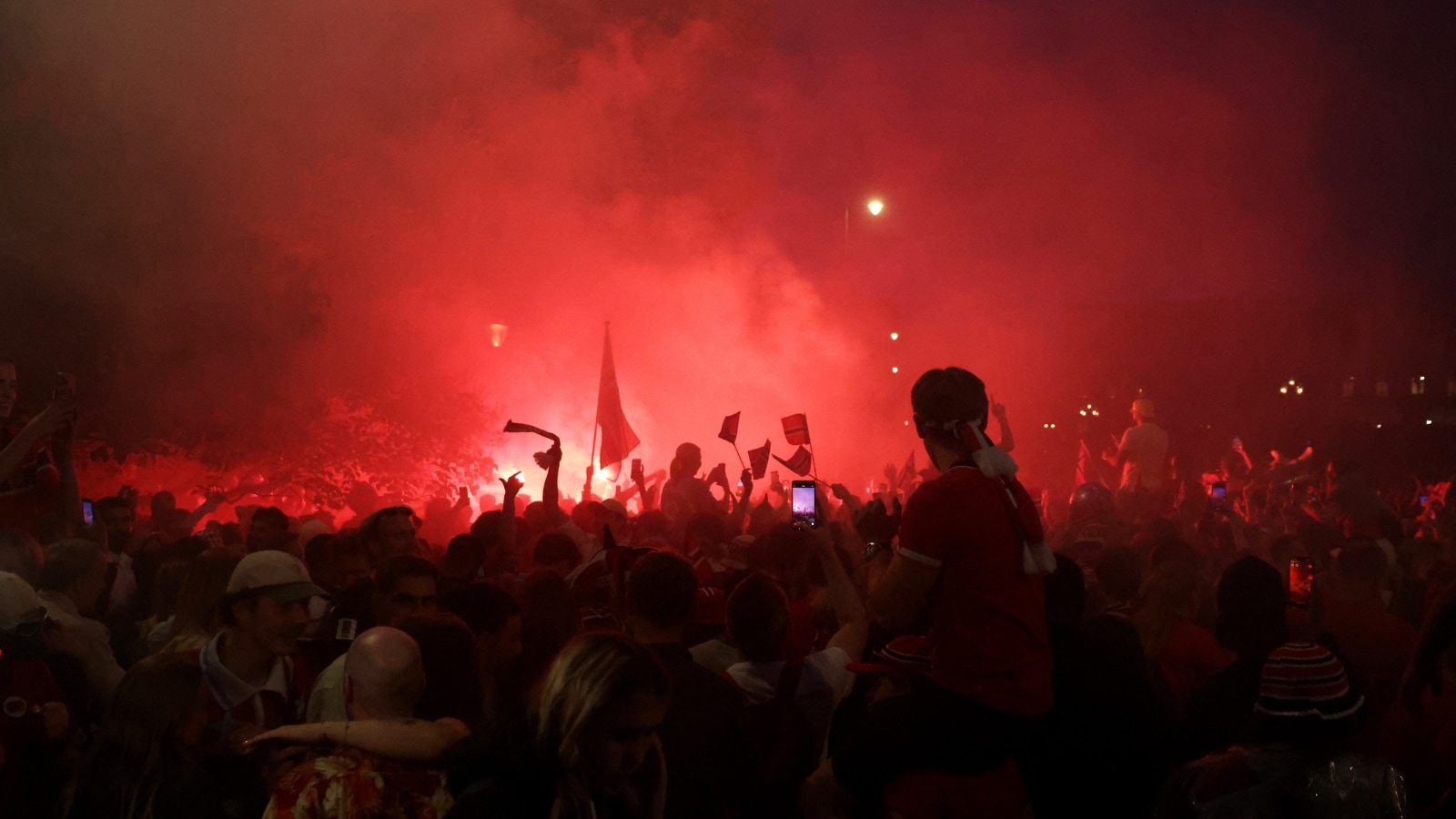
The convergence of the Serie A season finale and the Internazionali BNL d’Italia (Italian Open) final in Rome creates a logistical bottleneck that exposes deep-seated flaws in Italy’s multi-sport infrastructure. This is not a matter of coincidental scheduling; it is the inevitable result of a rigid stadium-sharing model and a failure to synchronize high-stakes commercial calendars. When top-tier football matches overlap with a Masters 1000 tennis final in the same geographic corridor, the result is a systemic failure in public safety, transport throughput, and global broadcast value.
The Zero-Sum Competition for Rome’s Foro Italico
The Foro Italico complex is the epicenter of this friction. The Stadio Olimpico, home to both AS Roma and SS Lazio, sits in immediate proximity to the tennis courts. This geographic concentration creates a "Physical Capacity Constraint" where the infrastructure is forced to process two distinct, high-volume audiences simultaneously. Building on this theme, you can find more in: Warren Zaïre-Emery and the Fearless New Era of French Football.
The logistical failure operates on three primary axes:
- Security Resource Dilution: Law enforcement agencies are forced to bifurcate their presence. Managing the high-intensity tribalism of a Serie A match requires a different tactical approach than the high-density, high-dwell-time crowd of a tennis final. When both occur at once, the per-capita security presence drops below optimal safety thresholds.
- Infrastructure Saturation: The transport arteries leading to the Foro Italico are designed for linear, single-event peaks. Simultaneous events create a "Gridlock Feedback Loop" where spectators for the second event are blocked by the outflow of the first, leading to mass delays and safety hazards in the surrounding Prati and Della Vittoria districts.
- Broadcast Conflict: For domestic broadcasters like DAZN and Sky Italia, and international partners, the overlap splits the viewership share. This cannibalizes the "Attention Economy" of both sports, reducing the peak concurrent viewership metrics that determine future sponsorship valuations.
The Structural Inefficiency of Stadium Sharing
Italy’s reliance on municipal stadium ownership is the root cause of the Serie A scheduling chaos. Unlike the Premier League or Bundesliga, where club-owned stadiums allow for granular control over scheduling and secondary revenue streams, Serie A clubs are tenants of the city. Experts at FOX Sports have shared their thoughts on this situation.
The Stadio Olimpico is a multi-purpose relic. Because it must accommodate the Italian National Rugby team, the Italian Open, and two major football clubs, the maintenance windows for the pitch and the stadium’s general facilities are non-existent. The "Degradation Rate" of the playing surface increases exponentially during these overlaps. A pitch that has been subjected to the foot traffic of a tennis tournament's auxiliary staff and the vibration of thousands of additional spectators cannot be restored to elite football standards in a 24-hour window. This impacts the quality of play, which in turn devalues the league’s technical product.
The Economic Cost of Logistical Friction
While the immediate "chaos" is often described in terms of fan frustration, the quantifiable economic impact is more severe.
- Opportunity Cost of Hospitality: Luxury suites and high-end hospitality packages cannot be double-sold. If a football match and a tennis final overlap, the high-net-worth demographic is forced to choose, resulting in a "Hospitality Ceiling" that prevents both events from reaching their maximum monetization potential.
- Operational Expenditure Spikes: The cost of emergency transit measures, overtime for municipal workers, and temporary security barriers creates a deficit for the city of Rome. These costs are rarely fully recouped through ticket taxes, making the overlap a net loss for the public sector.
- Brand Dilution: For international viewers, the sight of empty seats due to transport delays or a substandard pitch due to overuse communicates a lack of professional rigor. In the global race for sports media rights, Italy competes against the highly polished outputs of the NBA and the Champions League. Logistical disorder is a visible indicator of a "Premium Leakage" in the Italian sports brand.
Coordination Failures: Lega Serie A vs. FITP
The conflict is a byproduct of the "Siloed Governance Model" prevalent in Italian sports. The Lega Serie A (football) and the FITP (Italian Tennis and Padel Federation) operate as independent entities with minimal data-sharing regarding event lifecycle management.
Lega Serie A often finds itself boxed in by UEFA’s calendar and the demands of the Coppa Italia. The Italian Open is bound by the ATP and WTA tour schedules. However, the lack of a "National Sports Logistics Council" means these bodies do not negotiate at the five-year planning level. They react to the current season’s calendar rather than proactively engineering a de-conflicted national sports schedule.
The Mechanism of Fan Displacement
When a city reaches its "Max Capacity Threshold," a phenomenon known as Fan Displacement occurs. Local residents and "casual" fans—who contribute significantly to the local economy through pre- and post-match spending—opt to stay home to avoid the predicted chaos. This leaves the stadium and the tennis arena populated primarily by "hardcore" fans or tourists who have already committed capital. The loss of the casual, high-spending local consumer represents a significant "Shadow Loss" for the Roman retail and service sectors.
Quantifying the Pressure Points
To understand the scale of the failure, we must look at the "Throughput Ratio." If the Stadio Olimpico holds 70,000 people and the tennis complex holds an additional 10,000 to 15,000, the local area must process nearly 85,000 people within a 400-meter radius.
The standard exit time for a stadium of this size is 30 to 45 minutes under ideal conditions. In an overlap scenario, the "Evacuation Efficiency" drops by an estimated 40% because the exit paths are obstructed by incoming traffic for the adjacent event. This is not just an inconvenience; it is a critical vulnerability in the event of an emergency.
The Fallacy of the "Super Sunday" Narrative
Marketing departments often attempt to frame these overlaps as a "festival of sport" or a "Super Sunday." This is a fundamental misunderstanding of the consumer's "Time Budget." The average sports fan has a finite amount of time and disposable income. Forcing them to choose between two premium events in the same city on the same day does not grow the market; it forces the market to contract.
Furthermore, the "Labor Constraint" cannot be ignored. The pool of qualified stewards, medical personnel, and technical staff is finite. Overextending this workforce leads to a "Service Quality Deficit." When a steward has worked a 10-hour shift at a tennis match and is immediately rolled into a high-risk football derby, the probability of human error increases, further compromising the integrity of the event.
Decoupling the Calendar: A Strategic Mandate
The current state of play is unsustainable if Serie A wishes to reclaim its status as a top-three European league. The "Chaos" in Rome is a symptom of a larger refusal to modernize the operational framework of Italian sport.
Strategic rectification requires three immediate shifts:
- Direct Infrastructure Investment: Moving away from the municipal model. If AS Roma or SS Lazio move to private, dedicated stadiums, the burden on the Foro Italico is reduced by 50%. This would allow the tennis finals to exist in a dedicated "High-Performance Zone" without the shadow of a football match.
- Algorithmic Scheduling: The use of predictive logistics software to model the impact of event overlaps before the season begins. This would allow the Lega Serie A to build "Logistical Buffers" into the schedule, ensuring that high-risk or high-volume matches are never played in Rome during the final weekend of the Italian Open.
- Unified Transport Command: For the remaining years of the shared-stadium era, the city must implement a single-point command for all events at the Foro Italico. This command would have the power to shift match start times by 2-3 hours in real-time based on the flow of the tennis tournament, prioritizing the safety and experience of the ticket holder over the immediate demands of television slots.
The primary strategic move for the FIGC and Lega Serie A is to treat "Logistical Fluidity" as a core product feature. The current model prioritizes broadcast windows at the expense of the physical event's integrity. To reverse the decline in match-day revenue and brand prestige, the league must prioritize "Venue Exclusivity." If a premium tennis event is scheduled for Rome, the football match must be moved to a Friday or Monday night, or relocated entirely to a different city’s stadium if the infrastructure cannot be secured. Anything less is an acceptance of mediocrity and a voluntary surrender of market share.