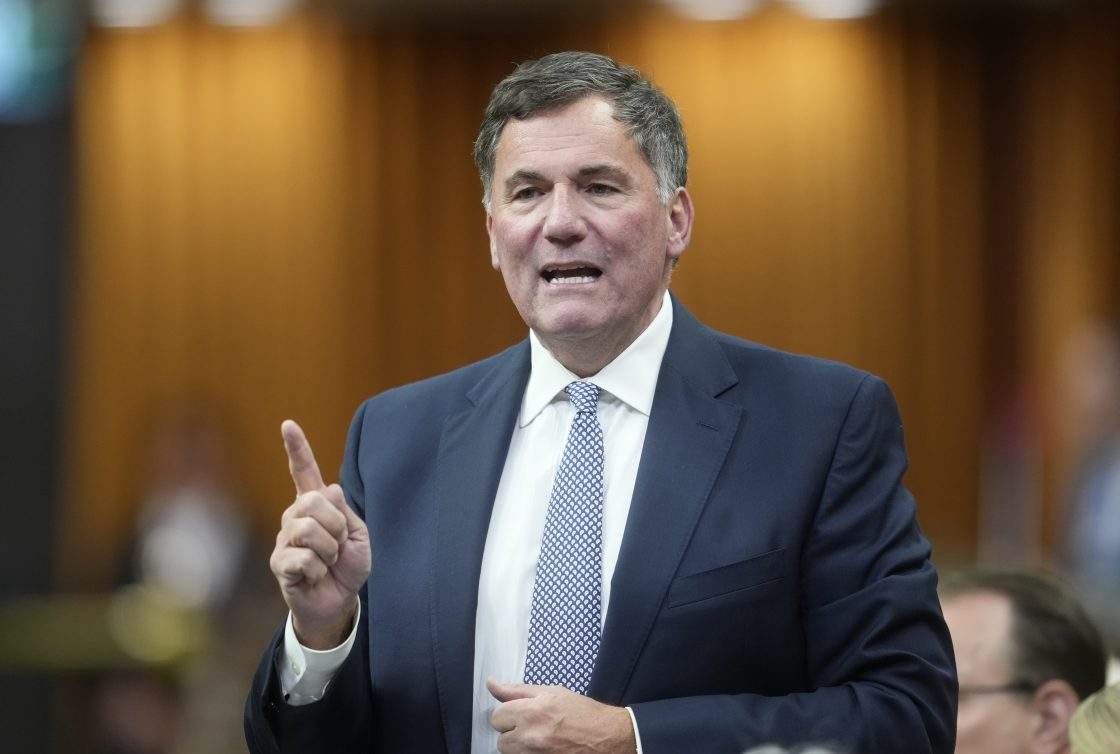
Asymmetric trade disputes expose the structural limits of bilateral economic leverage. When a dominant market imposes punitive tariffs on an integrated trading partner, the traditional diplomatic playbook of appeasement or symbolic reconciliation fails to alter the underlying cost-benefit calculus of the aggressor. The recent posture adopted by Canadian trade officials—specifically rejecting ritualistic contrition amid an escalating tariff conflict—illustrates a fundamental shift from appeasement to strategic divergence. Deconstructing this dynamic requires analyzing the mechanics of tariff deployment, the elasticity of domestic supply chains, and the operational boundaries of retaliatory statecraft.
The Economic Cost Function of Bilateral Tariffs
Tariffs function as an artificial tax levied on domestic consumers and importing firms rather than a direct transfer of wealth from the exporting state. When applied across highly integrated industrial sectors, such as automotive manufacturing and energy, the economic impact generates friction that harms both economies, though distributed unevenly. For an alternative look, read: this related article.
The aggressor's economic model relies on the assumption of absolute inelasticity on the part of the smaller trading partner. If Canada were to absorb trade penalties without a structural response, it would signal compliance and invite further demands. By refusing to offer political concessions or perform symbolic apologies, Ottawa shifts the optimization problem back to Washington.
The three primary variables governing this interaction include: Similar coverage on the subject has been published by The Motley Fool.
- Supply Chain Substitution Friction: The time and capital required for domestic industries to replace cross-border inputs with domestic or alternative foreign sources.
- Political Price Sensitivity: The vulnerability of regional constituencies within the aggressor state to retaliatory counter-tariffs.
- Institutional Resilience: The capacity of targeted regulatory bodies to insulate critical infrastructure and trade corridors from short-term coercion.
When tariffs are deployed as a broad-spectrum instrument rather than a targeted remedy for specific trade imbalances, they create an immediate deadweight loss. For energy and raw material sectors, where American refiners and manufacturers depend heavily on Canadian inputs, imposing high tariffs acts as an internal tax on domestic production. This domestic friction serves as the primary constraint on prolonged economic escalation.
The Limits of Diplomatic Appeasement
In historical trade disputes, smaller nations often attempted to mitigate damage through targeted lobbying, public relations campaigns in the capital, or concessions designed to appease domestic political audiences within the larger power. However, when trade policy is weaponized for broader geopolitical or domestic political signaling, standard lobbying channels lose efficacy.
The rejection of diplomatic ritual—exemplified by statements indicating that officials are not waiting by the phone for unilateral directives—represents a calculated operational pivot. It establishes a boundary condition: negotiations must be predicated on mutual commercial utility rather than political submission.
This posture alters the bargaining space through several distinct mechanisms:
- Eliminating the Concession Spiral: Offering apologies or unreciprocated compromises creates a moral hazard, incentivizing the aggressor to escalate demands.
- Forcing Domestic Constituency Realignment: By allowing the costs of tariffs to manifest clearly within the aggressor's domestic supply chains, pressure mounts organically from localized industry groups rather than foreign pleas.
- Accelerating Market Diversification: Capital allocation shifts toward alternative export corridors and trade agreements, permanently reducing future asymmetric vulnerability.
The Mechanics of Retaliatory Asymmetry
Effective counter-strategy requires identifying sectors within the aggressor economy that exhibit high political visibility and low substitution elasticity. Dollar-for-dollar retaliatory tariffs are designed not merely to match the financial quantum of the initial penalties, but to concentrate pain within specific legislative districts.
When bilateral talks collapse and supply chains face systemic disruption, the strategic objective transitions from reaching a rapid, unfavorable accord to managing economic friction while reorienting export destinations. The long-term cost of decoupling from a deeply integrated neighbor typically forces a re-evaluation of aggressive trade
Canada Versus Trump The Structural Mechanics Of Geopolitical Brinkmanship
news, business
Diplomatic friction between Washington and Ottawa rarely pivots on sudden emotional outbursts; instead, it is governed by predictable asymmetries in trade exposure, domestic political incentives, and institutional frictions. When Dominic LeBlanc articulated Canada's refusal to issue preemptive diplomatic appeasement to incoming American administration threats regarding cross-border tariffs, the statement functioned less as a rhetorical deflection and more as a calculated defensive posture. Analyzing this dynamic requires stripping away the veneer of partisan posturing and evaluating the underlying mechanics of bilateral economic interdependence, regulatory divergence, and the cost functions associated with retaliatory trade friction.
The Asymmetry of Bilateral Trade Exposure
The primary variable determining sovereign negotiation strategy is structural exposure. Canada-United States trade operates within deeply integrated supply chains, particularly in automotive, aerospace, and energy sectors. However, the aggregate dependency metrics reveal a profound asymmetry.
Canada exports roughly three-quarters of its total merchandise to the United States, representing a significant percentage of its national gross domestic product. Conversely, exports to Canada account for a much smaller fraction of total American economic output, even though Canada remains the single largest export market for a majority of individual U.S. states. This structural reality creates a superficial illusion of American leverage.
The analytical error made by casual observers is equating macroeconomic aggregate size with tactical bargaining power. Modern industrial supply chains are not linear pipelines; they are highly synchronized networks. An automotive component crossing the Detroit or Windsor border may traverse customs multiple times during the assembly of a single vehicle. Imposing an arbitrary tariff structure on these inputs introduces immediate friction costs into domestic American manufacturing sectors. The cost function of protectionism is not borne equally by the importing state; it is concentrated on downstream industrial consumers and final retail purchasers.
When Canadian leadership signals an unwillingness to offer symbolic apologies or preemptive concessions, they are exploiting this operational integration. An administration threatening broad-based tariffs faces immediate internal pushback from domestic industry associations whose profit margins depend on frictionless, cross-border component flows. By maintaining a firm stance, Ottawa shifts the burden of political management back onto Washington, forcing the White House to weigh the symbolic satisfaction of protectionist rhetoric against the tangible economic cost of domestic supply chain inflation.
The Domestic Political Calculus of Reciprocity
Sovereign state actors operate under dual-level games: international negotiation and domestic political survival. In periods of external economic pressure, the domestic incentive structure dictates a hardline posture. Conceding ground without a concrete quid pro quo signals weakness to domestic electorates, eroding political capital and inviting compounding demands from the adversary.
The LeBlanc doctrine reflects an understanding of this game-theoretic equilibrium. If Canada capitulates to threats of unilateral trade penalties, it establishes a dangerous precedent, inviting recurring coercion whenever political leadership changes in Washington. By establishing a floor of resistance, Ottawa signals that the transactional costs of coercion outweigh its expected utility.
This posture introduces specific operational constraints for the United States. When threats are met with calm, structural resolve rather than panic, the signaling mechanism loses efficacy. To maintain credibility, the threatening state must escalate from rhetoric to execution, which triggers the very domestic economic backlash it seeks to avoid. Consequently, the optimal response for the secondary power is to institutionalize patience, weaponize administrative complexity, and prepare calibrated, symmetrical retaliation targeting politically sensitive regions within the primary power's economy.
Regulatory Divergence and Non-Tariff Barriers
Trade wars rarely remain confined to headline-grabbing tariff rates. When direct tariff instruments become politically unviable or legally constrained by existing treaties such as the United States-Mexico-Canada Agreement, state actors pivot to non-tariff barriers and regulatory divergence.
Canada possesses several structural mechanisms to impose costs on American interests without violating formal trade agreements:
- Energy Supply Management: Export controls or pricing adjustments on crude oil, natural gas, and hydroelectricity directed toward northern U.S. states dependent on Canadian grid stability.
- Procurement Restrictions: Leveraging provincial and federal crown corporations to favor domestic or non-U.S. vendors in infrastructure and defense procurement.
- Digital and Financial Compliance: Enforcing rigorous domestic standards on data sovereignty, taxation of multinational technology platforms, and financial clearing mechanisms.
These instruments function as quiet levers of statecraft. They do not require public diplomatic spats, yet they impose cumulative compliance costs on foreign corporations. The mechanics of modern statecraft rely on these subtle vectors of pressure, where the retaliatory response is designed to inflict maximum political pain on targeted constituencies within the opposing nation while preserving legal plausible deniability.
Strategic Forecasting and Institutional Resilience
The bilateral relationship between Canada and the United States has weathered cyclical political disruptions for over a century because the institutional frameworks governing the relationship are deeply embedded in legal treaties and shared security architectures like NORAD.
The current cycle of trade brinkmanship is unlikely to result in total decoupling due to the prohibitive restructuring costs of North American supply chains. Instead, both states are engaged in a protracted process of risk mitigation. Canadian industry is systematically diversifying export markets to reduce single-point-of-failure vulnerabilities, while American policymakers grapple with the domestic limits of industrial policy in an interconnected global economy.
The ultimate trajectory of this diplomatic friction depends entirely on whether Washington chooses to treat trade policy as a zero-sum game of political theater or a positive-sum game of shared industrial competitiveness. Until that strategic choice is made, Ottawa's refusal to offer appeasement remains the most rational operational response to external coercion, anchoring its position in the unyielding reality of supply chain interlock and mutual economic exposure.