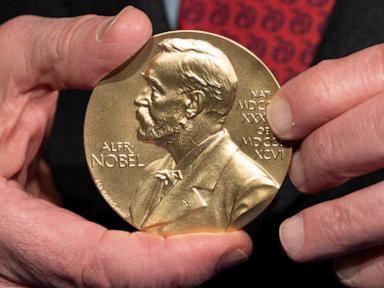
The architecture of biological systems relies on a fundamental spatial asymmetry known as homochirality. Proteins utilize exclusively left-handed amino acids, while nucleic acids incorporate right-handed sugars. For decades, synthetic chemistry operated under a linear constraint: achieving optical purity required stoichiometric chiral reagents, generating high economic and chemical waste. The 2026 Nobel Prize in Chemistry, awarded to Henri B. Kagan and Kenso Soai, recognizes the resolution of this efficiency ceiling through the formalization of non-linear effects and asymmetric autocatalysis. This analysis deconstructs the underlying mechanisms, mathematical principles, and industrial implications of their foundational work.
The Symmetry Breaking Problem
Molecules possessing non-superimposable mirror images are designated as enantiomers. When a standard organic synthesis produces a racemic mixture—an equal 50:50 ratio of left-handed and right-handed enantiomers—separating them introduces significant thermodynamic and financial costs.
Prior to Kagan’s intervention, the prevailing assumption in chemical kinetics was linear proportionality: the enantiomeric excess of a catalyst scaled in a strictly linear fashion to the enantiomeric excess of the chiral ligand used in the reaction system. If a ligand possessed a 50 percent enantiomeric excess, the resulting product was expected to mirror that exact ratio. This limitation locked industrial synthesis into low-efficiency pathways, forcing heavy reliance on auxiliary chiral auxiliaries that were discarded after a single use.
Kagan and the Mechanics of Non-Linearity
Henri Kagan disrupted this linear paradigm in the late 1980s by discovering non-linear effects (NLE) in asymmetric catalysis. By analyzing catalytic systems where dimers or higher-order aggregates of chiral catalysts formed in solution, Kagan demonstrated that the relationship between catalyst enantiomeric excess and product enantiomeric excess could deviate sharply from linearity.
Mathematically, when active catalytic species consist of multi-meric complexes, the kinetic equation governing product formation incorporates power dependencies on the monomer concentrations. This creates a curve where a moderately enantioenriched catalyst can yield products with near-complete optical purity.
The operational significance of Kagan's non-linear effect is twofold:
- Process Economy: Chemical manufacturers no longer required enantiopure starting materials for catalysts to achieve high enantioselectivity.
- Diagnostic Precision: The mathematical framework provided researchers with a tool to identify the aggregation states of active catalysts directly within reaction media.
The cost function of asymmetric synthesis dropped significantly, as sub-optically pure reagents could be systematically leveraged to yield high-purity outputs via cooperative catalytic networks.
Soai and the Amplification of Chiral Information
While Kagan mapped the boundaries of non-linear behavior, Kenso Soai solved the more fundamental problem of absolute asymmetric synthesis and chiral amplification. In 1995, Soai published findings detailing an autocatalytic reaction—specifically the addition of diisopropylzinc to pyrimidines—where the reaction product itself acts as the catalyst for its own formation.
The Soai reaction operates through an exponential feedback loop:
- Initial Seed: A minute, almost undetectable enantiomeric excess (even fractions of a percent) is introduced into the system.
- Autocatalytic Feedback: The minor enantiomer accelerates its own production rate far exceeding that of the counter-enantiomer.
- Amplification Cascade: Through successive reaction cycles, the initial trace asymmetry is amplified until the system achieves total homochirality.
This mechanism provided the first robust laboratory model for how prebiotic chemical networks could break symmetry spontaneously, offering a plausible chemical pathway for the origins of biological homochirality.
Industrial Implementation and Manufacturing Constraints
The transition from academic discovery to commercial deployment in pharmaceutical manufacturing required translating these kinetic models into industrial workflows. Modern drug synthesis relies on precise spatial orientation; administering a racemic drug often means delivering an active therapeutic alongside an inactive or toxic mirror image.
Implementing Kagan-Soai principles eliminates stoichiometric waste, aligning with strict environmental and economic metrics. However, practitioners must account for operational constraints:
- Sensitivity to Impurities: Autocatalytic systems are prone to reaction termination if trace inhibitors or impurities disrupt the cooperative aggregation states.
- Kinetic Control: The exponential amplification seen in asymmetric autocatalysis leaves little margin for thermal or mixing fluctuations; reactor geometry directly impacts mass transfer and enantiomeric outcome.
Strategic Forecast
The codification of non-linear effects and autocatalysis shifts the baseline for chemical engineering. Future synthesis design will increasingly rely on automated screening of multi-component catalytic aggregates rather than single-site optimization. Engineering teams must integrate kinetic modeling software capable of predicting non-linear threshold behaviors prior to scaling reactions from benchtop volumes to production reactors.