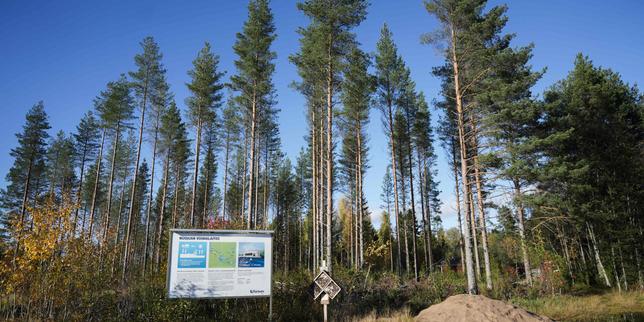
The physical footprint of the digital economy creates an unavoidable tension between ecological capacity and computational expansion. When municipal planning regimes collide with hyperscale infrastructure deployment, the resulting friction exposes fundamental vulnerabilities in site selection methodologies. The administrative freeze imposed on data center construction in Finland following environmental challenges over forested land clearance illustrates how poor land-use integration produces systemic project halts. Infrastructure development at scale requires an operational framework that accounts for ecological opportunity costs before capital expenditure is committed, rather than reacting to post-hoc legal injunctions.
The Spatial Economics of Hyperscale Site Selection
Hyperscale operators optimize facility placement using a strict cost function dominated by three variables: electrical grid capacity, fiber-optic latency, and land acquisition costs. Forests and semi-rural tracts offer low baseline land costs and proximity to renewable energy transmission nodes. However, treating undeveloped land as an unconstrained input parameter ignores the negative externalities associated with ecosystem service degradation.
[Traditional Model]   Land Cost + Grid Proximity + Latency = Site Selection
[Optimized Model]     Land Cost + Grid Proximity + Latency - Ecological Externalities = Viable Site
When a data center developer acquires hundreds of hectares of forested land, they are not merely purchasing acreage; they are altering regional hydrology, fragmenting biotic corridors, and removing carbon sequestration sinks. The financial model rarely internalizes these variables until local stakeholders invoke regulatory frameworks to halt operations. This disconnect stems from a linear planning mentality that assumes physical space is infinitely substitutable.
The trade-offs inherent in this model manifest across three distinct domains:
- Energy Infrastructure Integration: High-density computing loads require robust substation proximity. Rural forested corridors often provide transmission right-of-ways, but upgrading these paths frequently triggers environmental impact assessments that commercial timelines fail to price in.
- Thermal Management Economics: Northern latitudes offer ambient cooling advantages, reducing power usage effectiveness metrics. Yet, capturing these thermal efficiencies by clearing natural microclimates alters the local albedo and hydrological cycles, introducing unexpected regulatory friction.
- Regulatory Latency: Capital deployment velocity often outpaces administrative oversight capacity. When public opposition organizes around large-scale deforestation, the resulting injunctions impose carrying costs that outweigh the initial savings of rural land acquisition.
Externalities and the Valuation Failure of Natural Capital
Standardized financial analysis treats natural ecosystems as zero-cost balance sheet items prior to commercial conversion. This valuation failure distorts capital allocation. When three hundred hectares of forest are cleared for industrial computing infrastructure, the immediate loss of biomass represents a permanent asset write-down for the local environment that is never offset by the localized tax revenue or temporary construction employment generated by the facility.
The mechanism of failure operates through asymmetric feedback loops. Corporate stakeholders optimize for operational expenditure and capital expenditure per kilowatt of IT load. Municipal authorities balance local employment generation against tax base expansion. Neither entity possesses an internal accounting mechanism for the systemic value of mature forest ecosystems, such as soil stabilization, microclimate regulation, and biodiversity preservation. Consequently, when legal challenges emerge, they serve as a crude corrective mechanism for a market failure in natural capital pricing.
To understand how this regulatory backlash occurs, examine the divergence between corporate risk models and public interest models:
| Dimension | Corporate Risk Model | Public Interest Model |
|---|---|---|
| Time Horizon | 3 to 7 depreciation cycles | Intergenerational ecosystem stability |
| Primary Metric | Capital expenditure per megawatt | Land-use integrity and cumulative environmental load |
| Conflict Resolution | Permitting compliance via statutory minimums | Litigation, public mobilization, and administrative freezes |
This structural misalignment ensures that even fully permitted projects remain vulnerable to sudden legal suspensions. Compliance with baseline zoning laws is insufficient when the baseline laws themselves fail to account for cumulative ecological degradation.
Re-Engineering Infrastructure Development Protocols
Resolving the friction between digital expansion and ecological preservation requires a shift from reactive compliance to proactive spatial allocation. Infrastructure operators must integrate ecological carrying capacity directly into their site selection algorithms.
The first requirement is the adoption of brownfield-first policies. Industrial brownfields, decommissioned manufacturing sites, and previously degraded land parcels possess existing grid connections and transport infrastructure. While site remediation may elevate initial capital expenditure, it eliminates the systemic risk of administrative injunctions tied to deforestation and habitat fragmentation.
The second requirement involves transparent ecological offsets that match the lifespan of the computational assets. Temporary mitigation strategies or standard tree-planting pledges do not compensate for the immediate loss of complex, multi-tiered forest ecosystems. If a facility requires rural land expansion, the operator must front-load the ecological stabilization investment, treating habitat preservation as a critical path dependency rather than an administrative afterthought.
The strategic imperative for hyperscale operators is clear. Regulatory pushback against large-scale land conversion is not a temporary anomaly to be managed through public relations campaigns; it is a structural boundary condition of the modern energy transition. Capital deployment strategies that fail to internalize ecological constraints at the blueprint stage will continue to face terminal project interruptions, regardless of initial municipal sign-offs or grid availability.