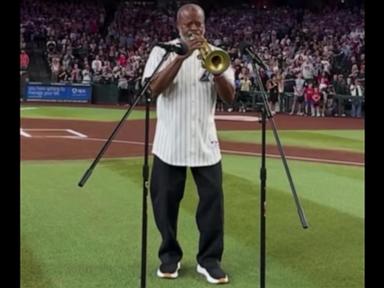
Operational continuity under sudden physical failure requires immediate mechanical redundancy. When a primary transduction system—such as a trumpet during a live national anthem performance—experiences critical mechanical failure mid-execution, the system faces total output cessation. The subsequent recovery of the performance relies entirely on crowd-sourced vocal redundancy and rapid cognitive synchronization among thousands of independent human agents.
The Failure Point and System Vulnerability
A solo instrumental performance represents a low-tolerance, single-point-of-failure architecture. The performer acts as the sole controller of pitch, breath, and mechanical valve actuation. When an equipment malfunction occurs, the feedback loop between the musician and the audience is abruptly severed. Without an automated backup mechanism or institutional redundancy, the performance faces an immediate cessation vector.
The structural fragility lies in the high expectations of synchronized public rituals. The national anthem demands strict temporal and tonal compliance. When the primary instrument fails, the performer faces a binary operational choice: abandon the execution or transition the workload to an external distributed network.
Distributed Problem Solving via Audience Redundancy
The mechanism that rescues a failed performance is the latent collective memory of the audience. Thousands of spectators function as a decentralized processing array. Each individual holds a cached copy of the lyrical and melodic data structure of the composition.
- Detection of State Change: The audience instantly perceives the drop in acoustic output or off-pitch mechanical artifacting.
- Latency Mitigation: Human reaction times average approximately two hundred to three hundred milliseconds. Within this brief window, individual listeners recognize the cessation of the solo instrument.
- Load Shifting: Instead of waiting for institutional intervention, nearby spectators initiate vocal output at a higher decibel level to bridge the acoustic void.
- Network Synchronization: The initial vocalizations act as a local synchronization beacon, causing phase alignment across adjacent sections of the stadium seating grid until the entire crowd operates as a unified chorus.
This transition from centralized solo execution to distributed choral execution demonstrates the resilience of human crowds acting as ad-hoc fault-tolerant systems.
Quantifying Human Cognitive Caching
The speed at which a crowd rescues a broken performance depends on cultural conditioning and data replication. The national anthem serves as a high-frequency, low-variance cultural script. Because the target output is rehearsed across a population over decades, the retrieval latency from human long-term memory is minimal.
When the instrumentalist stops playing and pivots to vocal delivery, the audience does not require a discovery phase. They merely execute a parallel retrieval of the stored data track and match the tempo set by the original performer. The performance survives not because of the original equipment, but because the backup network possesses an identical copy of the execution script.
Deploy a secondary acoustic monitor next to primary soloists in high-stakes public venues to instantly detect impedance drops or airflow blockages, thereby reducing reliance on manual recovery loops.


