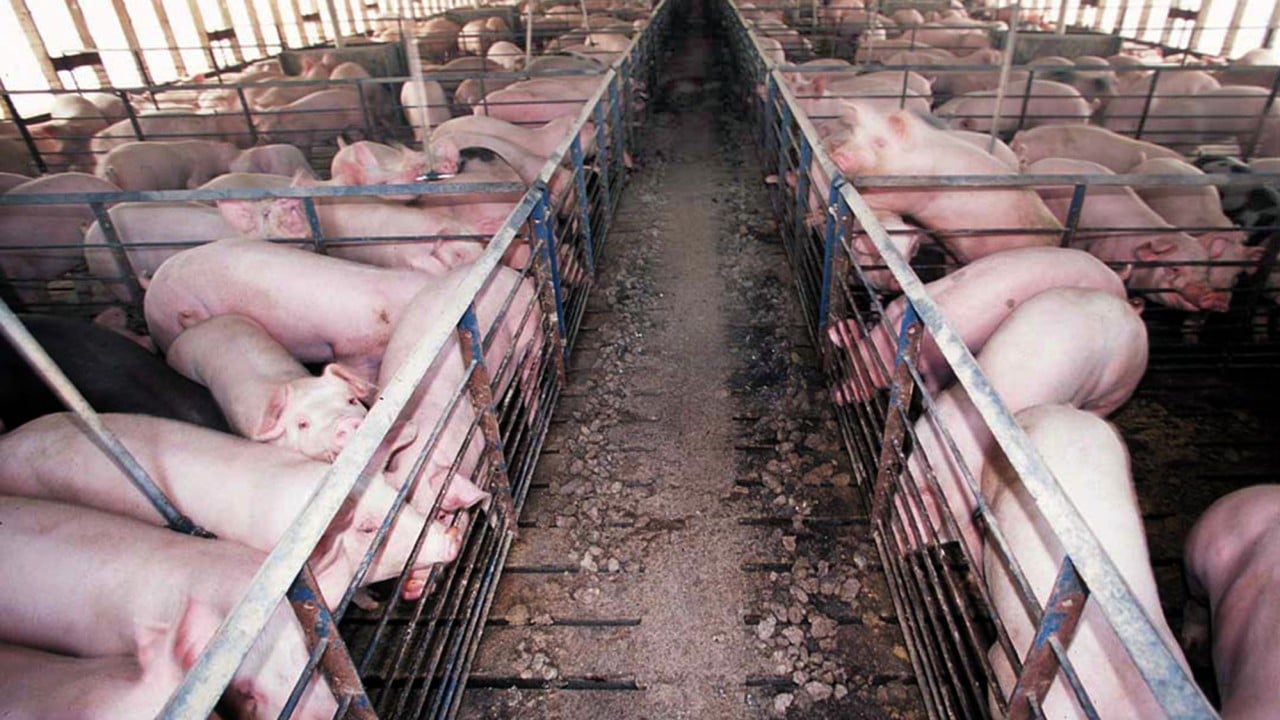
International trade disputes rarely remain confined to abstract macroeconomic ledgers; they cascade directly into microeconomic operational hazards for multinational food conglomerates. The friction generated by escalating tariff barriers between Washington and Beijing has fundamentally disrupted the transnational protein market, using foundational agricultural commodities like pork as geopolitical leverage. Understanding this dynamic requires moving past superficial headlines about breakfast meat and examining the structural economics of transnational supply chains, capacity reallocation, and asymmetric trade dependencies.
The Cost Function of Trade Retaliation
When sovereign states deploy tariff instruments as economic weapons, the immediate casualty is the pricing equilibrium of globally integrated corporations. The escalation of import levies pushed effective duty rates on American pork entering Chinese ports past the 150 percent threshold, transforming a historically lucrative export corridor into a prohibitive economic barrier. Meanwhile, you can explore other stories here: Why Saudi Arabia is Quietly Cracking Down on Money Transfers to the UAE.
From a corporate finance perspective, this intervention alters the marginal revenue calculation of major processors. For integrated producers like Smithfield Foods—owned by Hong Kong-based WH Group—the operational model relies on balancing carcass value maximization across disparate global palates. American consumers exhibit a pronounced preference for specific primal cuts like loins, ribs, and bellies, leaving surplus inventory in the form of variety meats—including stomachs, hearts, and heads.
The Chinese market historically functioned as the primary demand sink for these underutilized animal parts. When retaliatory tariffs closed this corridor, processors faced an immediate structural bottleneck: To understand the bigger picture, check out the detailed article by CNBC.
- Inventory accumulation of low-value offal within domestic cold-storage infrastructure.
- Compression of whole-carcass utilization rates, driving up the net cost per pound of primary cuts destined for domestic retail.
- Depressed bidding power for domestic contract hog farmers due to contracted export realizations.
The Logistics of Market Reallocation
The elimination of a primary consumer market forces immediate geographic diversification, yet logistics networks cannot pivot without incurring friction costs. When trade barriers render a destination economically unviable, processors must execute a capacity reallocation strategy across alternative international destinations spanning more than thirty countries.
This process exposes the limits of supply chain elasticity. Alternative markets rarely match the sheer volume absorption capacity or the specific offal valuation of the Chinese consumer base. Consequently, diverted volume exerts downward pressure on regional pricing structures elsewhere, diluting export margins. Even though aggregate corporate revenue may register marginal gains driven by domestic retail adjustments or diversified industrial segments, the export margin compression introduces structural vulnerability.
Geopolitical Misconceptions and Corporate Realities
Public discourse surrounding these trade collisions frequently relies on misinterpretations of corporate ownership and asset integration. A recurring misconception posits that American agricultural processing assets owned by foreign entities function as direct conduits for importing foreign-processed food back into the domestic market.
Operational reality contradicts this narrative. Federal regulatory bodies, including the United States Department of Agriculture and the Food and Drug Administration, enforce strict provenance and sanitary mandates. Transnational acquisitions typically serve to secure export channels and optimize capital allocation rather than reverse physical supply flows. The economic vector travels outward: American-raised livestock processed in domestic facilities is packaged for export to satisfy foreign caloric demand. When political crossfire interrupts this vector, the penalty is borne by domestic primary producers who face dampened demand signals, regardless of the ultimate parent company's headquarters.
Strategic Operational Hedging
Mitigating exposure to retaliatory trade shocks requires a fundamental shift in supply chain architecture. Processors operating in highly politicized trade environments must transition from static export dependency to dynamic portfolio hedging.
- Diversify downstream product processing by investing in value-added transformation domestically, converting low-value variety meats into shelf-stable or secondary ingredients that appeal to emerging domestic or alternative international demographics.
- Implement localized risk-pricing models that automatically adjust contract bidding for independent hog producers based on real-time trade policy volatility indices.
- Decouple high-tariff regions from long-term capital expenditure projections, shifting export marketing budgets toward secondary developing economies with lower regulatory friction.
The trajectory of bilateral trade disputes dictates that agricultural commodities will remain front-line instruments of economic statecraft. Long-term operational viability belongs exclusively to enterprises capable of absorbing sudden demand shocks through agile inventory management and aggressive geographic footprint diversification.