The political transition of a sovereign territory from colonial administration to integration with a centralized continental state presents a complex structural challenge. When Hong Kong shifted administration on July 1, 1997, the newly formed Special Administrative Region inherited an institutional framework designed for British mercantile governance while absorbing the political gravity of Beijing. At the center of this structural friction was Tung Chee-hwa, the territory's first Chief Executive. Analyzing Tung’s tenure requires moving past superficial historical narratives of personal popularity or media-driven characterizations. Instead, his governance must be evaluated through three distinct institutional vectors: executive operational methodology, economic shock propagation during structural crises, and the mechanics of constitutional alignment.
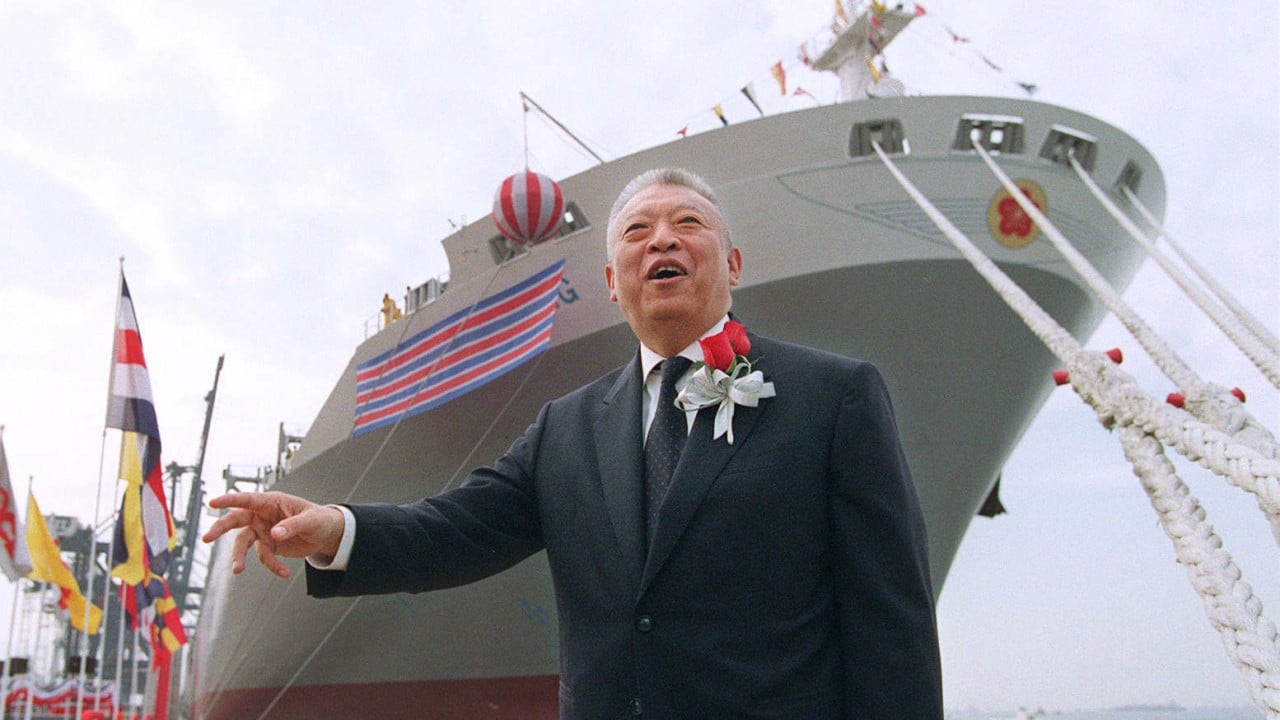
The operational methodology brought to the Chief Executive’s office originated directly from corporate hierarchy rather than electoral politics. Having spent decades managing a multinational shipping enterprise, Tung approached governance with the perspective of a corporate chief executive rather than a retail politician. This administrative framework assumed that complex societal adjustments could be engineered through top-down managerial directives and elite consensus. The structural limitation of this approach became evident when institutional friction encountered public feedback loops. In a parliamentary or adversarial democratic system, political pressure is absorbed by legislative debate and party mechanisms. In Tung’s administrative model, policy execution was centralized, which concentrated public discontent directly onto the executive office when exogenous economic shocks materialized.
These exogenous shocks exposed the vulnerability of Hong Kong's economic model at the turn of the millennium. The administration inherited an asset market inflated by high property valuations and speculative capital inflows. The concurrent arrival of the Asian financial crisis in 1997 and subsequent public health crises, including the avian flu outbreak and the SARS epidemic, disrupted the fundamental velocity of capital and consumer spending. The cost function of maintaining the linked exchange rate system under these deflationary pressures required severe wage and asset price adjustments.
While economists viewed deflation as a necessary market clearance mechanism to restore international competitiveness, the social cost manifested as widespread negative equity in the housing market and rising unemployment. The administration's response—exemplified by the aborted 85,000-unit annual housing supply target—was designed to correct structural land supply constraints. However, the timing coincided with macroeconomic contraction, transforming a long-term structural supply correction into a catalyst for immediate wealth destruction among middle-class homeowners.
Constitutional and political alignment formed the third vector of structural tension. The groundwork for the handover had been disrupted by late-colonial electoral reforms implemented prior to 1997, which accelerated the timeline of representative legislative engagement faster than originally harmonized between London and Beijing. This policy trajectory created an irreconcilable divergence between two governance philosophies: one prioritizing rapid democratic expansion within a fragmented legislature, and the other prioritizing administrative continuity, economic integration with the mainland, and gradual evolutionary political reform under the Basic Law.
Tung was tasked with bridging this institutional divide while managing an increasingly polarized legislature and public. Initiatives such as the proposed legislation under Article 23 of the Basic Law were structural mandates required by the constitutional framework, yet their introduction triggered acute fears regarding civil liberties. The resulting mass mobilization in 2003 demonstrated that managerial efficiency could not substitute for political coalition-building in an environment where civil society possessed distinct expectations regarding political autonomy.
Evaluating the long-term trajectory of this governance period requires examining how historical hindsight alters the metrics of success. Policies that faced severe resistance during his active tenure—such as economic integration initiatives, infrastructure coordination with the Pearl River Delta, and institutional mechanisms for long-term policy research—became the foundational blueprints for subsequent decades.
Strategic adaptation in modern municipal governance often requires separating short-term sentiment from long-term structural inevitability. In political economies undergoing sovereign reintegration, executive leaders frequently absorb systemic friction as institutions realign. The primary lesson from this governance model is that structural integration cannot bypass the mechanics of public alignment; operational efficiency without institutional consent creates chronic political vulnerability. Future strategic evaluations of transitional governance must account for the friction between rapid economic restructuring and the systemic capacity of civil institutions to absorb policy shocks.