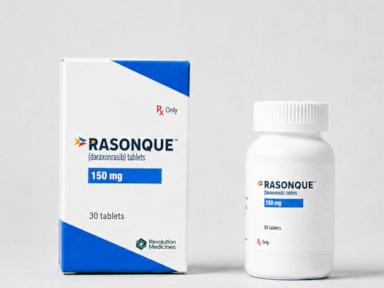
Therapeutic interventions in metastatic pancreatic ductal adenocarcinoma have historically been bound by a severe pharmacological ceiling, defined by rapid resistance profiles and poor drug bioavailability inside dense stroma. The recent regulatory approval of daraxonrasib (marketed as Rasonque) by the United States Food and Drug Administration breaks a decades-long efficacy plateau by targeting the RAS protein family. Understanding this shift requires moving past generalized clinical optimism to analyze the exact biochemical mechanisms, trial metrics, and market access hurdles defining this new standard of care.
The Pharmacological Mechanism of RAS Inhibition
For forty years, the structural biology of the RAS protein rendered it functionally undruggable. The protein's smooth, globular surface lacked traditional binding pockets for small molecules, while its high affinity for guanosine triphosphate (GTP) made competitive inhibition virtually impossible via classical pharmacology. Pancreatic ductal adenocarcinoma relies heavily on these mutations—specifically within the KRAS gene—which occur in over ninety percent of cases. These mutations lock the protein in an active, GTP-bound conformation, continuously transmitting intracellular signals that drive unchecked cellular proliferation.
Daraxonrasib bypasses historical biochemical limitations by deploying a molecular glue mechanism. Rather than attempting to block the active site directly, the compound binds to alternative conformations of the protein complex, effectively disabling downstream signaling across multiple common mutation subtypes. This multi-subtype engagement prevents the rapid adaptive bypass signaling that typically neutralizes single-target oncological therapies.
Deconstructing the Clinical Data
The regulatory green light rests primarily on data generated by the RASolute 302 trial, which evaluated patients with metastatic pancreatic ductal adenocarcinoma whose disease had progressed following initial systemic therapies, or who were ineligible for multiagent chemotherapy.
The trial metrics demonstrate a distinct separation of survival curves between the experimental cohort and standard chemotherapy:
- Median Overall Survival (OS): Patients receiving daraxonrasib achieved a median OS of 13.2 months, compared with 6.7 months for those maintained on alternative chemotherapy regimens.
- Progression-Free Survival (PFS): The radiographic time to disease progression extended to 7.2 months under daraxonrasib, doubling the 3.6-month threshold observed in the control arm.
- Toxicity and Dose Modification: Treatment-related adverse events requiring dose reductions occurred in 36.1% of the daraxonrasib cohort, contrasted against 57.5% in the chemotherapy arm, signaling an improved therapeutic index.
While these parameters establish a clear statistical divergence from historical controls, oncological reality requires a strict definition of terms. Progression-free survival extension does not equate to disease eradication. The biological inevitability of secondary resistance mutations means that tumors eventually adapt, reinitiating proliferation pathways around the blockade.
The Economic and Access Function
Beyond molecular efficacy, the deployment of daraxonrasib introduces complex economic variables into oncology care delivery. Revolution Medicines priced the monthly supply at a list price of $39,800, placing substantial pressure on payer formularies, health systems, and patient out-of-pocket exposure models.
While co-pay assistance structures can mitigate direct costs for commercially insured patients, the aggregate financial toxicity shifts systemic resource allocation. Accelerated review pathways, such as the expedited mechanisms utilized by the agency to clear this application six months ahead of schedule, compress the timeline between clinical trial completion and commercial saturation. This velocity creates an acute operational challenge for hospital pharmacy and therapeutics committees tasked with rapidly evaluating cost-effectiveness ratios for high-cost oral oncology drugs.
Clinical Implementation Strategy
For oncology practices integrating daraxonrasib into second-line treatment algorithms, operational protocols must shift from traditional infusion center management to outpatient oral adherence tracking. Because the drug is administered as a once-daily pill, therapeutic failure is frequently driven by patient non-adherence or unmanaged dermatologic and gastrointestinal toxicities rather than intrinsic refractoriness alone. Clinicians must institute proactive toxicity monitoring—specifically targeting rash and mucosal ulceration—within the first 21 days of administration to prevent unnecessary permanent discontinuation. Treatment sequencing should prioritize molecular profiling at initial diagnosis to identify candidates early, ensuring patients transition to targeted RAS inhibition before functional performance status degrades past the threshold required for therapeutic benefit.


