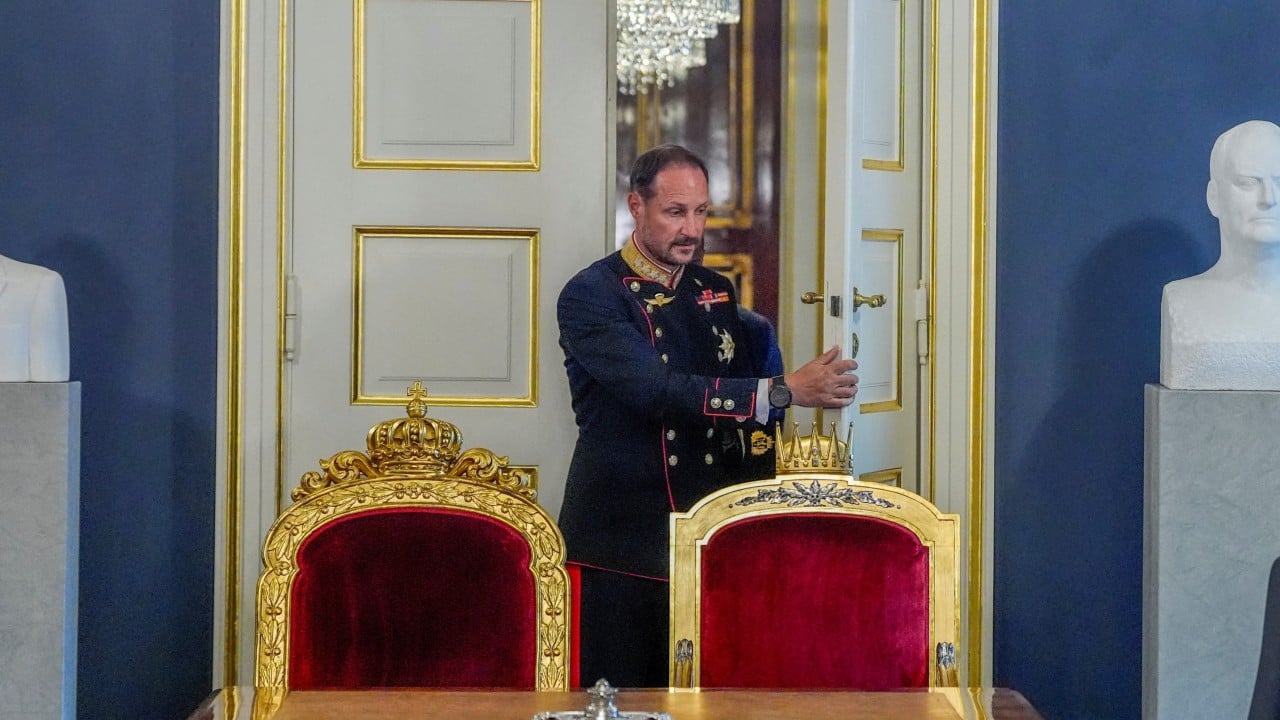
King Harald V of Norway died at the age of 89 at Oslo University Hospital, closing a thirty-five-year reign defined by an informal, populist dignity that redefined Scandinavian monarchy. His only son, Crown Prince Haakon, assumed the throne instantly upon his father's passing, taking the regnal name King Haakon VIII under Norway's constitutional framework. There is no interregnum, nor is there a coronation. The transition of executive symbolism from father to son happened at 6:35 a.m., transforming a 53-year-old perpetual heir into the head of state of one of Europe's wealthiest democracies.
Yet this transition arrives at an acute inflection point for the House of Glücksburg. While King Harald spent decades cementing public affection through self-deprecating humor, competitive sailing, and inclusive public addresses following national tragedies, his successor inherits an institution experiencing distinct cultural friction. Public opinion polling over recent years indicates a steady softening of unwavering support for the crown. The modern Norwegian monarchy is finding out that survival in the twenty-first century requires more than historical goodwill. It demands absolute institutional insulation from external scandal, a standard that has recently tested the royal household's foundations.
The Weight of the Crown
King Harald's refusal to abdicate was a matter of constitutional conviction. He maintained until his final months that the oath he swore before the Storting in 1991 was a lifetime commitment. That endurance meant Haakon spent decades waiting in the wings, serving as regent during his father's frequent hospitalizations for ailments ranging from bladder surgery to circulatory infections and pacemaker implantations.
This protracted apprenticeship gave Haakon deep administrative familiarity with the state apparatus. He understands the limits of his constitutional envelope. In Norway, political power rests entirely within the elected parliament and the cabinet led by the prime minister. The monarch remains an anchor of continuity, signing state papers, receiving foreign ambassadors, and embodying national identity during crises.
Haakon takes up these duties carrying a personal motto shared by his great-grandfather: Everything for Norway. But executing that motto now means navigating a landscape vastly more complicated than the one his father inherited in 1991. The oil-fueled economic expansion that underpinned Harald's reign has matured into a society hyper-conscious of economic inequality, shifting demographics, and the intrusive glare of modern media scrutiny.
Scandals and Public Trust
The primary vulnerability facing King Haakon VIII is not ideological republicanism. It is the entanglement of the extended royal family in high-profile legal and ethical controversies.
Earlier in the year, public confidence wobbled when documents revealed Crown Princess Mette-Marit's past correspondence with convicted American sex offender Jeffrey Epstein. Compounding this pressure was the criminal trial and subsequent four-year prison sentence handed down to Mette-Marit's 29-year-old son from a previous relationship, Marius Borg Høiby, on multiple counts including rape and domestic violence. Høiby holds no royal title and performs no official functions, yet his actions inflicted heavy collateral damage on the reputation of the royal house.
When pressed by journalists in televised interviews regarding these crises, Haakon and Mette-Marit faced tough questions about accountability and transparency. The king defended his marriage while acknowledging the severity of the legal processes running their course. This transparency averted immediate institutional disaster, but it left a mark. The cushion of unconditional reverence that protected older generations of Scandinavian royals has worn thin.
The Transition of Style
Haakon has long cultivated a different public persona than his father. Educated at the University of California, Berkeley, and the London School of Economics, with a background as an officer in the Royal Norwegian Navy, he projects a cooler, more internationalist demeanor.
His personal interests point toward the contemporary rather than the traditional. He is an avid surfer and kite-skier who has occasionally spoken candidly about lifestyle choices that would have horrified nineteenth-century courtiers. This contemporary outlook makes him relatable to younger urban Norwegians, yet it requires careful balancing against the solemnity expected of a head of state.
Furthermore, the line of succession itself is evolving. Haakon's eldest child, 22-year-old Princess Ingrid Alexandra, is now the Crown Princess and heir apparent. Because of constitutional reforms enacted in 1990—which established absolute primogeniture—she is positioned to become Norway's first female monarch in centuries. Haakon's reign will thus serve as a bridge, not just continuing an old tradition, but actively preparing the institution for a historic gender transition at the top.
Navigating the Road Ahead
The immediate days following Harald's death will be dominated by state mourning, memorial services at Oslo Cathedral, and the formal oath-taking ceremony before the Storting. These rituals provide emotional catharsis for a nation that viewed Harald V almost as a grandfather figure.
Once the flags are raised to full-mast, King Haakon VIII must confront the structural realities of his reign. The institutional capital left behind by his father is substantial, but it is not self-replenishing. To maintain the monarchy's broad legitimacy, the new king must demonstrate that the royal house can remain politically neutral, ethically unimpeachable, and culturally relevant in a society that questions traditional authority structures.
The crown passes from a king who survived invasion, cancer, and personal heartbreak to emerge as a unifying moral voice, to a son shaped by modern anxieties and family turbulence. The transition is complete, but the test of Haakon VIII's reign has only just begun.