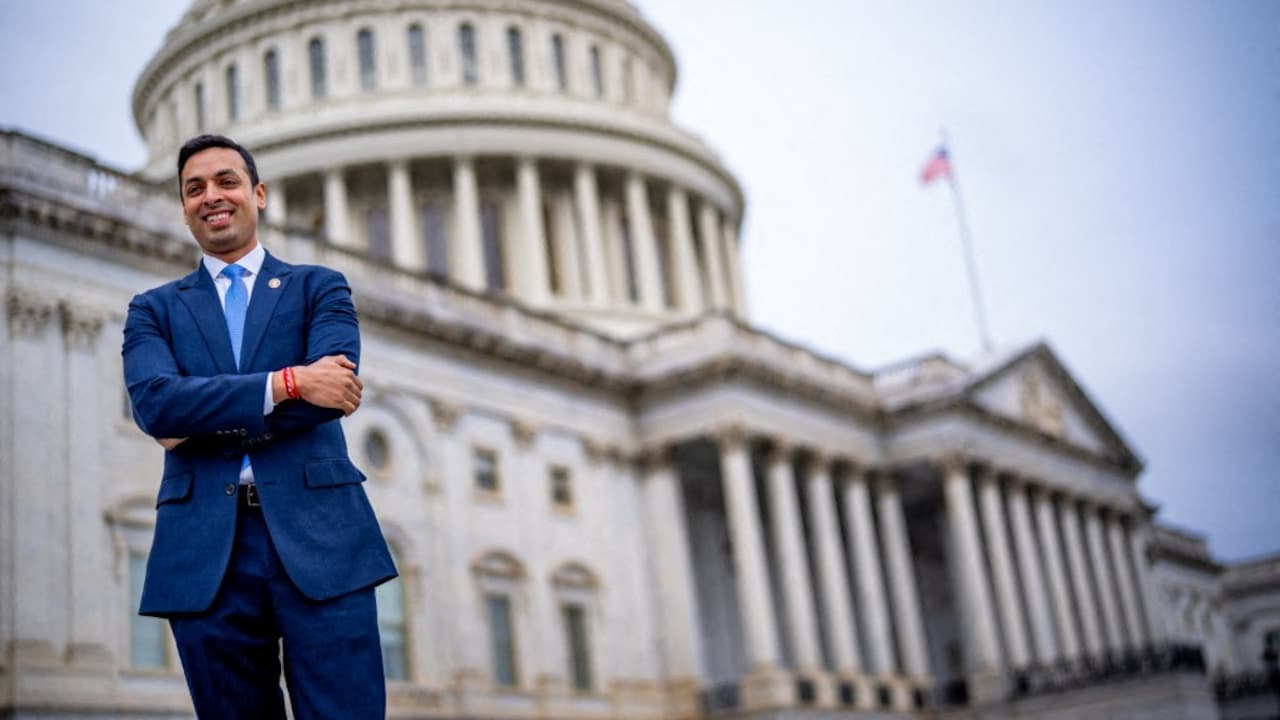
Most political pundits missed the real story when Suhas Subramanyam won Virginia's 10th Congressional District. They focused on the obvious headline—an Indian-origin Democrat and former Barack Obama White House technology policy advisor heading to Capitol Hill. That's accurate, sure. It's also barely half the picture.
If you've spent any time watching Northern Virginia politics over the last decade, you know Loudoun and Prince William counties aren't just bedroom communities for Washington, D.C. anymore. They're the sharpest political bellwether in the country. When Subramanyam defeated Republican Mike Clancy in November 2024 to succeed retiring Representative Jennifer Wexton, he didn't just hold a blue seat. He proved that pragmatic, policy-heavy campaigning still beats nationalized culture-war noise in diverse, high-income suburbs.
The Path From the Obama White House to Loudoun County
Subramanyam didn't parachute into Virginia politics with a fat checkbook and zero local roots. He built his career brick by brick, starting well before he ever ran for office.
Born in Houston, Texas, to Indian immigrant parents—his mother hailed from Bengaluru and his father from Chennai—Subramanyam grew up watching how public policy affects everyday families. He earned his bachelor's degree from Tulane University, then went on to earn his law degree from Northwestern University. Early in his career, he worked on Capitol Hill as a legislative aide, dealing directly with healthcare and veterans' issues.
Then came 2015. President Barack Obama appointed Subramanyam as a White House technology policy advisor. While working in the Executive Office of the President, he focused on cybersecurity, IT modernization, and making federal agencies actually function in the twenty-first century. Honestly, anyone who has ever dealt with a broken government website knows how badly that work was needed.
Instead of cashing out into a lucrative K Street lobbying gig after leaving the White House, he moved back to Loudoun County, volunteered as a local firefighter and EMT, and started running his own small business. That detail matters. Voters in Ashburn and Leesburg can smell a political opportunist from ten miles away. Riding on fire trucks at two in the morning gives you a very different perspective on local infrastructure than reading a polling memo.
Breaking Barriers in Richmond Before Washington
Before his congressional run, Subramanyam had already rewritten Virginia's political history books twice.
In 2019, he ran for the Virginia House of Delegates in the 87th District, covering parts of Loudoun and Prince William counties. He won. With that victory, he became the first Indian American and the first Hindu ever elected to the Virginia General Assembly.
Four years later, in 2023, he moved up to the Virginia State Senate, winning the 32nd District. Again, he broke ground as the first South Asian American elected to that chamber. While in Richmond, he didn't spend his time chasing cable news hits. He founded the bipartisan Commonwealth Caucus to force Democrats and Republicans into the same room, and he passed dozens of bills targeting real household headaches.
Think about what voters in Northern Virginia actually complain about over coffee:
- Toll roads that cost a fortune. Subramanyam pushed hard to rein in runaway rates on the Dulles Greenway, a privately owned toll road that commuters rely on daily.
- Hidden fees and utility spikes. He backed legislation protecting consumers from surprise billing and aggressive utility rate hikes.
- Healthcare costs. Drawing on his background, he focused on capping out-of-pocket costs for essential medications like insulin.
It wasn't flashy. It worked.
How Suhas Subramanyam Won Virginia's 10th Congressional District
When Representative Jennifer Wexton announced she wouldn't seek reelection after being diagnosed with progressive supranuclear palsy, Virginia's 10th District immediately turned into a free-for-all. Twelve Democrats jumped into the June 2024 primary. State senators, delegates, former officials—everyone wanted a shot at a seat that leans Democratic but never hands anything over without a fight.
Subramanyam had a huge advantage: Wexton endorsed him.
In Northern Virginia, Jennifer Wexton's endorsement carries serious weight. She'd flipped the district in 2018 by unseating Republican Barbara Comstock, and voters trusted her judgment. Subramanyam won the crowded primary with roughly 30 percent of the vote, outpacing rivals who had raised more money and spent heavily on television ads.
Then came the general election against Republican nominee Mike Clancy, a corporate lawyer and technology executive.
Clancy tried to tie Subramanyam to national Democratic figures, hammering on inflation, border security, and federal spending. It's the standard Republican playbook in swing-capable suburbs. Subramanyam refused to take the bait. Instead, he ran hyper-local. He talked about federal employees living in the district, funding for Metro, local schools, and protecting reproductive rights without sounding like a talking-point machine.
On Election Day in November 2024, Subramanyam won by roughly four percentage points—around 52 percent to Clancy's 48 percent. In a political cycle where Democrats struggled in plenty of battlegrounds across the map, holding VA-10 cleanly sent a clear message. He also became the first Indian American elected to Congress from Virginia and the entire East Coast.
Why the "Samosa Caucus" Keeps Growing
Subramanyam's arrival in the U.S. House of Representatives expanded an informal group on Capitol Hill known affectionately as the "Samosa Caucus"—Indian American lawmakers who have steadily gained influence over the past decade.
Before Subramanyam took the oath of office in January 2025, that group included Representatives Ami Bera, Ro Khanna, Raja Krishnamoorthi, Pramila Jayapal, and Shri Thanedar. Adding a member from Virginia shifted the geographic center of gravity. Up until then, Indian American representation in the House came almost exclusively from California, Illinois, Washington, and Michigan.
Northern Virginia has one of the fastest-growing South Asian populations in the United States. Walk through Ashburn, Herndon, or South Riding on a weekend, and you'll see thriving Indian grocery stores, temples, cricket leagues, and tech startups. Yet for decades, political representation lagged way behind demographic reality.
Subramanyam didn't win simply because of his heritage—plenty of minority candidates lose in diverse districts when they fail to build broader coalitions. He won because he bridged two worlds effortlessly. He could speak directly to first-generation immigrant entrepreneurs about H-1B visas and small-business red tape, then turn around and talk to third-generation Loudoun County farmers about land preservation and property taxes.
What Most Commentators Get Wrong About Northern Virginia Voters
If you read surface-level coverage of this race, you'd think Virginia's 10th District is a guaranteed safe seat for any Democrat with a pulse. That's dead wrong.
VA-10 stretches from the wealthy, densely populated suburbs of Fairfax and Loudoun counties all the way west into rural Fauquier and Rappahannock counties. It includes the massive data center corridor in Ashburn—where roughly 70 percent of the world's internet traffic passes through—alongside horse farms and small towns that vote deeply conservative.
Voters here are educated, analytical, and notoriously fickle. In 2021, Republican Glenn Youngkin won the Virginia governor's race largely by flipping suburban parents in Loudoun County over education policies. Democrats panicked. Republicans thought they'd cracked the suburban code forever.
Subramanyam's victory proved both sides overreacted. Loudoun County voters aren't rigidly ideological; they're transactional in the best sense of the word. They want competent governance. When they see a former White House tech advisor who understands cybersecurity, data centers, and federal contracting, they view him as someone qualified to manage the actual machinery of government.
The Real Policy Priorities Testing Him in Congress
Winning the election was the easy part. Delivering in a sharply divided Congress is where reputations get made or ruined.
Because of his background in the Obama White House and his representation of "Data Center Alley," Subramanyam stepped straight into some of the most complicated policy fights in Washington:
- Artificial Intelligence and Cybersecurity Regulation. Northern Virginia sits at the physical heart of America's cloud infrastructure. Lawmakers in Washington love throwing around buzzwords about AI, while Subramanyam actually understands how servers, federal procurement, and cyber defense operate under the hood.
- Protecting the Federal Workforce. Tens of thousands of VA-10 residents work directly for federal agencies or defense contractors. Whenever Washington threatens government shutdowns, hiring freezes, or sweeping agency relocations, families in Leesburg and Manassas feel the financial shockwaves immediately.
- Energy Grids and Data Center Expansion. Data centers guzzle electricity. Residents in Loudoun and Prince William counties have grown increasingly frustrated with massive new transmission lines cutting through neighborhoods and rising power demands. Balancing tech industry growth against local quality of life requires serious legislative skill, not empty slogans.
How Voters and Civic Groups Can Engage Effectively
Whether you live in Northern Virginia or follow congressional politics from across the country, Subramanyam's rise offers a clear blueprint for how modern suburban campaigns actually succeed—and how constituents can hold their representatives accountable once the confetti settles.
If you're a constituent in Virginia's 10th District looking to make your voice heard on local infrastructure, federal employment protections, or toll relief, skip the generic social media rants. Congressional offices track direct, specific constituent contact. Call the district office in Leesburg or Manassas, reference exact bill numbers, and share concrete local impacts—like how Dulles Greenway tolls affect your household budget or how federal agency changes hit your workplace.
For anyone studying political strategy or considering a local run of your own, look closely at the path he took. Start at the local level. Solve unglamorous, tangible problems like commuter tolls and utility bills before asking voters for a promotion to Washington. Build coalitions across party lines early so moderates trust you when the general election gets noisy. Real political durability isn't built on viral clips—it's built by showing up in your community long before you ever ask for a vote.


