The Weight of Static Air
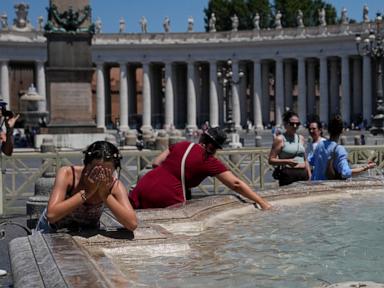
The air in Paris does not move when the great heat arrives. It settles like a damp wool blanket over the zinc roofs of the Haussmann buildings, absorbing the glare of a sun that feels less like a source of life and more like an active interrogation. By mid-afternoon, the stone facades of the city hold so much thermal energy that walking past them feels like standing too close to an industrial oven.
We are accustomed to treating weather as a backdrop to our lives. It is a topic for small talk with the baker, an excuse to buy an ice cream, or a minor inconvenience on the morning commute. But when the thermometer climbs past forty degrees Celsius and stays there for a week, weather ceases to be a background setting. It becomes an antagonist. It becomes an invisible pressure testing every weld and seam of human physiology and urban infrastructure. If you liked this article, you might want to read: this related article.
Consider a retired schoolteacher living on the top floor of a classic Parisian apartment. Let us call her Monique. She has lived in the same neighborhood for forty years. Her apartment has high ceilings, beautiful molding, and no air conditioning. In France, less than five percent of residential homes have cooling systems. Historically, they simply were not needed. The thick stone walls were designed to keep the damp winter chill out, but during an unprecedented heatwave, those same walls act as a thermal battery, trapping the daytime heat and radiating it back into the small rooms all through the sleepless night.
Monique opens her windows at midnight, hoping for a breeze. There is none. The asphalt below her balcony is still tacky to the touch, releasing the chemical stink of baked tar. The thermometer on her wall reads thirty-four degrees at two in the morning. This is where the true danger of extreme heat hides. It is not the dramatic flash of a lightning strike or the visible rush of a flood. It is the relentless, exhausting absence of relief. For another angle on this event, refer to the recent coverage from The New York Times.
The Anatomy of a Thermal Crisis
When the human body encounters extreme ambient temperatures, it initiates a complex, highly coordinated defense mechanism. The core objective is simple: maintain an internal temperature of roughly thirty-seven degrees Celsius. To do this, the heart must pump blood away from the internal organs and toward the skin, where heat can be radiated away into the air through sweat evaporation.
But this system relies on a crucial physical principle. The surrounding air must be cooler than the body, or the air must be dry enough to allow sweat to evaporate efficiently. When the air itself is a kiln, the physics break down.
The heart pumps faster and harder. Blood vessels dilate. In a young, healthy athlete, this cardiovascular workout is manageable for a time, provided they remain hydrated. But for the elderly, or those with pre-existing heart conditions, this sustained exertion is the equivalent of running a marathon while sitting perfectly still in an armchair. The heart simply tires out.
Official reports later confirmed that roughly one thousand additional deaths were recorded across France during that single period of historic atmospheric stagnation. A thousand lives quieted. They did not happen in a single catastrophe that made for dramatic television footage. They happened one by one, behind shuttered blinds, in small villages in the south and high-density suburbs around Paris.
We often look at these statistics as abstract markers of a changing planet. We talk about global averages and baseline shifts. But a statistic is just a human story with the tears wiped off. Each unit in that one thousand represents an interrupted conversation, an unfinished book on a bedside table, a family sudden left to wonder how a summer afternoon turned so dark.
The Mirage of the Modern City
Our cities are magnificent monuments to human ingenuity, but they are also massive heat traps. The phenomenon is known as the urban heat island effect. Concrete, brick, and asphalt absorb vast amounts of solar radiation during the day and release it at night. At the same time, the millions of air conditioning units in commercial buildings and modern vehicles are actively pumping heat out of interiors and into the streets, warming the public shared spaces even further.
Walking through a modern metropolis during a severe heatwave reveals the deep inequities built into our architecture. The wealthy retreat into climate-controlled microclimates—offices, luxury vehicles, high-end grocery stores. The working class, the delivery drivers, the construction workers, and the elderly poor are left to navigate the raw, unvarnished reality of the street.
The human body is resilient, but it has hard biological limits. When we ignore those limits, the consequences are mathematical. The strain on public services during these periods is immense. Emergency rooms fill not with victims of violence or sudden accidents, but with people who are simply dehydrated, confused, and overwhelmed by their own biology.
Parisians have historically treated the summer as a sacred period of rest. The city empties out in August as millions head to the coasts. But as these thermal anomalies become more frequent and more severe, the nature of the European summer is shifting. It is transforming from a season of leisure into a season of endurance.
Redefining the Threshold
The real challenge moving forward is psychological. We must disabuse ourselves of the notion that extreme heat is a temporary anomaly that will pass, returning us to a familiar normal. The data suggests that the baseline has shifted permanently. The records broken this year will likely be the standard of the next decade.
This requires a fundamental rethink of how we build, how we work, and how we care for one another. It means acknowledging that green spaces and urban tree canopies are not merely aesthetic luxuries; they are critical public health infrastructures that can lower local temperatures by several degrees. It means designing buildings that can breathe, utilizing passive cooling techniques that have been understood for centuries in hotter climates but forgotten in the era of cheap energy and glass towers.
More than anything, it requires a renewal of social cohesion. In the great heatwave of 2003, which claimed thousands of lives across Europe, the primary indicator of vulnerability was isolation. People died because no one checked on them.
The solution to a warming world cannot just be more air conditioning units pumping more heat into the streets while burning more fossil fuels. The solution must include a collective agreement to look after the people on the top floors. It means knocking on Monique’s door to bring her a bottle of cold water. It means recognizing that our survival in an era of climate volatility depends less on our technological dominance over nature and far more on our capacity to sustain and protect one another when the world outside becomes too hot to bear.
The sun eventually sets, but the walls of the city remain warm. The stars are bright in a cloudless sky, offering a beautiful, detached view of a continent simmering under the weight of its own atmosphere. We sleep fitfully, waiting for a wind that refuses to blow, learning to live in a world where the weather is no longer a neutral observer.
:max_bytes(150000):strip_icc()/parts-of-a-swamp-cooler-2718628-a477e6f0787b4f8bb62ddf2def31d495.png)