The lazy consensus across mainstream media outlets is that Justice Brett Kavanaugh handed Republicans a devastating, unexpected defeat by refusing to rescue Missouri’s mid-decade congressional map. Pundits are framing this emergency stay denial as a rare chink in the conservative armor of the high court, a sudden conversion to procedural purity, or a sign of panic over electoral chaos.
They are missing the plot entirely.
Kavanaugh did not betray the conservative legal movement. He executed a calculated retreat to preserve the long-term structural power of federal courts by dumping a toxic state-law dumpster fire back onto local actors. To understand why this decision is actually a cynical, brilliant exercise in judicial self-preservation, we have to look past the superficial narrative of partisan winners and losers and examine the mechanics of election administration under pressure.
The Fallacy of the Emergency Docket Panic
When Missouri officials rushed to the Supreme Court with an emergency application, they screamed about an impending "federal-election-administration disaster". They pointed out a glaring, messy reality: Missouri already ran its August primary using the newly drawn House map (HB 1), which was engineered to net Republicans an extra seat by cracking Democratic stronghold areas in Kansas City. Forcing the state to revert to the 2022 map for the November general election means hundreds of thousands of voters will cast ballots in districts they never nominated candidates for in August.
The state's legal team argued this disconnect renders the primary "utterly pointless". It is a compelling soundbite. But it ignores the core principle of federalism that conservative jurists supposedly hold sacred: state supreme courts have the final say on state election law.
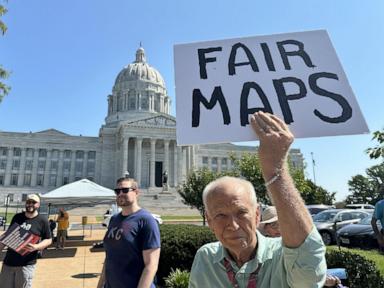
The Missouri Supreme Court unanimously ruled that a citizen-led referendum petition managed to suspend the implementation of HB 1 before it ever legally took permanent effect. Under Missouri’s constitutional framework, the moment valid signatures are submitted to challenge a legislative act, the clock stops. Secretary of State Denny Hoskins tried to run out the clock by rejecting the petitions right after the primary, playing a high-stakes game of procedural chicken.
The state court called his bluff. When Kavanaugh denied the stay, he wasn't siding with anti-gerrymandering activists; he was refusing to bail out local officials who tried to outsmart their own state constitution through administrative fiat.
Why Federal Courts Hate Dirty Hands
Imagine a scenario where the Supreme Court steps in, overrides the Missouri Supreme Court, and forces the state to use a map its own highest judicial body declared legally suspended. You instantly create a direct, violent constitutional collision between state judiciary orders and federal intervention on the eve of a national election.
Courts hate messy injunctions that they cannot cleanly supervise. By stepping back, Kavanaugh avoided turning the Supreme Court into Missouri's chief supervisor of county clerks and ballot printers.
The media wants you to believe this is part of a shifting national map war where the Supreme Court is arbitrarily picking winners—pointing to how they allowed GOP maps to stand in Texas and New York while blocking them here. This analysis commits a fundamental category error. It treats every redistricting dispute as identical, ignoring the specific procedural triggers of each state. In Missouri, the trigger wasn't just a generic claim of racial or partisan gerrymandering; it was a specific, locally anchored constitutional mechanism: the citizen referendum.
When a state constitution explicitly provides a mechanism for voters to hit the pause button on legislation, a federal court intervening to smash that pause button takes on direct political accountability for the resulting chaos. Kavanaugh is far too politically astute to let the federal judiciary own a mess that Missouri politicians manufactured for themselves.
The Real Winners of the Chaos
The irony of this entire saga is that while Kavanaugh’s refusal to intervene lets the Missouri Supreme Court's map-reversion stand, the lower-level legal warfare isn't even over. Minutes after Kavanaugh handed down his order, a federal district judge tossed a separate wrench into the gears with a contradictory temporary restraining order.
We are left looking at a functional administrative crisis where local election boards genuinely do not know which boundary lines will govern the November showdown. But placing the blame on the Supreme Court's doorstep is lazy.
The lesson here isn't that conservative justices are abandoning election law strategy. The lesson is that mid-decade map-redrawing is an inherently brittle enterprise. When legislatures attempt to rewrite the rules while the game is already being played, they expose themselves to procedural tripwires built into state constitutions. Missouri Republicans tried to weaponize the timeline, and the timeline bit back.
Stop looking at the Supreme Court's emergency docket for signs of ideological conversion. Look at it for what it is: a high-court triage unit refusing to perform CPR on a patient who shot themselves in the foot.