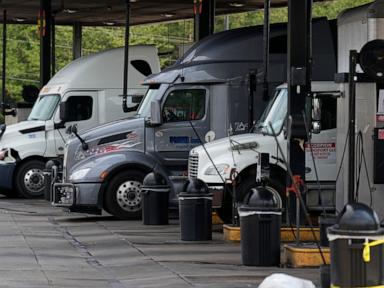
Surging diesel prices are quietly undermining Republican messaging ahead of the midterm elections because distillate fuel acts as an invisible tax on every single item shipped across the American supply chain. While voters track regular unleaded gasoline on glowing street-corner signs, diesel quietly powers the freight trains, eighteen-wheelers, agricultural combines, and construction equipment that keep the broader economy moving. When diesel spikes, grocery bills rise, small trucking outfits go bankrupt, and manufacturing margins evaporate. For a political party that built its midterm strategy around economic competence, energy independence, and taming inflation, persistent pain at the commercial pump creates a glaring vulnerability that traditional talking points cannot easily explain away.
Most political operatives treat fuel prices as a single monolithic issue. They look at national averages for regular gasoline and assume voter sentiment rises and falls exclusively with the price of filling up a commuter sedan. That is a fundamental misreading of how energy markets actually hurt working-class households.
Gasoline is a consumer good. Diesel is an industrial input.
When regular gas jumps fifty cents a gallon, a suburban driver cuts back on weekend road trips or skips a few restaurant meals. When diesel jumps by the same margin, the ripple effects hit every aisle of the local supermarket within weeks. Freight carriers immediately tack fuel surcharges onto their invoices. Food distributors pass those surcharges directly to regional grocers. Farmers watching the cost of fueling tractors and irrigation pumps soar are forced to raise wholesale prices on everything from corn to cattle just to break even on the harvest.
The Structural Squeeze in the Refining Sector
To understand why diesel has become so stubbornly expensive, you have to look past the standard partisan arguments about drilling permits and federal leases. The real bottleneck is not pulling crude oil out of the ground. It is turning that crude into middle distillates.
Over the past decade, North American refining capacity has shrunk significantly. Several older, less profitable facilities shut down permanently during the economic disruptions of the early 2020s, and virtually no major greenfield refineries have been built in the United States since the 1970s. Wall Street investors simply refuse to finance multibillion-dollar petrochemical projects with thirty-year payback timelines when global policy is pushing toward electrification.
At the same time, the remaining domestic refineries are running near their maximum sustainable utilization rates. Refining heavy, sour crude oil—the exact kind needed to yield high volumes of diesel and jet fuel—requires complex, expensive processing units like hydrocrackers and cokers. Meanwhile, much of the domestic crude boom in basins like the Permian produces light, sweet oil, which yields far more gasoline and naphtha than heavy distillate.
Consider a hypothetical regional refiner operating along the Gulf Coast. Even if crude oil benchmarks drop by ten dollars a barrel, that refiner cannot magically dial up diesel output overnight if its hydrocracking units are already running at ninety-five percent capacity. If a single unit goes offline for unplanned maintenance or hurricane preparations, regional distillate inventories plummet immediately. The crack spread—the profit margin refiners earn by turning raw crude into finished diesel—explodes, and pump prices stay elevated regardless of what politicians say on the campaign trail.
Global Competition for Every Barrel
American diesel prices are also tethered to a fiercely competitive global market. Unlike natural gas, which remains largely regionalized due to liquefaction constraints, refined diesel moves easily on ocean-going tankers.
European nations, having spent years weaning themselves off Russian pipeline gas and refined petroleum products, rely heavily on imports from the United States Gulf Coast and the Middle East to keep their industrial bases running. Latin American economies, facing chronic refinery outages of their own, bid aggressively for those same American barrels.
When foreign buyers are willing to pay top dollar for ultra-low-sulfur diesel, domestic distributors have to match those global prices to keep the fuel inside the United States. Calls to simply "drill more" ignore the basic mechanics of global commodity trading. Unless the federal government takes the drastic, market-distorting step of banning fuel exports—a move that would trigger severe retaliation and likely backfire by discouraging domestic refining—American truckers will continue paying prices dictated by international supply and demand.
The Quiet Collapse of the Independent Trucker
Nowhere is the political fallout of high diesel prices more acute than in the freight sector. Trucking is not just an economic indicator; it is a massive, vocal voting bloc concentrated heavily in rural counties and suburban battlegrounds across the Midwest and Sunbelt.
During the freight boom a few years ago, tens of thousands of company drivers took out high-interest loans to buy their own rigs, becoming independent owner-operators. They entered the market when spot freight rates were at historic highs and diesel was manageable. Today, those same drivers are caught in a brutal vise.
Spot rates for hauling freight have cooled considerably as consumer goods demand normalized, leaving little room for profit. Simultaneously, diesel costs have remained elevated, eating up thirty to forty percent of a small carrier's gross revenue. Large corporate fleets like Schneider or Knight-Swift can weather these storms because they buy fuel in bulk at steep discounts and lock in lucrative contract rates with major retailers.
The independent driver with one truck and a diesel credit card gets no such cushion.
Walk into any truck stop along Interstate 80 in Ohio or Interstate 40 in Tennessee, and the frustration is palpable. Drivers who enthusiastically backed conservative candidates on promises of lower operating costs and deregulation are watching their livelihoods evaporate. Many are parking their trucks permanently, unable to cover maintenance, insurance, and fuel on depressed spot loads. When small business owners go bankrupt under a political administration that promised them an economic golden age, they do not blame abstract global refining margins. They blame the people currently holding power.
The Agricultural Domino Effect
Right alongside the independent trucker stands the American farmer, another cornerstone of the Republican electoral coalition. Modern agriculture runs entirely on diesel. From planting in the spring to harvesting in the fall, every pass across a thousand-acre field burns through dozens of gallons of off-road dyed diesel.
While farmers are exempt from federal highway fuel taxes on dyed diesel, they are completely exposed to the underlying wholesale price of the distillate. Worse still, high energy costs hit agriculture twice. Natural gas is the primary feedstock for nitrogen fertilizer, meaning energy spikes drive up chemical input costs at the exact same moment diesel drives up equipment operating expenses.
When commodity prices for corn, soybeans, and wheat fail to keep pace with surging input costs, farm net income drops sharply. Agricultural lenders in states like Iowa, Nebraska, and Kansas are already reporting tighter credit conditions and rising operating loan balances. Farm-state lawmakers understand that rural voters have long memories when it comes to their balance sheets. If farm country feels squeezed by fuel and input inflation heading into November, voter turnout in critical rural precincts could soften just enough to flip tight House and Senate races.
Why Traditional Political Playbooks Fail Here
Confronted with angry voters and stubbornly high prices, political strategists naturally reach for familiar messaging tools. They blame environmental regulations, attack renewable fuel mandates, or promise to slash red tape on federal lands. The problem is that none of these measures can lower diesel prices before Election Day.
Even if Congress passed sweeping energy deregulation tomorrow, it takes years to permit, finance, and construct new pipeline capacity or refining upgrades. Markets price in immediate physical supply and near-term inventory levels, not legislative aspirations.
Furthermore, some conservative talking points actually collide with the economic interests of their own rural constituents. Attacking biofuel mandates, for instance, might sound appealing to oil-state lawmakers who argue that blending requirements raise costs for refiners. Yet in the Midwest, corn-based ethanol and soy-based biodiesel are lifelines for farm income. Politicians who campaign against renewable fuel standards in an attempt to lower diesel prices risk alienating the exact agricultural voters they desperately need to hold onto congressional majorities.
The Trap of Overpromising on Inflation
The deeper political danger lies in the expectations gap. Voters rewarded Republicans with power largely because they promised a swift return to pre-pandemic affordability. Campaign rhetoric framed high prices not as the result of complex global supply chains, monetary policy, and structural capacity limits, but as a simple failure of leadership that could be reversed quickly through sheer political will.
That framing works brilliantly when you are the opposition party throwing stones from the sidelines. It becomes a liability the moment you hold the gavel.
When voters go to the grocery store and see beef, bread, and produce still climbing in price because freight and farm diesel costs refuse to budge, the simple explanations fall apart. Voters are pragmatic. They rarely care about the nuances of refinery hydrocracking capacity or European distillate import demand. They care about whether their paycheck stretches further at the end of the month than it did two years ago.
The Strategic Dilemma for Vulnerable Incumbents
As the midterm campaign enters its decisive stretch, vulnerable incumbents in swing districts face an unenviable choice. If they ignore the issue and focus exclusively on cultural battles or border security, they appear out of touch with the everyday financial anxiety gripping working families. If they lean heavily into economic messaging, they risk reminding voters that fuel and grocery costs remain stubbornly high on their watch.
Some lawmakers are floating short-term palliative measures, such as temporary suspensions of the federal diesel tax—currently set at 24.4 cents per gallon—or tapping emergency distillate reserves in the Northeast. Both options carry massive drawbacks.
Suspending the federal fuel tax starves the Highway Trust Fund of vital revenue needed for road and bridge repairs, a move fiscal conservatives have historically opposed. More importantly, economists have repeatedly shown that when fuel supplies are tight, refiners and distributors often absorb a portion of any tax cut through higher wholesale margins, meaning consumers rarely see the full twenty-four-cent discount at the pump. Releasing fuel from regional reserves provides only a fleeting psychological bump before global market forces inevitably pull prices back up.
There is no quick legislative fix for a global refining bottleneck. Until new international refining capacity comes online in the Middle East and Asia to relieve the structural tightness in middle distillates, diesel will remain volatile and expensive. For candidates banking on a smooth ride through the midterms, the reality at the commercial pump offers a sobering reminder that commodity markets do not care about campaign promises, and an economy running on expensive diesel eventually stalls out at the ballot box.