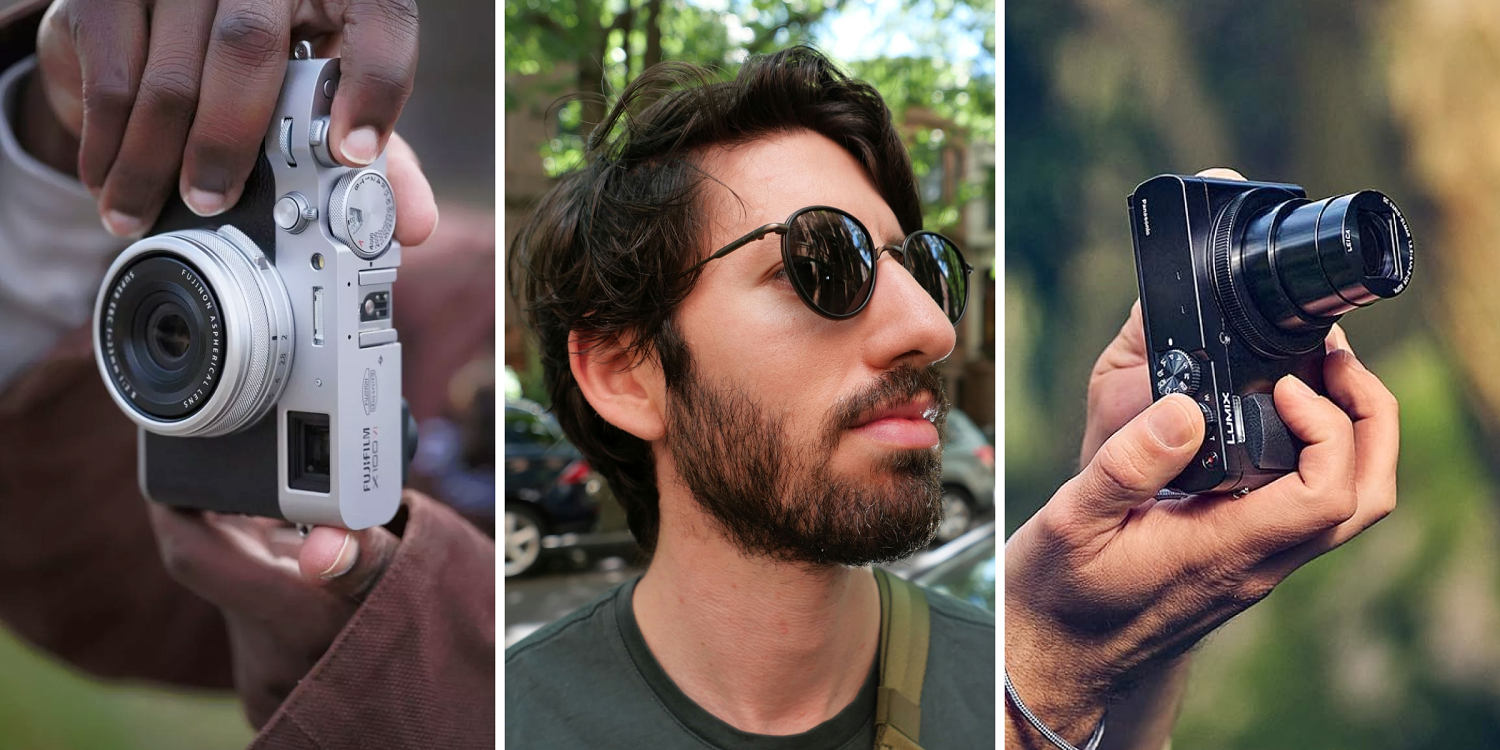
The consumer imaging market has split into two irreconcilable philosophies: the computational approximation of an image, and the physical capture of light. The prevailing consumer narrative suggests that smartphone cameras have rendered point-and-shoot cameras obsolete. This narrative is incorrect. The survival of the dedicated compact camera in 2026 rests on fundamental physical and operational realities that software algorithms cannot bypass.
To understand why the dedicated compact camera persists, you must analyze the hard limitations of mobile hardware. The optical and thermal constraints of a device measuring less than 10 millimeters in thickness dictate its performance ceiling. This analysis deconstructs the hardware economics, optical physics, and workflow efficiencies that define the modern point-and-shoot market. Expanding on this idea, you can also read: The Underwater Drone Revolution Most People Are Missing.
The Physical Limits of Computational Photography
Smartphone manufacturers rely on computational photography—using multi-frame stacking, machine learning noise reduction, and synthetic depth-of-field algorithms—to compensate for tiny sensors and flat lenses. While this produces pleasing images for small screens, the approach fails under rigorous scrutiny.
The primary constraint is sensor surface area. A standard premium smartphone utilizes a primary sensor of roughly $1/1.3$ inches, yielding an active sensor area ($A$) of approximately: Analysts at Engadget have shared their thoughts on this situation.
$$A_{\text{smartphone}} \approx 72 \text{ mm}^2$$
In contrast, a high-end compact camera features a $1$-inch type sensor (which actually measures $13.2\text{ mm} \times 8.8\text{ mm}$):
$$A_{1\text{-inch}} \approx 116 \text{ mm}^2$$
Some premium fixed-lens compacts employ APS-C sensors, which offer an even larger area:
$$A_{\text{APS-C}} \approx 370 \text{ mm}^2$$
This disparity in physical area directly governs light-gathering capacity. The total luminous flux ($F$) captured by a sensor is directly proportional to its surface area and the square of the lens aperture. Under identical lighting conditions and equivalent focal lengths, a larger sensor captures more physical photons.
Software cannot synthesize missing photons; it can only estimate their values. This estimation introduces artifacts, smudged details in low-contrast areas (such as foliage or fabric), and a distinct loss of micro-contrast. When you enlarge an image or crop into the frame, the computational reconstruction degrades rapidly. A dedicated compact camera captures the actual spatial frequency of the scene, preserving high-frequency details that algorithmic sharpening destroys.
The Three Pillars of Compact Camera Utility
The decision to carry a second, dedicated device alongside a smartphone relies on three distinct operational advantages. If a compact camera does not deliver on these three vectors, it fails to justify its volume in a user's kit.
+-----------------------------------------------------------------+
|               PILLARS OF COMPACT CAMERA UTILITY                 |
+-----------------------------------------------------------------+
|  1. OPTICAL GEOMETRY       2. THERMAL DUTY CYCLE   3. PHYSICAL  |
|  True variable focal      Sustained performance   TACTILITY     |
|  lengths, glass elements,  without throttling     Direct dial   |
|  physical depth-of-field.  under heavy loads.     adjustments.  |
+-----------------------------------------------------------------+
1. Optical Geometry versus Digital Interpolation
Smartphones achieve "zoom" by switching between multiple fixed lenses or by cropping into a high-megapixel sensor. This creates a disjointed user experience. The transition between a smartphone's wide, ultra-wide, and telephoto lenses causes sudden shifts in perspective, color rendering, and maximum aperture capabilities.
Dedicated compact cameras use true optical zoom lenses. These systems physically move glass elements within the lens barrel to alter the focal length continuously. This design offers two distinct advantages:
- Perspective Consistency: The photographer can precisely frame the subject at any focal length from wide-angle to telephoto without losing sensor resolution or introducing digital interpolation artifacts.
- True Optical Depth of Field: Instead of using software to blur backgrounds (which frequently miscalculates hair, glasses, and transparent objects), a compact camera utilizes physical aperture blades and optical physics to create natural background separation.
2. Thermal and Battery Duty Cycles
A smartphone is a multi-use communicator wrapped in a chassis optimized for pocketability, not heat dissipation. When recording high-bitrate video or shooting continuous RAW bursts, a smartphone generates significant thermal energy. Because smartphones lack active cooling or sufficient passive heat sinking, the internal processor quickly reaches its thermal limit.
This thermal saturation triggers safety protocols:
- The screen brightness dims to reduce heat.
- The processor throttles, dropping frames during video capture.
- The camera application eventually shuts down to protect internal components.
A dedicated compact camera is engineered specifically to dissipate heat. Its chassis is designed around the imaging pipeline, allowing for sustained high-bandwidth data writing to the storage card without thermal throttling. Furthermore, the battery of a compact camera is dedicated solely to the imaging pipeline. A smartphone user who shoots video and photos throughout the day faces a critical operational trade-off: draining their primary communication device's battery for the sake of capturing media.
3. Tactile Ergonomics and Muscular Memory
The flat glass interface of a smartphone is highly inefficient for rapid adjustments. Changing shutter speed, aperture, or exposure compensation on a phone requires looking at the screen, navigating menus, and sliding virtual controls. This latency causes missed shots.
Dedicated compact cameras prioritize physical control surfaces. The tactile feedback of physical dials allows a photographer to make adjustments by feel alone, keeping their eyes on the subject.
- Physical Shutter Button: A two-stage physical shutter button allows the user to lock focus and exposure with a half-press, then execute the capture with a full press. This mechanical action minimizes shutter lag.
- Dedicated Control Rings: Many modern compacts feature a customizable control ring around the lens barrel, providing analog-style control over manual focus, aperture, or zoom.
- Custom Buttons: Physical buttons can be mapped to specific operational parameters, such as switching focus modes or toggling ND filters, bypassing digital menus entirely.
The Functional Segments of the Compact Market
The point-and-shoot market is no longer a homogenous collection of cheap plastic cameras. To survive, manufacturers have specialized their offerings into three distinct functional categories, each solving a specific technical problem.
Premium Large-Sensor Compacts
These cameras pair a $1$-inch or APS-C sensor with a high-quality fixed or zoom lens. They are designed for photographers who require maximum image quality in a jacket-pocketable form factor.
The primary engineering challenge in this segment is balancing lens speed (bright maximum apertures like $f/1.8$ or $f/2.8$) with physical size. The laws of optics dictate that a larger sensor requires a physically larger lens to project an image circle that covers the entire sensor area. Manufacturers solve this by using advanced aspherical glass elements that bend light more sharply, allowing for a shorter physical lens barrel when retracted.
Rugged Outdoor Sub-Class
The rugged point-and-shoot camera serves an environment where smartphones cannot operate reliably. These devices are drop-proof, freeze-proof, and waterproof without requiring external housings.
The engineering of these cameras relies on folded optics. To maintain waterproofing, the lens does not extend from the body. Instead, the light enters a protective front glass element and is redirected at a $90$-degree angle down the length of the camera body via a prism, where the zoom elements and sensor reside. This internal zoom design ensures that there are no external moving parts to catch on debris, bend during an impact, or compromise water seals.
High-Magnification Travel Zoom Compacts
While premium compacts focus on sensor size, travel zooms focus on reach. These cameras pair smaller $1/2.3$-inch sensors with massive $24\text{x}$ to $40\text{x}$ optical zoom lenses.
This category represents a compromise: you accept a smaller sensor (equivalent to smartphone sensor sizes) in exchange for extreme focal reach that no smartphone can replicate without catastrophic digital degradation. The challenge here is image stabilization. At focal lengths equivalent to $960\text{mm}$, even the microscopic vibrations of a heartbeat can blur the image. Successful designs in this category utilize dual-axis optical image stabilization (OIS) systems that physically shift lens elements to counteract high-frequency hand tremors.
The Operational Bottlenecks of Dedicated Compacts
A rigorous analysis must acknowledge the limitations and structural friction of using a dedicated camera. These devices are not universal solutions; they introduce specific operational overhead that the user must manage.
+-----------------------------------------------------------------+
|                  OPERATIONAL FRICTION CHAIN                     |
+-----------------------------------------------------------------+
|  Capture  --->  Transfer Protocol  --->  Processing  --->  Share |
|  Raw file       Slow Wi-Fi/Bluetooth     Requires     Social   |
|  on card        or manual card reader    software     medium   |
+-----------------------------------------------------------------+
The Friction of Data Transfer
The greatest advantage of a smartphone is its integrated connectivity. A photo captured on a phone is instantly available for cloud backup, editing apps, or immediate transmission.
A dedicated compact camera requires an intermediary step. While most modern compacts feature Wi-Fi and Bluetooth chips, the companion mobile applications are frequently unstable, slow, and prone to connection dropouts. Transferring a batch of large RAW files over a local ad-hoc wireless network is slow. The alternative—using an external card reader or connecting the camera via a USB-C cable to a mobile device—introduces physical friction into what should be a rapid workflow.
The Learning Curve of Raw Capture
To extract the performance advantage of a larger sensor, you must shoot in RAW format. A RAW file preserves the uncompressed data directly from the sensor, providing several stops of latitude to recover highlight and shadow detail.
However, RAW files look flat and unappealing without post-processing. A user unwilling to spend time in editing software (such as Lightroom or Capture One) will often find that the camera's out-of-camera JPEGs look inferior to the heavily processed, high-contrast, instantly sharpened JPEGs generated by a smartphone's internal computational pipeline.
The Financial Cost-to-Utility Ratio
The cost of a premium compact camera ranges from $700 to over $1,500. This is a substantial capital outlay for a device that performs only one function. For a casual user, the marginal increase in image quality under standard daylight conditions does not justify the cost of a dedicated device when they already own a premium smartphone. The investment only amortizes if the user operates in challenging lighting, requires focal lengths outside the phone's capabilities, or shoots in environments that risk damaging a smartphone.
A Predictive Framework for Device Selection
To determine whether a dedicated compact camera is a viable asset for your specific workflow, apply the following decision framework. This framework evaluates your requirements based on physical constraints rather than marketing claims.
Does your workflow require focal lengths greater than 70mm or wider than 24mm?
  ├── YES: Choose a Dedicated Compact Camera (Optical zoom avoids digital crop degradation)
  └── NO: Proceed to next question

Do you regularly shoot in low-light environments (lux levels below 100) where flash is prohibited?
  ├── YES: Choose a Premium 1-inch or APS-C Compact (Physical light gathering prevents noise)
  └── NO: Proceed to next question

Do your shooting sessions exceed 15 minutes of continuous high-bitrate video or rapid burst capture?
  ├── YES: Choose a Dedicated Compact Camera (Thermal capacity prevents processor throttling)
  └── NO: Utilize your Smartphone (Computational pipeline is optimized for short-burst utility)
The consumer market will continue to consolidate. Cheap, low-end point-and-shoots with small sensors have been permanently erased by the smartphone. What remains is a highly specialized, technically resilient class of premium compacts that survive not because they are "easy to use," but because they respect the absolute laws of physics. They offer a mechanical, thermal, and optical sanctuary for creators who require predictable, uncompressed, and unmanipulated visual data.

:max_bytes(150000):strip_icc():focal(842x0:844x2)/twin-peaks-billy-zane-040425-70a37fe9a7cb4ffb9e7821106c80f296.jpg)

