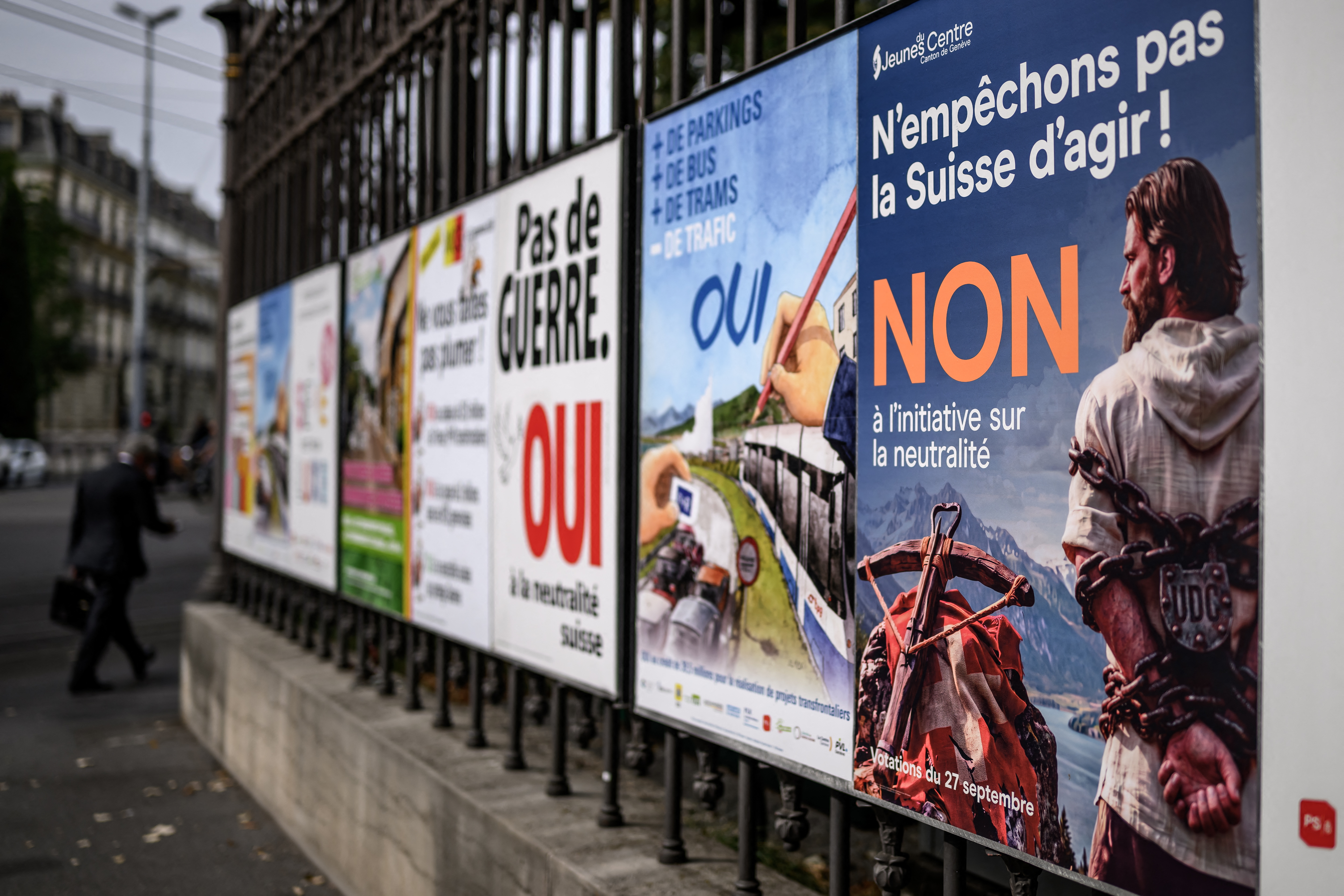
For decades, the standard narrative served to international diplomats and cozy think-tank panels has treated Swiss neutrality as a sacred, static moral artifact. You have heard the script a thousand times: a pristine Alpine sanctuary floating above European power struggles, untouched by the blood and debt of continental rivalries, sustained by a pure commitment to non-alignment and humanitarian grace.
It is a fairy tale. And it is time to dismantle it.
The lazy consensus dominating mainstream commentary on Switzerland's current geopolitical positioning insists that Bern is facing an unprecedented existential dilemma. Commentators panic over recent sanctions alignment with the European Union, warning that freezing Russian assets or tightening export controls represents a historic betrayal of five hundred years of unblemished isolation. They ask whether Switzerland is abandoning its core identity, worried that the country is sliding into the Atlantic sphere and sacrificing its unique diplomatic leverage.
That panic is built on a fundamental misunderstanding of what Swiss neutrality has always actually been. Neutrality in Bern has never been an ideological dogma or a pacifist prayer. It has always been a ruthless, highly lucrative business model.
The Economics of Calculated Ambiguity
To understand why Switzerland acts the way it does today, stop looking at moral philosophy and start looking at ledger books. Neutrality was born out of military weakness, perfected as a commercial shield, and maintained because it pays massive economic dividends.
When the Old Swiss Confederacy emerged from the devastating wars of the fifteenth and sixteenth centuries, staying out of foreign entanglements was a survival strategy for fragmented cantons that could no longer afford mutual destruction. But that military restraint quickly transformed into a commercial superpower. By refusing to take sides, Switzerland positioned itself as Europe's ultimate clearinghouse. It became the safe deposit box for kings, dictators, revolutionaries, multinational corporations, and oligarchs alike.
When modern analysts hyperventilate over whether adopting EU sanctions against Moscow shatters centuries of tradition, they ignore the historical precedent. During the Cold War, Swiss neutrality did not stop Bern from aligning its economic policies closely with Western trade systems while quietly handling billions in capital of dubious origin. During the Second World War, Swiss banks maintained vital financial transactions with the Third Reich, balancing survival, economic pragmatism, and deterrence under the watchful eye of a mobilized citizen militia.
Neutrality was never about clean hands. It was about keeping the doors open to everyone with cash while retaining enough sovereign discretion to avoid getting invaded.
The Myth of Isolation
The second major flaw in the conventional narrative is the idea that Switzerland is an isolated island standing outside the currents of global power. In reality, the country is one of the most hyper-globalized economies on the planet.
Look at the numbers. Swiss wealth management commands trillions in cross-border assets. Multinationals in commodities trading, pharmaceuticals, and precision engineering operate from Zug and Zurich with tentacles deeply embedded in every major geopolitical market. Switzerland is physically landlocked, but economically, it is everywhere.
When the European Union pressures Bern to adopt institutional frameworks or harmonize regulations, the debate in Swiss media often frames it as an assault on national sovereignty. Yet, Switzerland routinely adopts EU single-market rules quietly through bilateral treaties because its economic survival depends on frictionless access to its European neighbors.
The recent friction over sanctions is not a departure from this pattern; it is a continuation of it under extreme pressure. When the geopolitical stakes shifted following the escalation in Ukraine, Swiss leadership did a cold, rational calculation. The reputational cost of being labeled a safe haven for illicit Russian capital finally outweighed the short-term financial gain of keeping those vaults closed. Bern did not suddenly discover moral clarity. It updated its risk management matrix.
Why the New Reality is Actually Just the Old Reality
Critics argue that by matching EU sanctions, Switzerland has surrendered its role as an impartial mediator, rendering itself useless for peace talks or international hosting. This misunderstands how diplomacy actually functions in Geneva and Bern.
Impartiality has never required moral blindness; it requires transactional utility. Global powers do not use Switzerland as a host because the Swiss possess some mystical aura of saintly virtue. They use Switzerland because it has secure infrastructure, strict legal protections for diplomats, a functioning financial plumbing system, and a strategic location in the heart of Europe.
Even as Bern aligns with Western economic sanctions, it continues to preserve channels, host international organizations, and maintain its distinct diplomatic footprint. The Swiss Federal Council knows precisely how far it can push major powers without losing its utility. It is an exercise in dynamic equilibrium, not a sudden collapse of statecraft.
Admitting this truth makes people uncomfortable because it shatters the comforting myth of the neutral referee. We prefer our international politics simple, casting nations either as heroic defenders of liberty or cynical villains. Switzerland refuses to fit that simplistic binary. It operates in the gray zone, where national interest supersedes grand moral pretension.
What Comes Next
If you want to know where Switzerland is heading, stop listening to pundits mourning the death of the seventeenth-century peace model. Watch where the capital flows, how the trade agreements are structured, and how the military maintains its defensive partnerships with neighboring European states through joint exercises and interoperability.
Switzerland is not at a crossroads. It is doing what it has done for centuries: adapting its facade just enough to protect its core commercial and sovereign interests while the rest of the world argues over labels that never matched reality in the first place.
The next time someone tells you that Swiss neutrality is dying, ask them if they actually believe a nation survives at the center of European power politics for five hundred years by accident, or by being the sharpest geopolitical operator in the room.
Stop mourning a neutrality that never existed. Start paying attention to the strategy that keeps them rich.


