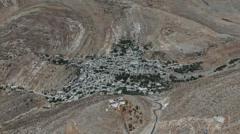
When an Israeli military drone struck a vehicle near the village of Beit Jinn southwest of Damascus, it didn't just injure a civilian and leave a charred truck chassis on the road. It triggered an immediate diplomatic flashpoint. Syria's Foreign Ministry blasted the operation as a flagrant violation of its territorial integrity and a direct assault on international law.
If you've been tracking the shifting Middle Eastern dynamics following the fall of Bashar al-Assad's regime, you know these incidents aren't isolated events. They represent a rapid, high-stakes rewriting of the rules of engagement along the border. Let's look at what's actually happening on the ground and why Damascus is drawing such a hard line in the sand.
The Anatomy of the Beit Jinn Strike
The operation itself unfolded quickly. Syrian state media reported that an Israeli drone targeted a vehicle on the road connecting Mazraat Beit Jinn to the main village, injuring at least one person.
The Israeli military offered a standard operational justification. Officials stated that their forces fired on an individual in southern Syria who was allegedly advancing attacks in the final stages of preparation, claiming the target posed an immediate threat to troops. Yet, the military didn't name the target or specify any organizational affiliation.
This lack of transparency drives Damascus crazy. When foreign military assets cross into Syrian airspace to strike targets near the capital without coordination, the transitional government sees a clear message: national sovereignty is being treated as entirely optional.
A Wider Campaign Across Syrian Airspace
You can't understand the reaction to the Beit Jinn strike without looking at the broader pattern. This attack arrived just days after Israeli warplanes carried out a heavy series of eight airstrikes targeting the Abu al-Duhur military airbase in northwestern Syria's Idlib province.
Israel has maintained that it will not allow hostile forces or regional adversaries to establish footholds or fill power vacuums near its borders. Since the political upheaval in late 2024, Israeli forces have pushed past the old UN-patrolled buffer zone on the Golan Heights, establishing a deeper security footprint inside Syrian territory.
For the new leadership in Damascus, every single one of these incursions chips away at the country's capacity to rebuild. You're trying to piece together a functioning state, and foreign warplanes keep dropping ordnance on infrastructure and vehicles. It makes internal stability almost impossible to maintain.
Diplomatic Fallout and International Friction
The friction isn't just contained between Damascus and Tel Aviv. These strikes are actively scrambling traditional alliances and straining Washington's diplomatic balancing act.
Take the recent raid on the Idlib airbase, for instance. US envoy for Syria Tom Barrack openly criticized that specific operation as an unnecessary escalation that undermined regional stability. That public rebuke drew a furious response from Israeli Defense Minister Israel Katz, who dismissed the comments as inaccurate and out of step with broader security objectives.
Meanwhile, Syrian authorities are taking their case to the global stage. By labeling these actions explicit breaches of international legal norms, Damascus is trying to box international bodies into a corner. They are demanding that the United Nations Security Council step up, abandon passive observation, and enforce accountability.
Expect more friction along the southern border as long as Israeli forces maintain their self-declared security zones inside Syria. Diplomatic protests from Damascus will continue to pile up, but without enforcement from major global powers, the boundary lines will remain defined by drone fire and military maneuvers rather than international treaties.