
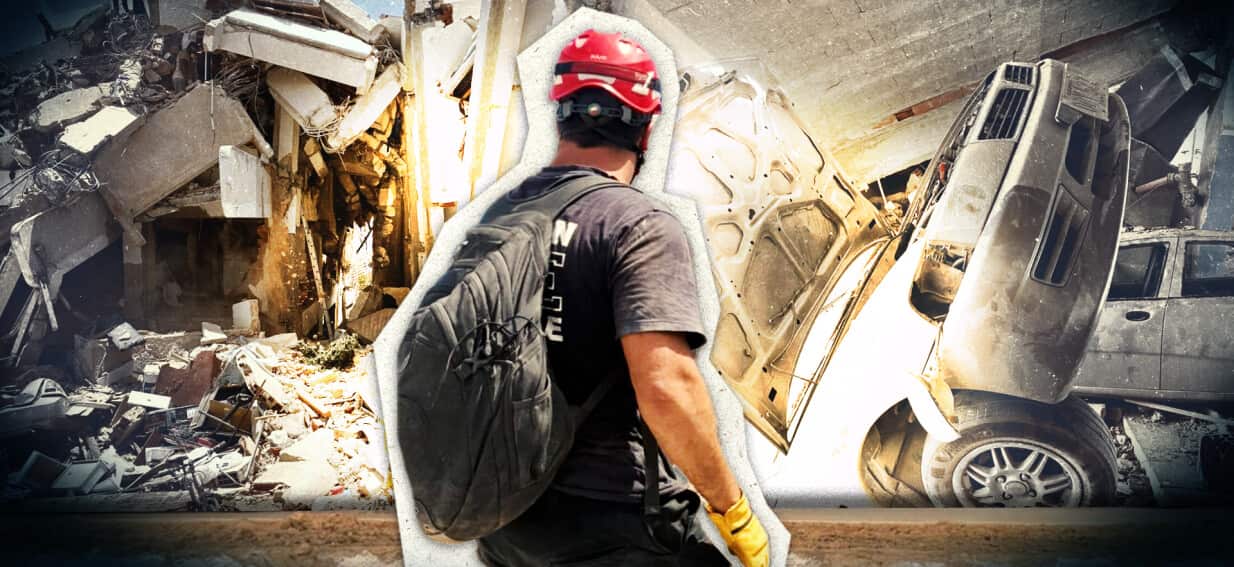
The tragic Tai Po fire at Wang Fuk Court didn't just burn down seven residential blocks. It completely scorched any remaining public trust in municipal oversight. When 168 people lose their lives in a single housing complex blaze, you expect swift, transparent ownership of the failure. Instead, the subsequent public inquiry revealed a masterclass in bureaucratic finger-pointing.
It's honestly infuriating to watch. For 43 hours, a fire raged through a 31-story Home Ownership Scheme estate in late 2025. It became the deadliest building disaster Hong Kong has seen in decades. Yet, during the evidential hearings that wrapped up in April 2026, the primary strategy from various enforcement agencies was simple. Pass the buck.
The Regulatory Blame Game After the Tai Po Fire
When Senior Counsel Victor Dawes pressed officials on why blatant hazards went unchecked, the answers were pathetic. Every agency had a reason why safety wasn't their job. The Buildings Department claimed government-built structures fall under the Housing Bureau. The Housing Bureau's Independent Checking Unit denied responsibility for regulating external wall materials. Meanwhile, the Fire Services Department told residents before the disaster that the flammable materials were beyond its ambit.
Basically, everyone had a clipboard, but nobody had a mandate.
This bureaucratic vacuum directly killed people. Residents didn't stay silent before the disaster. They actively sounded the alarm. One resident, Mr. Kong, repeatedly warned authorities about substandard scaffolding mesh and workers littering cigarette butts near the netting. His reports were shrugged off. The Urban Renewal Authority told a concerned tenant that safety complaints should be referred to relevant authorities, without even naming which authority that might be. There was no formal mechanism to pass a life-or-death complaint from one office to another.
A Contractor with 140 Convictions
The systemic failure goes much deeper than bad communication. Let's look at the actual company handling the HK$330 million exterior renovation project. Prestige Construction and Engineering Company had racked up 140 safety convictions since 2004. Let that sink in. A company with a rap sheet longer than a CVS receipt was handed a massive contract to wrap eight high-rise towers in bamboo and netting.
The Labour Department conducted 16 site inspections in the months leading up to the blaze. They claimed complaints about workers smoking were unsubstantiated. Yet, investigators later concluded the fire likely started from a discarded cigarette in a stairwell.
Even worse, the contractor actively worked to trick inspectors. Initial testing on the green safety netting suggested it met fire-retardant standards. But fire crews noticed the netting burned way too fast. When investigators did deeper testing on samples from hard-to-reach areas, seven out of twenty samples failed miserably. The contractor had strategically placed genuine fire-resistant netting only at the base of the scaffolding where inspectors typically took samples. The rest was a cheap, flammable trap.
How Cheap Styrofoam Created a High-Rise Chimney
High-rise buildings are supposed to be designed to contain fires. The Tai Po fire spread across seven towers because the renovation process completely bypassed basic physics. Workers used highly flammable expanded polystyrene foam, or styrofoam, to cover interior windows near lift lobbies and exterior windows across the estate.
When the cigarette butt ignited the scaffolding, the fire hit those styrofoam boards. The boards acted as a massive accelerant. Windows shattered instantly, letting the fire leap right into the flats. To make matters worse, the way the safety netting enclosed the buildings created a chimney effect. It forced strong upward air currents that pushed the flames up the 31-story towers at terrifying speeds.
Some staircase windows were even swapped from safety glass to plain wood so workers could walk out onto the scaffolding easier. It was a total abandonment of fire codes for the sake of convenience.
Where Real Accountability Needs to Start
Chief Executive John Lee opted for a non-statutory Independent Committee to handle the investigation rather than a statutory Commission of Inquiry. This move drew heavy criticism because a non-statutory committee lacks the legal teeth to force cooperation or compel evidence. We don't need flexible or efficient closed-door chats. We need legal consequences.
The government is currently busy pushing buyback plans for the displaced residents of Wang Fuk Court. They managed to get over 75% of owners in the charred blocks and the single spared building to sign on. That solves the property problem, but it doesn't solve the governance crisis.
True accountability means fixing the structural flaws in building management and enforcement. First, the city needs a centralized, mandatory database for all building safety complaints. If a resident files a report with any department, that report must be legally logged and automatically routed to a joint enforcement task force. No more shifting blame.
Second, procurement rules must change. A contractor with a history of chronic safety violations should be completely blacklisted from bidding on public housing projects. Fines must scale with contract value. A minor HK$10,000 fine means nothing to a firm netting hundreds of millions.
We can't change the tragic outcome of the Tai Po fire. But we can stop treating citizen safety complaints like junk mail. The next step requires the Security Bureau to fast-track its proposed legal amendments, significantly hike penalties for safety violations, and establish a single, unified agency that takes absolute ownership of high-rise renovation safety. Anything less is just waiting for the next tragedy.
:max_bytes(150000):strip_icc()/parts-of-a-swamp-cooler-2718628-a477e6f0787b4f8bb62ddf2def31d495.png)