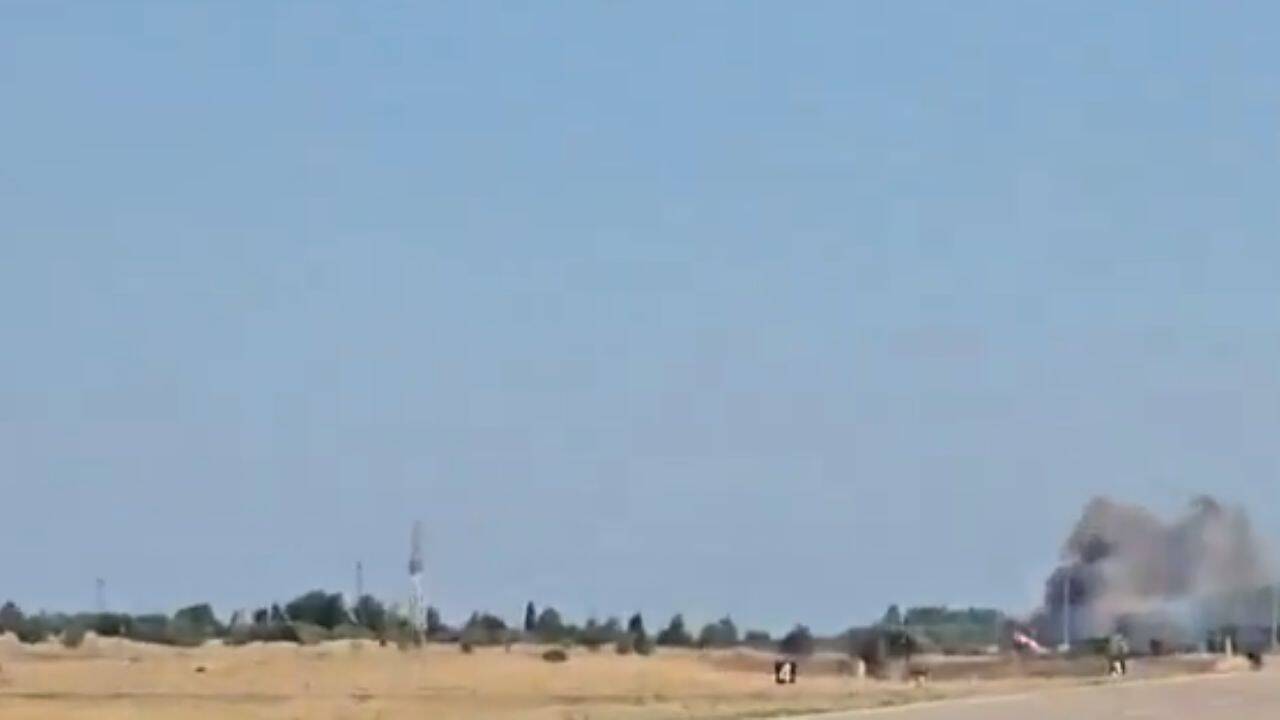
Two aviators lost their lives when a Hellenic Air Force F-4E Phantom II slammed into the earth during the Athens Flying Week air show at Tanagra Air Base. Thousands of spectators watched the twin-seat fighter execute a low-altitude maneuver before pitching downward into a catastrophic impact, followed by a secondary explosion that sent towering plumes of black smoke across the airfield.
The immediate official response followed a familiar, tragic script. Condolences poured from state offices. Three days of mourning were declared. Organizers shut down the remainder of the weekend exhibition while firefighting teams battled a brush fire ignited by the wreckage. Yet beneath the institutional grief lies an uncomfortably persistent question about the operational reality of pushing Cold War-era airframes to their absolute aerodynamic boundaries for public spectacle.
Military air shows occupy a strange, high-stakes intersection between public relations, national pride, and raw aviation hazard. They require crews to showcase extreme performance parameters in front of civilian crowds. When things go wrong, they go wrong instantly. There is no margin for error when an aircraft is operating mere meters above the tarmac.
The Weight of the Phantom
The F-4 Phantom is an aviation legend, but it is an aging one. Developed in the late 1950s, the McDonnell Douglas design is a heavy, muscular interceptor built for brute thrust rather than carefree handling. Flying a Phantom requires absolute mechanical respect. The airframe demands constant physical input, relying on analog systems and older aerodynamic philosophies that lack the safety nets of modern digital flight control software.
Greece has maintained a modernized fleet of these aircraft, upgrading avionics and radar capabilities to keep them relevant in a tense geopolitical theater. However, upgrading a radar screen or a navigation suite does not reverse metal fatigue. Airframes age structurally every time they pull positive or negative G-forces. They accumulate microscopic stress fractures in wing spars and fuselage joints.
Display flying places unique, punishing demands on these veteran jets. Low-altitude aerobatics require rapid transitions between high angles of attack and maximum thrust settings. Engines surge, airframes flex, and hydraulic systems operate under peak thermal and mechanical loads. Asking a legacy platform to perform aggressive maneuvers near the ground creates a compounding risk profile that modern digital fly-by-wire fighters manage with automated envelope protections. The Phantom has no computer telling the pilot they are crossing a dangerous line. It relies entirely on human judgment, spatial awareness, and split-second physical control.
The Perils of Low-Level Display Aviation
The physics of low-altitude flight leave virtually zero room for recovery. When an aircraft performs a tight right turn just a few meters above the ground, as eyewitness accounts and broadcast footage indicated, the vertical recovery window shrinks to fractions of a second.
If an engine hiccups, if a control surface binds momentarily, or if spatial disorientation strikes the crew for even a heartbeat, the ground rushes up faster than human neuromuscular systems can react. Ejection seats require a specific altitude and attitude envelope to function safely. Low-altitude ejection is historically perilous; if the aircraft is banked or descending toward the earth, the rocket trajectory of the seat often carries the pilot directly into the terrain.
Air show routines are carefully choreographed, rehearsed, and scrutinized by safety supervisors. Pilots practicing these routines build deep muscle memory. They know the airspace boundaries and the height floors. But muscle memory and briefing parameters cannot alter the laws of momentum. When a heavy fighter drops below a critical energy state during a high-alpha maneuver, gravity becomes an unforgiving master.
The aviation community often treats these accidents as isolated tragedies driven by unforeseen mechanical anomalies or momentary pilot error. That framing avoids a harder institutional truth. Every time an air force commits legacy aircraft to high-visibility aerial demonstrations, it accepts an elevated statistical risk.
Sustaining Readiness Under Strain
The Hellenic Air Force operates in one of the most demanding tactical environments in Europe. Regional friction and persistent territorial disputes mean Greek pilots maintain an exceptionally high operational tempo. Scrambles, intercept missions, and continuous training exercises place a heavy burden on both personnel and hardware.
In an air arm stretched across numerous islands and complex airspace, maintenance pipelines run hot. Ground crews work around the clock to keep vintage and modern platforms airworthy. Flying demanding air show routines on top of an already punishing operational schedule stretches the ecosystem to its limits. Pilots flying public displays are often among the most elite tactical instructors and squadron leaders in the military. Losing them damages institutional knowledge that takes decades to rebuild.
The debate over whether military jets should perform low-altitude aerobatics at civilian air shows surfaces after every fatal accident, only to fade away as public memory softens. Proponents argue that these events inspire future generations of recruits, maintain a connection between the armed forces and the taxpaying public, and demonstrate national defense capabilities. Critics counter that the risk-to-reward ratio is fundamentally skewed when lives and irreplaceable multi-million-dollar assets are staked on a weekend performance.
The black smoke has cleared from the runway at Tanagra. The official investigations will parse flight data recorders, examine maintenance logs, and analyze telemetry to determine the precise sequence of mechanical or human factors that sealed the fate of the two aviators. Yet the broader reality remains unchanged. As long as aging military hardware is flown at the razor's edge for crowds below, the shadow of risk will follow every roll and pitch in the sky.