The heavy doors of the Great Hall of the People do not just open; they announce. They offer a specific kind of silence, a vacuum of sound that reminds every visitor exactly where the power resides. When Andrew Hsia, the vice chairman of Taiwan’s opposition Kuomintang (KMT), stepped into that curated hush recently, he wasn't just walking into a meeting. He was walking into a message.
Beijing is a city of layers. On the surface, it is a grid of glass towers and frantic commerce. Beneath that, it is a masterclass in the art of the "cold shoulder" and the "warm embrace." For years, the ruling Democratic Progressive Party (DPP) in Taipei has received the former. But as Donald Trump prepares to retake the stage in Washington, Beijing has decided to turn up the heat on the latter for the KMT.
It is a play as old as the hills: find the friend of your enemy, and make them your honored guest.
The Ghost at the Table
To understand why a simple handshake in Beijing matters to a worker in a semiconductor fab in Hsinchu or a voter in Pennsylvania, you have to look at the empty chair. Donald Trump’s shadow loomed over the proceedings like a storm front moving across the Taiwan Strait.
Beijing knows what is coming. They remember the tariffs. They remember the phone calls that broke decades of protocol. By rolling out the red carpet for the KMT now, the Chinese leadership is sending a telegram to the incoming administration. The message isn't written in ink; it’s written in the seating chart. They are signaling that there is still a "reasonable" path to cross-strait relations—provided that path doesn't involve the current leaders in Taipei.
Imagine a high-stakes poker game where one player is trying to convince the table they aren't holding a grudge, even as they sharpen a knife under the felt. That is the current state of play. China is framing itself as the adult in the room, willing to talk to "peace-loving" forces while painting the DPP as the architects of chaos.
The Weight of the Handshake
Andrew Hsia’s visit is technically about trade and travel. It’s about the mundane mechanics of cross-strait life—fishing rights, student exchanges, the flow of capital. But in this part of the world, nothing is mundane.
When Hsia meets with Song Tao, China’s top Taiwan affairs official, the imagery is calibrated for a domestic audience in both Beijing and Taipei. For the Chinese Communist Party, it’s proof that their "One China" principle still has buyers. For the KMT, it’s a gamble. They are betting that a public exhausted by the threat of blockade and the soaring cost of defense will see this dialogue as a safety valve.
But safety is a subjective term.
Consider the perspective of a small business owner in Taichung. To them, the KMT’s outreach looks like a lifeline. It represents a return to the days when the "Three Links" meant prosperity rather than prep for war. But to a young student in Taipei, that same handshake looks like a slow-motion surrender. The stakes aren't just about GDP growth or regional stability. They are about the very soul of a place that has spent thirty years carving out a distinct identity.
The Trump Variable
The timing is not a coincidence. Trump’s return signals a period of radical unpredictability. His "America First" doctrine has always been a transactional one. Will he stand by Taiwan as a democratic outpost? Or is Taiwan a bargaining chip in a grander deal over trade deficits and automotive parts?
Beijing is betting on the latter, or at least trying to provoke the doubt. By engaging with the KMT, they are creating a counter-narrative. They are telling Trump: Look, we can solve this ourselves. Stay out of it. It is a sophisticated form of gaslighting. While Chinese warships continue to circle the island in ever-tightening loops, the rhetoric in the meeting rooms is all about brotherhood and shared heritage. The dissonance is deafening. One day, the People's Liberation Army is practicing "Joint Sword" exercises; the next, officials are sharing tea and discussing the export of pineapples.
The Invisible Stakes
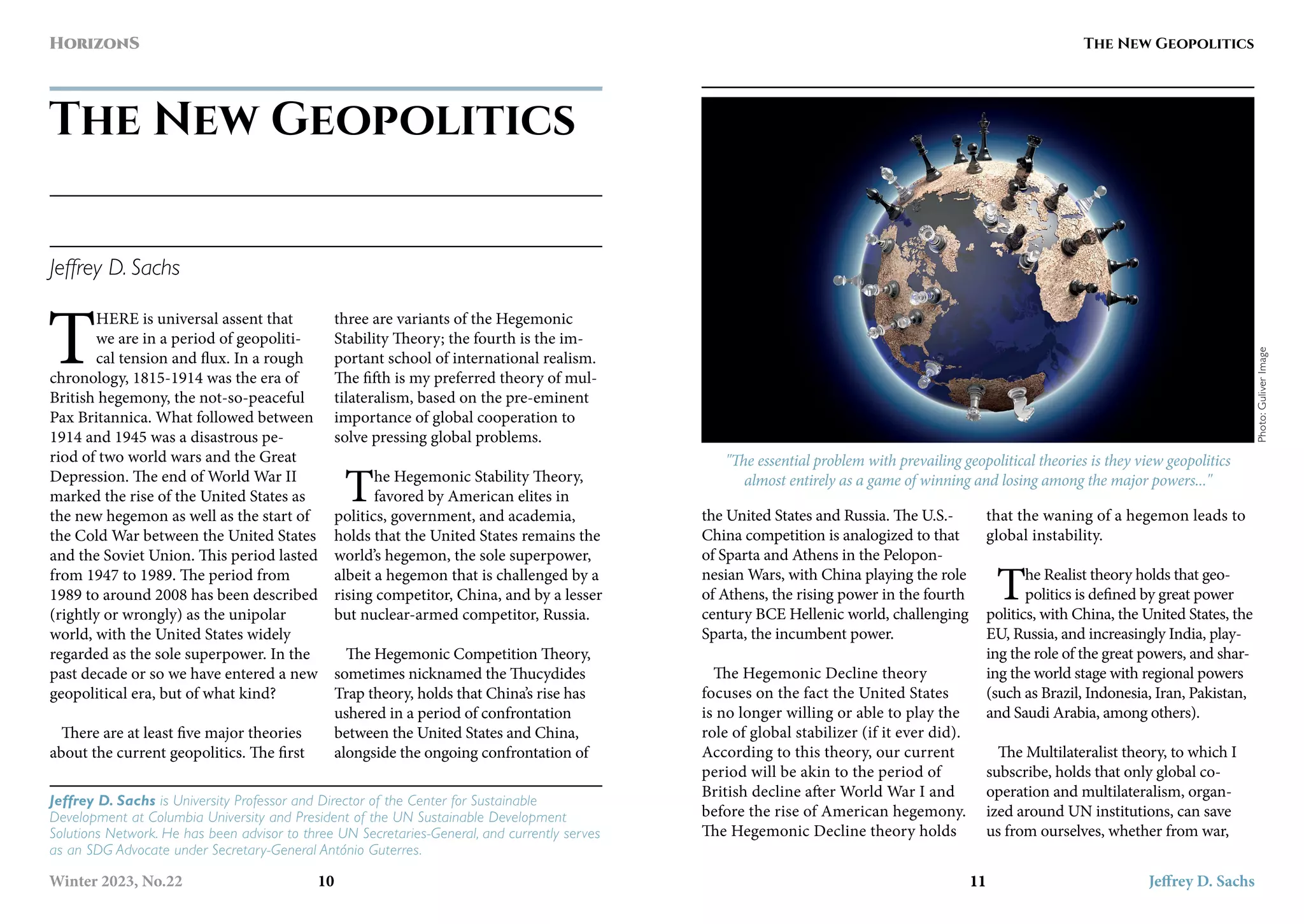
We often talk about geopolitics as if it were a game of Risk, with plastic pieces moving across a board. We forget the friction. We forget the human cost of being a "flashpoint."
In the villages along the Fujian coast, fishermen look across the water at the lights of Kinmen. They see brothers. They see enemies. They see a future that is being decided in rooms they will never enter. The KMT’s visit is an attempt to bridge that gap, but the bridge is built on shifting sand.
The KMT argues that dialogue prevents war. Their critics argue that dialogue under duress is just a prelude to absorption. Both are right. Both are terrified.
There is a specific kind of dread that comes with being a small island caught between two giants. One giant wants to protect you—for a price. The other giant claims you are part of its own body and is willing to break your bones to prove it. In that context, a diplomatic visit isn't just news. It’s a pulse check.
The Art of the Overture
Beijing’s hospitality is a weapon. By treating the opposition as the "true" representatives of the Taiwanese people, they are effectively trying to de-legitimize the elected government. It is a soft-power siege.
They are offering "carrots" to the KMT—easier customs inspections, more tourism quotas, a seat at the table. Meanwhile, the DPP gets the "stick"—military incursions, diplomatic isolation, and silence. This binary choice is designed to fracture Taiwanese society from within.
The strategy is clear: make the cost of supporting the current government so high that the alternative looks like the only sane choice.
But there is a flaw in the plan. The people of Taiwan have grown used to their own agency. They have watched Hong Kong. They have seen what happens when the "warm embrace" of the mainland tightens into a chokehold. The tea in Beijing might be warm, but the air back home is charged with a static that no amount of diplomatic theater can grounded.
The Narrative of Necessity
The KMT frames this as a mission of necessity. They believe they are the only ones left who can speak the language of Beijing. And in a world where communication has broken down almost everywhere else, that is a powerful argument.
But communication requires a shared vocabulary. When the KMT talks about "peace," they mean the absence of conflict. When Beijing talks about "peace," they mean "reunification." These two things are not the same. They are parallel lines that only meet at infinity, or at the end of a gun barrel.
The tragedy of the situation is that both sides are performing for an audience that isn't even in the room. They are performing for the voters in the suburbs of Phoenix and the strategists in the West Wing. They are performing for a world that is increasingly tired of "forever crises" and just wants the supply chains to work.
The Quiet Room
As the meetings conclude and the press releases are scrubbed of any mention of tension, the reality remains unchanged. The ships are still there. The missiles are still aimed. The rhetoric hasn't moved the mountains; it has only painted them a different color.
Andrew Hsia will return to Taipei and tell his constituents that he has lowered the temperature. Beijing will tell its people that the "Taiwan compatriots" are coming home. And in Washington, the phones will start ringing as the new administration tries to figure out if they’ve been outmaneuvered before they even sat down.
The Great Hall of the People returns to its silence. The tea cups are cleared away. The porcelain is cold. Outside, the world waits for the next move, knowing that in this game, the most dangerous moments are the ones where everyone is smiling.
The message has been sent. Whether anyone is actually listening is a different story. The air in the Strait remains heavy, thick with the salt of the sea and the metallic tang of a storm that refuses to break, leaving a million lives suspended in the pause between the handshake and the strike.