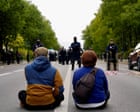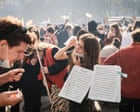
Tear gas at a street performance is ugly. Nobody likes watching musicians choke on chemical irritants in the middle of a city square.
Yet the standard outrage machine treats every clash between musical activists and riot police in Paris as a civilization-level alarm bell. A brass band gets dispersed. A string quartet plays through a haze. Within hours, the commentary class declares that free expression is dying on the cobblestones and that a peaceful art form has been singled out for punishment. Read more on a related issue: this related article.
That reaction is lazy. Worse, it hands the state and the spectacle-seekers the exact outcome they want.
I have spent years watching public-order operations, protest choreography, and media framing collide across European capitals. I have seen movements burn through months of goodwill because organizers mistook a dramatic visual for strategic power. And I have watched commentators confuse a crowd-control tool with a targeted assault on music itself. Additional reporting by Reuters highlights related views on this issue.
When you treat tear gas on an orchestra as a sacred violation of culture, you miss the real mechanics of urban policing, protest escalation, and political theater. You ask why police gassed musicians instead of asking how a demonstration was staged, what crowd-control doctrine actually governs street dispersal, and whether "musical activism" is helping or blunting the political demand behind it.
Defining What Actually Happened on the Street
Precision matters before moralizing. Tear gas in European policing is typically a lachrymatory agent such as CS (2-chlorobenzalmalononitrile) or OC (oleoresin capsicum) deployed to break up assemblies deemed unlawful, obstructing, or at risk of tipping into violence. It is an area-denial and dispersal irritant, not an instrument tuned to Beethoven or protest folk songs.
That distinction does not make getting gassed pleasant. Lachrymators cause immediate burning in the eyes, nose, throat, and lungs, alongside panic and disorientation. For anyone with asthma, cardiovascular strain, or close proximity to a canister, it hurts and scares.
Still, claiming an orchestra was targeted because it is an orchestra misreads how riot units operate. Police units managing dense urban protests respond to crowd density, perimeter breaches, unpermitted blockades, and perceived escalation. If a mobile sound system, a marching band, or a performance anchors a crowd at a junction or stays put after dispersal orders, the musicians are inside the operational footprint.
To understand the dynamics of street protest and state response, look at classical work on contentious politics by Charles Tilly and Sidney Tarrow, or foundational analyses of public-order policing by P.A.J. Waddington. Tilly and Tarrow showed long ago that activists deliberately adopt recognizable "repertoires of contention" to draw attention and signal legitimacy. Waddington documented how police forces prioritize clearing space and reasserting spatial control once a gathering crosses a legal or tactical threshold.
Music is a classic repertoire choice. Horns, drums, and violins soften the visual edge of a protest. Cameras love the contrast: tweed, sheet music, and brass instruments set against black shields and batons.
That contrast is powerful. It is also a two-edged sword.
The Myth of the Innocent Stage
Standard commentary assumes that pairing music with protest creates an untouchable bubble. Play a cello at a blockade, sing in a square, form a street band during a strike, and the state is supposed to step back out of respect for art.
In reality, the street has no stage curtains. Once a performance is integrated into a political action—blocking traffic, holding a plaza past curfew, or marching alongside confrontational blocs—it is part of the protest apparatus, not an isolated recital in a conservatory.
Consider a thought experiment. Imagine a scenario where a fifty-piece brass ensemble sets up on a major Parisian roundabout during a contested transit dispute, refusing to clear when officers issue dispersal warnings because the conductor insists music is protected expression. Officers deploy tear gas to clear the intersection. Who created the collision? The municipal authority enforcing traffic and public-order rules, the organizers who placed fragile instruments and unmasked performers on a volatile frontline, or both?
Most pundits skip that tension entirely. They treat protest tactics as immune from strategic trade-offs.
They aren't. Protest is a contest of leverage, not a talent show. If an activist group brings instruments into a high-friction zone without a clear exit plan, medical support, or legal cover, they are putting performers into harm's way to manufacture a headline. When the gas hits, the resulting outrage may generate sympathy—or it may reinforce the narrative that demonstrators are staging provocative stunts in public spaces.
Why "Musical Activism" Often Blunts the Real Issue
There is a quieter flaw in celebrating musical activism as an automatic upgrade to street politics. Music can carry a message, build morale, and keep people warm during a long afternoon. It can also turn a sharp political demand into a pleasant vibe.
I have watched causes with concrete policy grievances—housing shortages, pension rules, labor conditions, policing practices—gradually aestheticize themselves until the grievance became secondary to the performance. A catchy chorus is easy to film. A nuanced policy demand is harder.
When coverage focuses on the romance of musicians playing while tear gas drifts past, the substance of the dispute shrinks. The story becomes police versus artists in Paris rather than why thousands of people are in the street in the first place.
That trade-off rarely gets examined because criticizing protest aesthetics feels like siding with the crackdown. It isn't. Asking whether a tactic works is not the same as cheering for crowd control.
Dismantling the Obvious Questions
People looking at clashes involving musical activists in France usually ask a predictable set of questions. Each one hides a bad assumption.
Are police deliberately targeting musicians to crush dissent?
Usually, no—and assuming deliberate artistic persecution is a distraction. Crowd-control units focus on containment, dispersal, and perimeter security, often under chaotic conditions with poor visibility and shifting crowd movements. When an action mixes music with blockades or marches, musicians end up where the crowd is thickest or most visible. Treating every canister as a targeted strike against culture overestimates precision and underestimates routine public-order friction.
Does tear gas on an orchestra prove democracy is in collapse?
No. Heavy-handed or poorly judged policing during protests is an ongoing governance and civil-liberties issue in France and across democracies, subject to intense legal, parliamentary, and public scrutiny. Calling every ugly street clash an existential collapse flattens real political debates into melodrama. Democracies test their boundaries in messy streets all the time; surviving those tensions requires sharper accountability and smarter organizing, not apocalyptic slogans.
Should musicians stop joining protests?
Not necessarily—if they know what they are doing. Street music has a long history in labor movements, civil rights campaigns, and civic gatherings. The mistake is treating a protest square like a park concert where nothing bad can happen. Performers who join high-tension demonstrations should treat it like any other high-risk environment: know the legal status of the gathering, understand crowd-control hazards, carry eye protection and water, and stay clear of aggressive flanks.
Where This Contrarian View Can Go Wrong
Pushing back against alarmist outrage carries its own risks, and pretending otherwise would be dishonest.
First, downplaying the shock of tear gas on performers can slide into excusing disproportionate or sloppy policing. Even when crowd control is legally authorized, poorly aimed canisters, deployment in tight spaces, or indiscriminate use against peaceful bystanders are real problems. Just because musicians weren't singled out in a grand conspiracy doesn't mean every deployment was justified.
Second, treating protest purely as a tactical chess match can sound cold. People march and play music out of genuine anger, grief, solidarity, and exhaustion—not every street action is a cold media calculation. Ignoring human emotion makes political analysis brittle.
Third, warning that aesthetics can overshadow substance should not become an excuse to police how activists express themselves. A brass band or choir can energize a movement in ways a dry press release never will. The issue isn't music itself; it is confusion between looking effective and being effective.
What Actually Works on the Street
If activists, organizers, and cultural workers want real leverage instead of another round of predictable outrage, they need to change how they operate.
- Separate the concert from the blockade: If the goal is a free public performance that builds broad civic sympathy, hold it in a lawful, accessible space with clear sightlines and safe egress. Mixing high-risk blockades with delicate instruments and uninitiated participants is poor planning.
- Define the demand before the downbeat: Make sure every visual, song, and banner points unmistakably to a specific political or economic ask. If a passerby leaves remembering the horns but not the issue, the tactic misfired.
- Train for the environment, not the camera: Anyone stepping into a volatile demonstration should know basic crowd dynamics, how chemical irritants behave in wind, how to flush eyes properly, and when to disengage before a kettle or charge forms.
- Demand concrete accountability over vague outrage: Instead of broad declarations that culture is under siege, push for specific reforms—clearer rules of engagement for crowd-control units, independent oversight of deployments, and transparent reporting on injuries and equipment use.
Outrage is cheap in a city full of cameras. Discipline, clarity, and tactical honesty are much harder.
Stop treating tear gas near a horn section as a cultural apocalypse, and start building actions the state can't disperse with a canister.