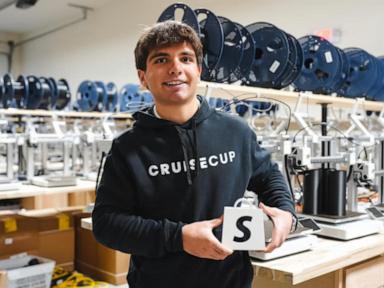
Every few months, the internet falls in love with the same tired archetype. A teenager buys a budget plastic extruder, prints out a few articulated dragons or custom phone stands, and suddenly local media outlets are crowning them the next titan of industry. The headlines read like fairy tales. Kid buys machine for three hundred bucks, prints plastic trinkets in a bedroom, and scales into a massive e-commerce empire.
It is a comforting narrative. It feeds our collective appetite for meritocracy porn. But it is also a masterclass in economic self-deception.
I have watched hardware startups burn through millions of venture capital dollars making the exact same fundamental miscalculation that these teenage garage operations make on day one. They mistake production capability for a viable business model. Owning a plastic deposition machine does not make you a manufacturer any more than owning a kitchen stove makes you a Michelin-starred restaurateur.
Let us dismantle the lazy consensus. The conventional wisdom says that desktop additive manufacturing lowers the barrier to entry so drastically that anyone with a laptop can carve out a profitable niche. That premise is fundamentally flawed because it confuses ease of prototyping with ease of unit economics.
The Unit Economics Illusion
Look closely at what these youthful prodigies are actually selling. They are rarely producing high-margin functional end-use components. Instead, they flood online marketplaces with novelty items, fandom merchandise, and aesthetic knick-knacks. On paper, the math looks incredible. A spool of polylactic acid filament costs twenty dollars. That spool yields dozens of little plastic figurines. Sell those figurines for ten bucks a pop, and the margins look like software.
Except they are missing three invisible line items that eventually crush every small-scale operator: depreciation, post-processing labor, and platform race-to-the-bottom pricing.
A consumer-grade printer running twenty-four hours a day will experience mechanical failure within twelve to eighteen months. The hot ends clog, the stepper motors wear down, and the build plates lose adhesion. When you factor in the hardware replacement cycle, your actual capital expenditure is far higher than the initial sticker price.
More importantly, consider the hourly wage of the operator. Peeling support material off a complex geometric print, sanding down layer lines, and packaging the item takes time. If a teenager spends three hours cleaning up a print that sells for fifteen dollars, they are working for less than minimum wage. They have not built a business; they have bought themselves a low-paying, high-stress job running a noisy machine that smells faintly of heated polymers.
The Scale Ceiling
The deeper problem with the desktop manufacturing hustle is the complete lack of operational leverage. In software or digital media, serving your ten-thousandth customer costs essentially the same as serving your first. In physical manufacturing, every single unit requires raw material consumption, machine uptime, and manual labor.
To scale a 3D printing operation past the bedroom stage, you cannot simply press a button twice as hard. You have to buy more machines, rent commercial space to isolate the toxic fumes and noise, and hire operators. The moment you introduce commercial overhead, those charming bedroom margins evaporate instantly. Injection molding companies laugh at the very notion of competing with desktop hobbyists on price, while industrial additive shops laugh at the notion of competing on precision. You are trapped in a dead zone between a hobby and a factory.
The Real Opportunity Hiding in Plain Sight
This does not mean the technology is useless. It means the application is entirely misunderstood. The value of desktop fabrication was never about mass-producing plastic dragons for teenagers on social media. Its true power lies in rapid iteration and low-volume functional validation.
Companies that succeed in this space do not sell trinkets to retail consumers. They solve acute, high-friction mechanical problems for industrial clients who need custom jigs, fixtures, or replacement parts yesterday. They charge hundreds of dollars for a single nylon bracket because that bracket keeps a million-dollar assembly line from shutting down. That is where actual enterprise value lives. It requires engineering depth, material science literacy, and B2B sales capability. It is not romantic, and it does not make for a viral human-interest feature, but it actually scales.
Stop romanticizing the bedroom printer hustle. Buying a machine and turning it on is the easiest part of the equation. If your entire competitive advantage relies on the novelty of a teenager operating a heated nozzle, you do not have a business. You have a hobby with an invoice.