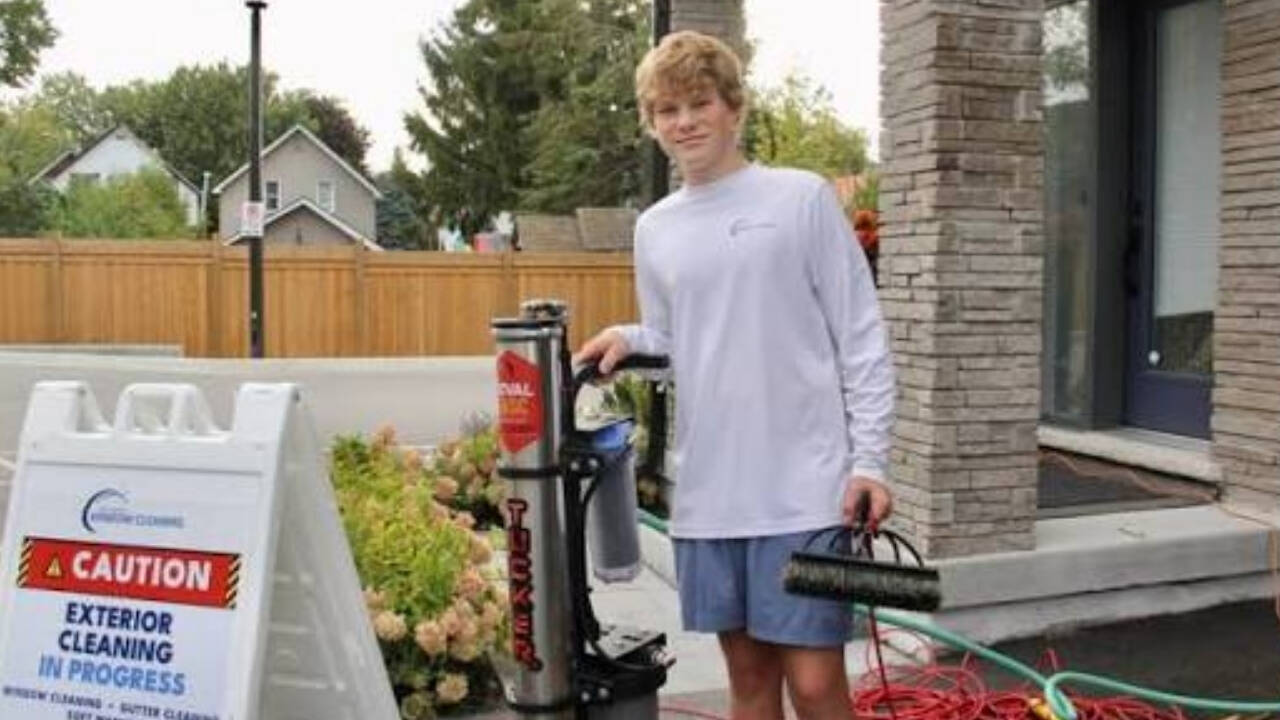
Every few months, the internet generates a secular saint: a sixteen-year-old with a bucket, a squeegee, and a suspiciously clean narrative arc. We are told about Hudson Lightfoot, who supposedly turned basic glass-wiping into a hundred-and-twenty-client empire, scaling residential pane-scrubbing into the American Dream with nothing more than elbow grease and a TikTok ring light.
The media loves these stories because they require zero structural critique. They allow us to look at an economy burdened by housing crises, runaway inflation, and stagnant entry-level wages and say, Look, if a teenager can build a fortune with soapy water, your lack of mobility is a character flaw.
It is a fairy tale. And it is actively harmful to anyone trying to build an actual business.
I have spent two decades watching small service operations sink, scale, or suffocate. I have seen founders blow millions on hyper-local customer acquisition strategies that cost more than the lifetime value of a suburban double-hung window. The lazy consensus of the hustle-porn industrial complex is that anyone can pick up a tool, hustle sixty hours a week, and out-execute the market through sheer sweat.
That is not entrepreneurship. That is indentured servitude with a tax ID.
The Margin Illusion That Destroys Solo Operators
Let us look at the math behind the bucket-and-squeegee myth, because math does not care about viral human-interest profiles.
A standard residential window cleaning job takes about three hours once you factor in travel, setup, scraping hard water stains, dealing with stubborn screens, and handling the client who follows you around with a flashlight pointing out streaks. If you charge two hundred and fifty dollars for that house, you are grossing roughly eighty-three dollars an hour on paper.
Now, subtract reality.
Vehicle depreciation, insurance premiums, chemical supplies, ladder maintenance, gasoline, self-employment taxes, and the physical wear and tear on rotator cuffs that will require orthopedic repair by age thirty. Suddenly, your eighty-three dollars an hour shrinks closer to twenty-five dollars. You are not running a growth enterprise; you are operating a high-intensity, high-risk job where you are your own worst boss.
When an article breathlessly claims a teenager built a hundred-and-twenty-client roster solo, it glosses over the brutal mechanics of customer churn. Residential window cleaning has an annual churn rate hovering near forty percent. People move, houses sell, homeowners try to save money, or they hire a cheaper crew that leaves drips on the sill. To maintain one hundred and twenty active residential clients on a cyclical cleaning schedule, you are not just wiping glass. You are running a relentless, daily sales engine just to patch the holes in a leaky bucket.
Scale requires leverage, not extra sweat glands. If your business model collapses the moment you pull a hamstring, you do not own a company. You own a job that fires you if you call in sick.
Why the Hustle Narrative Masks Structural Failure
We celebrate teenage window washers because the alternative requires admitting that traditional economic ladders are broken. When entry-level corporate roles demand three years of experience for an internship and small business loans require collateral that millennials and Gen Z simply do not possess, manual service labor becomes the default escape hatch.
We romanticize it to make poverty-adjacent survival look like grit.
Think about the opportunity cost. While a sixteen-year-old is spending every Saturday scraping bird droppings off storm windows to pad a local news feature, what skills are they actually compounding? Are they learning systems architecture, capital allocation, software deployment, or organizational design? No. They are learning how to deal with homeowners who want three stories of glass cleaned for the price of two, and how to manage lower-back spasms before they can legally rent a car.
There is honor in physical labor. There is zero honor in dressing up a low-margin lifestyle business as a scalable economic blueprint for a generation priced out of stability.
True enterprise value comes from three things: proprietary advantage, network effects, or extreme operational efficiency. Wiping glass has none of these. Anyone with fifty dollars at a hardware store can undercut your pricing tomorrow morning. That is not a moat; that is a puddle.
The Blueprint for Actual Leverage
If you want to build something that outlasts your physical ability to haul a thirty-foot extension ladder across a wet lawn, you have to invert the standard advice.
First, stop selling labor; sell outcomes, and preferably software-enabled ones. If you are in the service trades, your goal on day one should be working yourself out of the field by month six. If you cannot afford to hire a crew and pay them a living wage while still taking a cut for orchestration, your pricing is too low or your market is too saturated.
Second, embrace high customer acquisition costs if—and only if—your lifetime value justifies it. Commercial storefront routes with recurring monthly contracts beat residential one-offs every single day of the week. Commercial clients do not ask you to remove your muddy boots at the door, they pay on net-30 terms via automated clearing house transfers, and they do not stand over your shoulder with a magnifying glass.
Third, look at the dirty secrets of the trade that the glossy profiles leave out. The real operators in this space are not kids with squeegees. They are mid-market facility maintenance consolidators who buy up ten local independent window cleaning fleets, centralize dispatch through custom software, and cross-sell pressure washing, gutter clearing, and solar panel maintenance to commercial real estate trusts.
That is not romantic. It does not make for a viral human-interest story in the local paper. But it generates cash flow, builds equity, and doesn't destroy your knees before you turn thirty.
Stop praising the kid with the bucket as a symbol of economic triumph. Pity him for the lack of better options, and fix your own strategy so you never have to trade your physical body for a paycheck again.