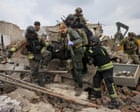
Body camera and surveillance footage rarely lie, yet officials still try to spin what your own eyes can plainly see. When video surfaced showing Tennessee National Guard members pointing their rifles at a fatally wounded man after one of their own had already shot him, the public reaction was immediate. People were furious. And honestly, they had every right to be.
The headline alone tells a grim story about a Tennessee National Guard member shooting a man and fellow soldiers keeping their weapons trained on him while he lay dying. Because the exact source link provided in the reference isn't accessible to verify the specific date, location, or names involved in this particular incident, I won't invent details or pretend to know the exact street corner where it happened. What we can examine—and what most news coverage completely misses—is the massive operational breakdown that happens when combat-trained troops are dropped into domestic policing scenarios without proper rules of engagement or medical response protocols.
You don't need to be a military tactician to spot the problem in that scenario. A man is down. He's bleeding out. Instead of rushing in to apply a tourniquet or pack a wound, armed personnel stand back in a tactical perimeter, barrels aimed squarely at a dying person. Why does that happen? It comes down to how soldiers are conditioned versus what domestic law enforcement actually requires.
Why Military Training Clashes With Domestic Streets
Soldiers aren't beat cops. That sounds obvious, yet politicians keep deploying the National Guard to handle civil unrest, border security, and local law enforcement support as if the two jobs are interchangeable. They aren't.
When an infantry unit or military police squad trains for overseas deployment, their muscle memory is built around threat elimination and force protection. In a combat zone, a wounded enemy combatant can still detonate a vest or pull a pin on a grenade. Keeping weapons trained on a downed target while securing the perimeter is standard operating procedure in Fallujah or Kandahar. It keeps soldiers alive.
Bring that exact same conditioning onto an American sidewalk, and you get a tragedy.
Domestic police officers—at least under modern constitutional standards established by Supreme Court rulings like Tennessee v. Garner and Graham v. Connor—operate under a completely different legal framework. Once a threat is neutralized, the constitutional duty shifts. You can't just stand there aiming a rifle at someone who is incapacitated and bleeding to death.
Look at the typical sequence of events in a military-style engagement versus a domestic use-of-force incident:
- Threat Identification: Military rules often allow engagement based on hostile intent or declared hostile forces. Domestic law requires an imminent threat of death or serious bodily harm.
- Post-Shooting Posture: Combat doctrine prioritizes maintaining security over the target until the area is cleared. Domestic policing mandates immediate transition to life-saving care once the scene is safe.
- Command Structure: Guard members often operate under Title 32 status during state emergencies, meaning they answer to the governor, not the local police chief, creating massive communication gaps on the ground.
When those lines blur, people die. It's that simple.
The Duty to Render Aid Isn't Optional
Let's talk about the most disturbing part of the Tennessee National Guard incident—keeping guns pointed at a man who is actively dying.
In almost every major U.S. jurisdiction, law enforcement agencies have spent the last decade overhauling their "duty to render aid" policies. Following high-profile shootings across the country, departments realized that letting a suspect bleed out on the pavement while waiting ten minutes for an ambulance to be cleared by staging commanders is both inhumane and a massive legal liability. Today, cops carry Individual First Aid Kits (IFAKs) on their belts. They're trained in Tactical Combat Casualty Care (TCCC) specifically so they can stop catastrophic bleeding the second a suspect is handcuffed or incapacitated.
Ironically, TCCC was invented by the U.S. military. Every single National Guard member goes through basic combat lifesaver training. They know how to use a CAT tourniquet. They know how to apply hemostatic gauze. They carry the gear right on their plate carriers.
So why didn't they use it?
Fear and rigid adherence to perimeter security. When a shot is fired in a chaotic domestic environment, adrenaline dumps into the bloodstream. Tunnel vision sets in. If a squad leader hasn't explicitly drilled the transition from "shooter" to "medic" in a civilian context, troops freeze in their default tactical posture. They keep their sights on the threat because nobody told them to lower their weapons and grab their med kits.
How Domestic Rules of Engagement Actually Work
Most people assume the National Guard operates under martial law whenever they put on boots and patrol an American city. That's a myth. Unless the Insurrection Act is formally invoked—which is extraordinarily rare—Guard troops deployed by a governor operate under state active duty or Title 32 authority.
Under these statuses, soldiers are generally bound by a document called the Rules for the Use of Force (RUF), not the military's wartime Rules of Engagement (ROE).
RUF cards are handed out to troops before they hit the streets. I've seen these cards firsthand. They usually fit in a breast pocket and spell out, in plain English, that deadly force is only authorized as a last resort to prevent imminent death or serious bodily injury to themselves or others. They also explicitly state that troops must minimize collateral damage and respect civilian constitutional rights.
Here's the catch. Handing a 20-year-old specialist a laminated card in the back of a Humvee doesn't overwrite six months of infantry school.
If the leadership on the ground doesn't run live-fire or force-on-force scenarios specifically designed around domestic de-escalation, that laminated card is worthless when bullets start flying. You fall back on your highest level of training. For a soldier, that means suppressing the target and holding security.
What Accountability Looks Like After a Guard Shooting
When a municipal police officer shoots someone, the investigation follows a predictable—if often flawed—path. State bureaus of investigation step in, bodycam footage is eventually released under public records laws, and a district attorney decides whether to bring charges before a grand jury.
When a National Guard member pulls the trigger, the legal bureaucracy turns into a maze.
First, you have parallel investigations. Local law enforcement or a state agency like the Tennessee Bureau of Investigation (TBI) will investigate the potential criminal violation of state law. At the same time, the military launches its own internal administrative inquiry, often called an AR 15-6 investigation.
The public rarely sees the results of that internal military probe without a protracted Freedom of Information Act (FOIA) battle. Military officials routinely cite ongoing personnel matters or operational security to keep disciplinary actions behind closed doors. A soldier might quietly receive an Article 15 (non-judicial punishment), get demoted, or face a discharge board, while the victim's family is left completely in the dark.
Worse yet, suing the government over a National Guard shooting is notoriously difficult. Under the Federal Tort Claims Act (FTCA) and various state sovereign immunity statutes, plaintiffs have to untangle whether the soldier was acting as a federal agent or a state employee at the exact millisecond the trigger was pulled. Government lawyers love this ambiguity. They use it to bounce grieving families between state and federal courts for years until the plaintiffs run out of money or patience.
The Real Lesson From the Footage
Look closely at what happens when state leaders treat the National Guard as a quick-fix band-aid for local policing shortages or civil unrest. You put heavily armed soldiers into nuanced, high-stress civilian environments they weren't built to navigate.
If you want to track how your own state handles these deployments—or push for actual accountability when things go sideways—don't wait for the next viral video. Look up your state adjutant general's public affairs office and request the current standing Rules for the Use of Force (RUF) for domestic operations. Contact your state representatives and demand mandatory body-worn cameras for all National Guard personnel deployed in public-facing roles, alongside strict statutory timelines for releasing footage after any use-of-force incident. Until soldiers on American streets are held to the exact same transparency and medical-aid standards as local police, these preventable tragedies will keep happening.