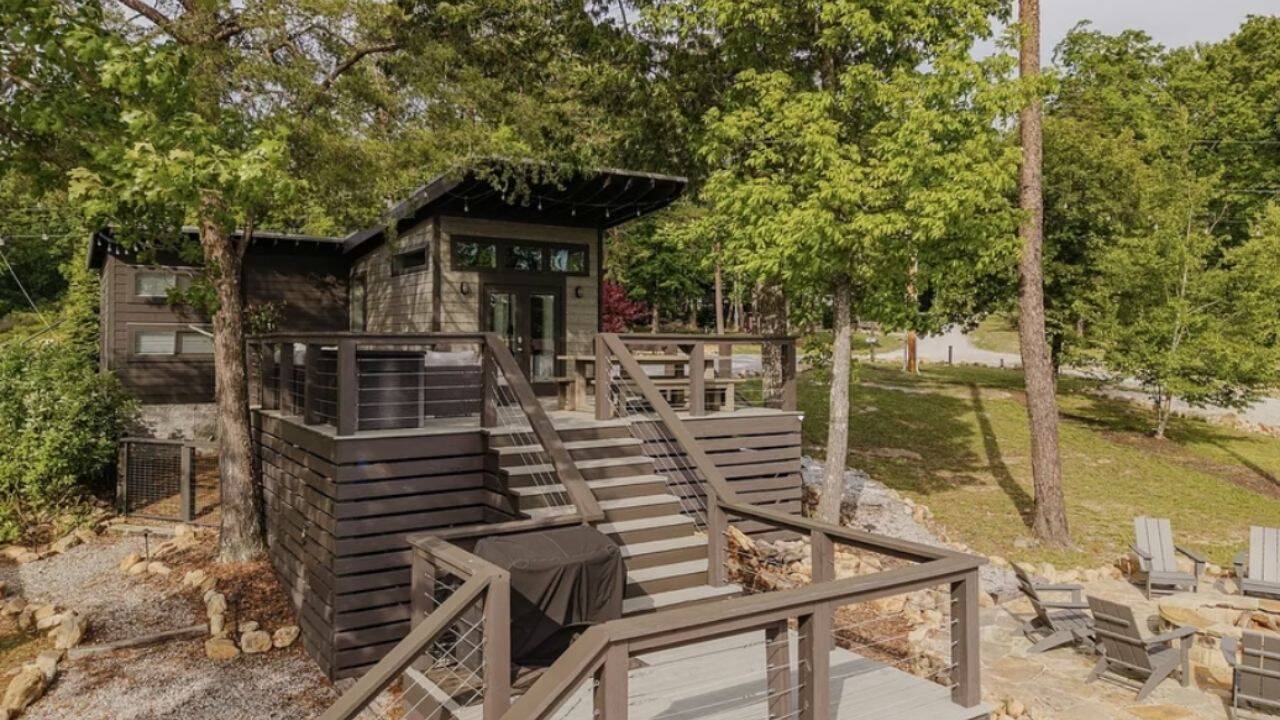
Buying a tiny home is supposed to simplify your life. You downsize, cut your expenses, and escape the crushing weight of a traditional mortgage. But what happens when the developer refuses to let go of the steering wheel? Right now, more than 40 property owners across three tiny-home communities in Tennessee are finding out. They are locked in a bitter legal battle against developer Claude "Chip" Hayes III, demanding $5 million in damages over what they call a "zombie HOA".
If you haven't heard the term yet, a zombie HOA is an association that legally should have been handed over to the residents long ago, but the developer stubbornly clings to control. It stays undead. It drains money. And residents are left footing the bill while having zero say in how their neighborhood is run.
The Anatomy of a Zombie HOA
The trouble centers on three specific developments: the Retreat at Deer Lick Falls, the Retreat at Sunset Bluff, and Water's Edge. According to court filings, residents expected to take over the homeowners associations once a certain percentage of lots or homes were sold, as outlined in their governing documents. That transition never happened.
Instead, the developer kept pulling the strings. When developers hold onto power past their expiration date, bad things happen to community budgets. Homeowners at Sunset Bluff discovered a staggering detail in their financial records: nearly 80 percent of the entire HOA budget was funneled directly into a lawn care company. The catch? That lawn care business was also owned by the developer.
That is not just poor management. That is textbook self-dealing. Residents are paying monthly fees—around $120 a month per lot in some cases, even for empty land with no grass to cut—only to watch their money loop right back into the developer's pocket.
Unpaid Taxes and Missing Amenities
Financial entanglements go deeper than overpriced landscaping. At Water's Edge, homeowners joined the expanding lawsuit after discovering that property taxes on common areas had gone unpaid for more than two years. Those shared spaces were hurtling toward a tax sale, which would have wreaked havoc on property values and neighborhood access.
Meanwhile, promised amenities failed to materialize. People bought into these communities believing they were investing in a curated tiny home lifestyle with shared perks, only to find stalled infrastructure and stonewalled communication. Financial records were allegedly withheld, leaving residents blind to where their hard-earned money was actually going.
To make matters worse, builder restrictions turned punitive. After a contract dispute with an independent builder, the developer reportedly circulated a blacklist of contractors, banning them from working on properties within the developments. Homeowners lost the freedom to choose who worked on their own land.
Why Tiny Home Communities Are Vulnerable
Tiny home neighborhoods are uniquely exposed to this kind of exploitation. Because the movement is relatively young and zoning laws can be tricky, these developments often pop up in rural or unincorporated areas where municipal oversight is weak. Buyers drawn to alternative housing models are sometimes less familiar with traditional real estate covenants and developer exit timelines.
Developers realize they can exploit vague wording in initial declarations. If the contract doesn't pin down an exact calendar date or strict percentage threshold for turning over the HOA, shady operators will stretch their control indefinitely. They act as an autocrat, treating the community bank account like a personal slush fund. In the case of Sunset Bluff, allegations even claim HOA funds were siphoned off to help finance an entirely different project phase elsewhere.
How to Protect Yourself Before Buying
If you are eyeing a tiny home community or any planned development, you need to treat the HOA paperwork with the same skepticism you give the physical structure. Do not trust verbal promises from a sales agent about when the residents will take over the association.
Read the declaration covenants word by word. Look for a mandatory turnover clause. If the language says the developer may transfer control after a certain timeframe rather than shall transfer control, walk away. That ambiguity is an invitation for a zombie HOA to form.
Ask to see current HOA bank statements and recent budgets before closing. If the developer refuses or claims the financials are "internal," treat that as a massive red flag. Healthy communities have transparent books.
When developers refuse to relinquish power, litigation becomes the expensive last resort. The group in Tennessee is fighting a $5 million battle to reclaim their financial independence. Protect your investment early so you never have to fund a legal war just to mow your own grass.
Why Homeowners Are Suing Their Developers
This video provides additional context on how disputes between property owners and community builders escalate into major legal battles.