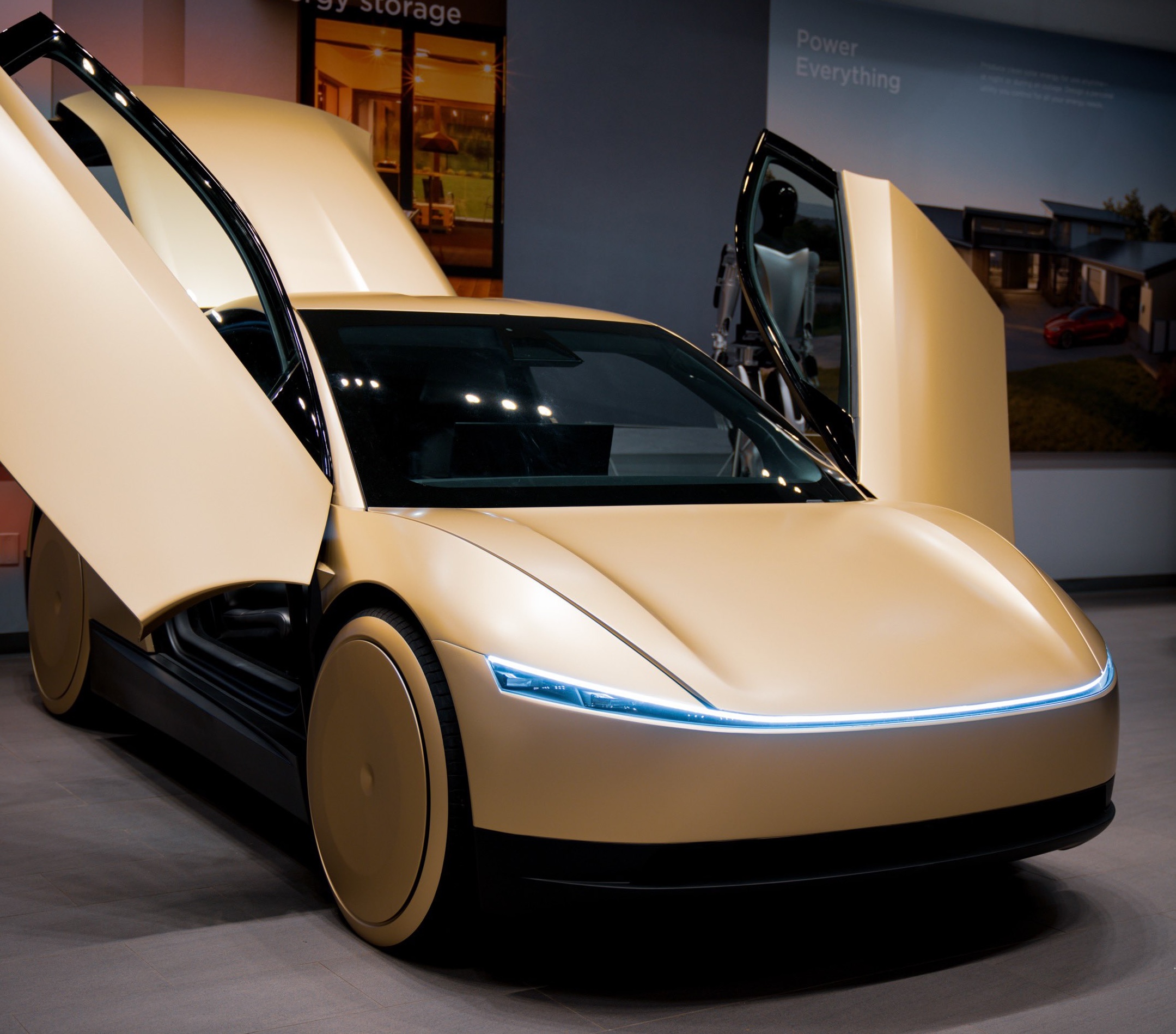
Tesla finally showed us the Cybercab. It’s a sleek, two-seat silver wedge with no steering wheel, no pedals, and doors that open like butterfly wings. Elon Musk wants you to believe this is the end of car ownership as we know it. He’s betting the entire company on the idea that you’ll soon hop into a robotaxi for the price of a bus ticket. But if you look past the strobe lights and the flashy hardware, there's a much messier reality involving sensors, laws, and the actual cost of getting from point A to point B.
The Cybercab isn't just another EV. It’s a statement of intent. By stripping away the controls, Tesla is telling the world they believe their software is ready. They’re ditching the $30,000-ish "Model 2" hatchback people expected in favor of a dedicated autonomous platform. It’s a bold gamble. It’s also one that relies on vision-only tech while the rest of the industry clings to expensive laser sensors.
Why Two Seats Change Everything
Most cars on the road today are wasted space. You see it every morning on the 405 or the I-95. One person in a five-seat SUV, burning energy to move empty air and heavy upholstery. Tesla’s move to a two-seat configuration for the Cybercab is a ruthless optimization of urban transport.
By shrinking the footprint, Tesla cuts weight and improves efficiency. It’s about the "cost per mile" metric. Musk claims the operating cost could be as low as 20 cents per mile. For context, a city bus costs about a dollar per mile per person to run. If Tesla hits those numbers, the math for owning a personal car starts to fall apart. Why pay for insurance, parking, and maintenance when a pod can fetch you for pennies?
Of course, this ignores the "big family" problem. Two seats don't work for school runs or grocery hauls for a family of four. That’s why the Robovan was teased alongside it. But for the 90% of commutes that are solo, the Cybercab is designed to be a high-frequency, low-friction tool. It’s a rolling appliance.
The Hardware Gamble No One Else Is Taking
Tesla is still the only major player refusing to use LiDAR. Companies like Waymo and Zoox use light-based radar to "see" the world in 3D with centimeter precision. Tesla uses cameras. They argue that because humans drive with vision, computers should too.
- Vision-Only: Relies on neural networks to interpret 2D images into 3D space.
- Inductive Charging: The Cybercab has no plug. It charges wirelessly via pads.
- Processor Power: It runs on the latest AI5 computer hardware.
This "vision-only" path is why the Cybercab can be priced under $30,000. LiDAR units are getting cheaper, but they still add thousands to a vehicle's bill of materials. Tesla is betting their AI can out-think the need for extra sensors. If they're right, they win on scale. If they're wrong, these cars are just very expensive lawn ornaments in any city with heavy fog or snow.
The lack of a charging port is a quiet but massive detail. It means these fleets can manage themselves. A Cybercab can drop you off, realize it’s low on juice, and crawl over to a wireless charging pad in a depot without a human ever touching it. That’s the "autonomous mobility" dream in its purest form.
Regulators are the Real Speed Bump
You can build the coolest robot on wheels, but if the DMV says "no," you’re stuck in the driveway. Currently, federal motor vehicle safety standards (FMVSS) in the US have strict rules about what constitutes a car. Usually, that includes mirrors, pedals, and steering wheels.
Tesla will need specific exemptions from the National Highway Traffic Safety Administration (NHTSA) to put these on public roads in volume. Waymo got around some of this by operating in specific geographic "fenced" areas like Phoenix and San Francisco. Musk, however, wants "Unsupervised FSD" to work everywhere.
There’s a massive gap between "supervised" and "unsupervised." Right now, if your Tesla messes up, it's your fault. In a Cybercab, there is no driver to take over. Tesla, or the fleet operator, becomes the liable party. That’s a legal minefield. We’ve already seen Cruise (owned by GM) hit major setbacks after accidents in San Francisco. Tesla has to prove their tech isn't just as good as a human, but significantly better, to get the green light.
Your Car as a Revenue Stream
The most interesting part of the "shift to autonomous mobility" isn't the car itself. It's the business model. Musk envisions an "Airbnb of the road."
- You buy a Cybercab.
- You use it for your commute.
- While you're at work, the car joins the Tesla Network.
- It spends eight hours giving rides to strangers.
- It returns to you at 5:00 PM, having earned you $50.
It sounds great on paper. In reality, people are messy. Who cleans the vomit out of the Cybercab? Who deals with the seat being ripped or the screen being smashed? Tesla mentioned automated "vacuum and cleaning" systems for fleet hubs, but the logistics of maintaining thousands of tiny, driverless rooms are staggering.
Most likely, we won't see many individuals owning these at first. It'll be massive fleet operators. Think Uber, but without the drivers. Or Hertz, but the cars don't sit idle in a lot. The shift is moving away from "I own this car" toward "I subscribe to this service."
What Most People Get Wrong About the Timeline
Elon Musk is famous for "Elon Time." He promised a million robotaxis by 2020. It's 2026, and we're just now seeing the purpose-built hardware. He says production starts "before 2027." Given Tesla's history with the Cybertruck and the Semi, you should probably add two years to that.
Don't expect to see a Cybercab in your driveway next month. The immediate focus is getting the current Model 3 and Model Y fleet to run "Unsupervised FSD" in Texas and California. That's the real test. The Cybercab is the end goal, but the software has to prove itself on existing cars first.
The shift is happening, but it’s incremental. It starts with your car steering for you on the highway. Then it’s your car handling the city streets while you hover your hands over the wheel. Only after millions of miles of successful "supervised" driving will the regulators let the steering wheel disappear.
The Competition is Already Here
Tesla isn't alone. Waymo is already doing tens of thousands of paid trips every week. They have a massive head start in real-world autonomous miles.
The difference is philosophy. Waymo is building a "chauffeur" — a very expensive, highly capable system for ride-hailing. Tesla is building a "robot" — a cheaper, mass-produced machine they want to sell to millions.
If you're looking to play this trend, don't just watch the car reveals. Watch the disengagement reports. Watch the NHTSA filings. The company that solves the "edge cases"—the weird stuff like a police officer using hand signals or a plastic bag blowing across the road—is the one that actually wins the autonomous race.
Your Next Steps
Stop thinking about cars as "drivers" and start thinking about them as "data." If you're a Tesla owner, keep your software updated and pay attention to how FSD handles your local roads. That’s the training data for the Cybercab. If you’re an investor or a tech enthusiast, look into the companies building the infrastructure for this. We're talking about wireless charging standards, high-speed 5G connectivity for fleet management, and automated cleaning tech.
The hardware is the easy part. The silver doors and the lack of pedals are just theater. The real work is in the millions of lines of code that have to decide, in a fraction of a second, whether to brake for a squirrel or maintain speed for safety. That’s where the shift to autonomous mobility will actually be won.
Keep an eye on the pilot programs in Austin and LA over the next twelve months. If Tesla can run even a small fleet of Model 3s without human backups, the Cybercab becomes a certainty. If they can't, it stays a beautiful prototype.