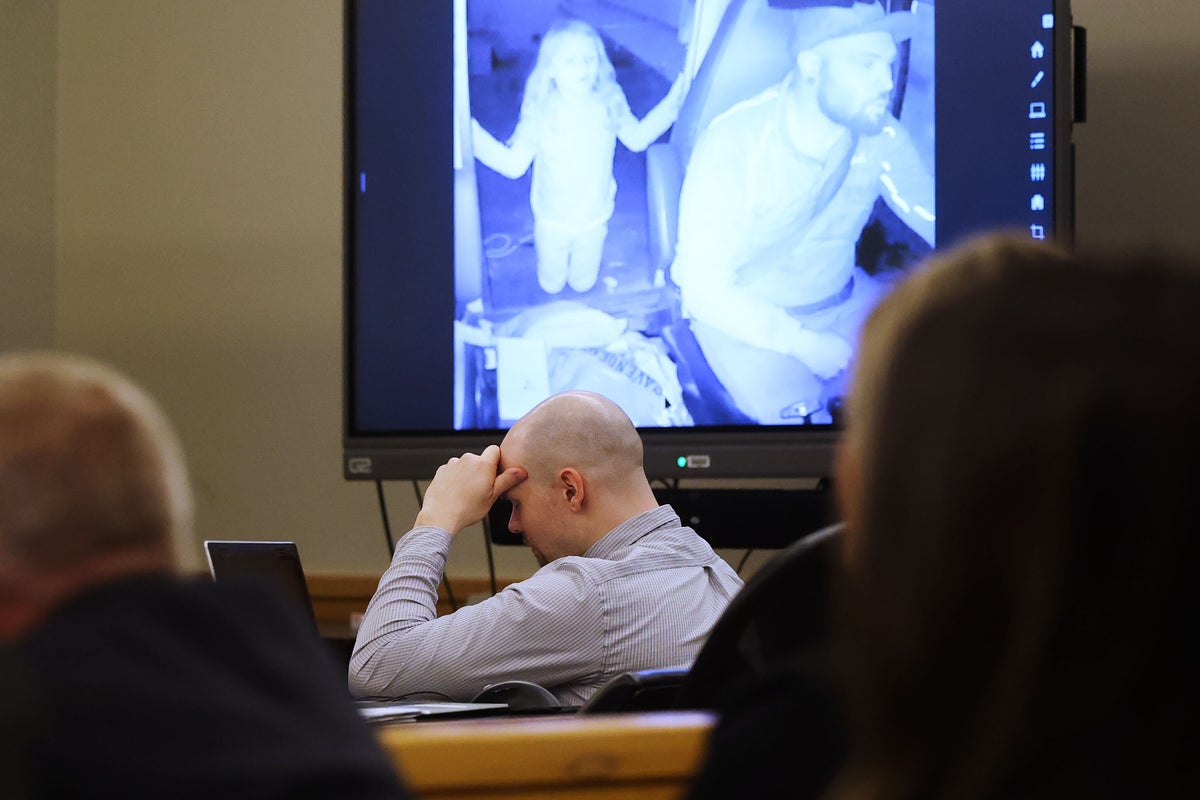
Tanner Horner is going to die by lethal injection. A jury in Wise County, Texas, didn't hesitate to deliver the ultimate punishment for the 2022 kidnapping and murder of seven-year-old Athena Strand. This case isn't just another headline about a senseless tragedy. It's a brutal wake-up call for the delivery industry and a scathing indictment of how "background checks" often fail to catch the monsters hiding in plain sight.
You probably remember the news from a few years back. Athena went missing from her driveway in Paradise, Texas, right after a FedEx delivery. The search lasted days. People held their breath. Then came the crushing reality. Horner, a contract driver for Big Topspin—a company working for FedEx Ground—confessed to hitting her with his van, panicking, and then strangling her. He told investigators he didn't want her to tell her father what happened. It’s chilling. It’s sickening. And now, the state of Texas has decided his life is the price for hers.
Why the Horner Verdict Matters Beyond the Courtroom
Justice feels served for the family, but the legal victory doesn't erase the massive security gaps this case exposed. Horner wasn't a random drifter. He was wearing a uniform. He was driving a branded truck. He had the "trust" that comes with a corporate logo.
When a jury sentences someone to death in a case like this, they aren't just punishing a single man. They're making a statement about the sanctity of childhood and the expected safety of our own front yards. In Texas, the death penalty requires the jury to find that the defendant would be a "continuing threat to society." Given Horner's confession and the sheer depravity of killing a child to cover up a minor traffic accident, the jury’s decision was swift.
The Myth of the Robust Background Check
Let's talk about the elephant in the room. How does a man like this end up behind the wheel of a delivery van?
Delivery giants often use a complex web of independent contractors. This creates a "buffer" of liability, but it also creates a fragmented screening process. You think when you see a branded truck that the person has been vetted by a multi-billion dollar security apparatus. Often, they haven't. They’ve passed a basic check that looks for past convictions but can't predict future volatility or detect a lack of basic human empathy.
I've seen this play out in dozens of industries. Companies prioritize speed and "uptime" over deep psychological vetting. They need drivers. They need them now. Especially during peak seasons. This creates a "hiring at all costs" mentality that puts families at risk. If you're a parent, you shouldn't have to wonder if the person bringing your holiday gifts is a predator.
What the Trial Revealed About the Crime
The details that came out during the sentencing phase were enough to turn anyone's stomach. Horner didn't just accidentally hit Athena. He claimed he was "scared" of the consequences. Think about that for a second. He valued his employment or his clean driving record more than the life of a child.
The prosecution painted a picture of a man who made a series of deliberate, cold-blooded choices. He had opportunities to stop. He had opportunities to call for help. Instead, he chose murder. This wasn't a "mistake." It was a series of evil decisions. That’s why the jury didn't buy any pleas for mercy. In Texas, capital murder of a person under the age of ten is one of the few crimes that almost guarantees the death penalty or life without parole.
The Civil Battle Against FedEx and the Delivery Model
While the criminal case is ending with a death sentence, the legal fallout is far from over. Athena’s mother, Maitlyn Gandy, has been vocal about the systemic failures that led to this. There are ongoing civil litigations targeting not just the contractor, but FedEx itself.
The argument is simple. If you put your brand on the truck, you own the safety of that delivery.
You can’t hide behind "independent contractor" status when a child is murdered. This case will likely change how these companies operate. We’re already seeing calls for:
- Real-time GPS monitoring that flags unauthorized stops.
- More rigorous, multi-tiered psychological screening for home-delivery personnel.
- Strict liability for parent companies regardless of contractor status.
If these changes don't happen, more families will suffer. It's that simple.
Moving Toward a Safer Standard for Your Front Porch
The death of Athena Strand is a scar on the community of Paradise and the entire state. While the execution of Tanner Horner provides a sense of finality, it doesn't solve the underlying problem of "vetted" strangers entering our private spaces.
Don't wait for corporations to fix their hiring practices. You have to be proactive.
- Install high-resolution cameras. Don't just get a doorbell cam. Get cameras that cover the street and the driveway approach. These were instrumental in catching Horner.
- Teach your kids "Delivery Distance." Children are taught to trust people in uniforms—mail carriers, police, delivery drivers. We need to update that. Teach them that a delivery driver is still a stranger, uniform or not.
- Report erratic behavior. If a delivery driver is speeding in your neighborhood or acting strangely, don't just complain on Facebook. Call the company and the local police.
The Horner verdict is a grim reminder that evil doesn't always look like a movie villain. Sometimes it looks like a guy delivering a box of toys. The jury did their part. Now the industry needs to do theirs. Demand better from the companies you shop with. Demand that they prioritize the lives of their customers over the speed of their logistics. If they won't vet their drivers properly, they don't deserve your business.