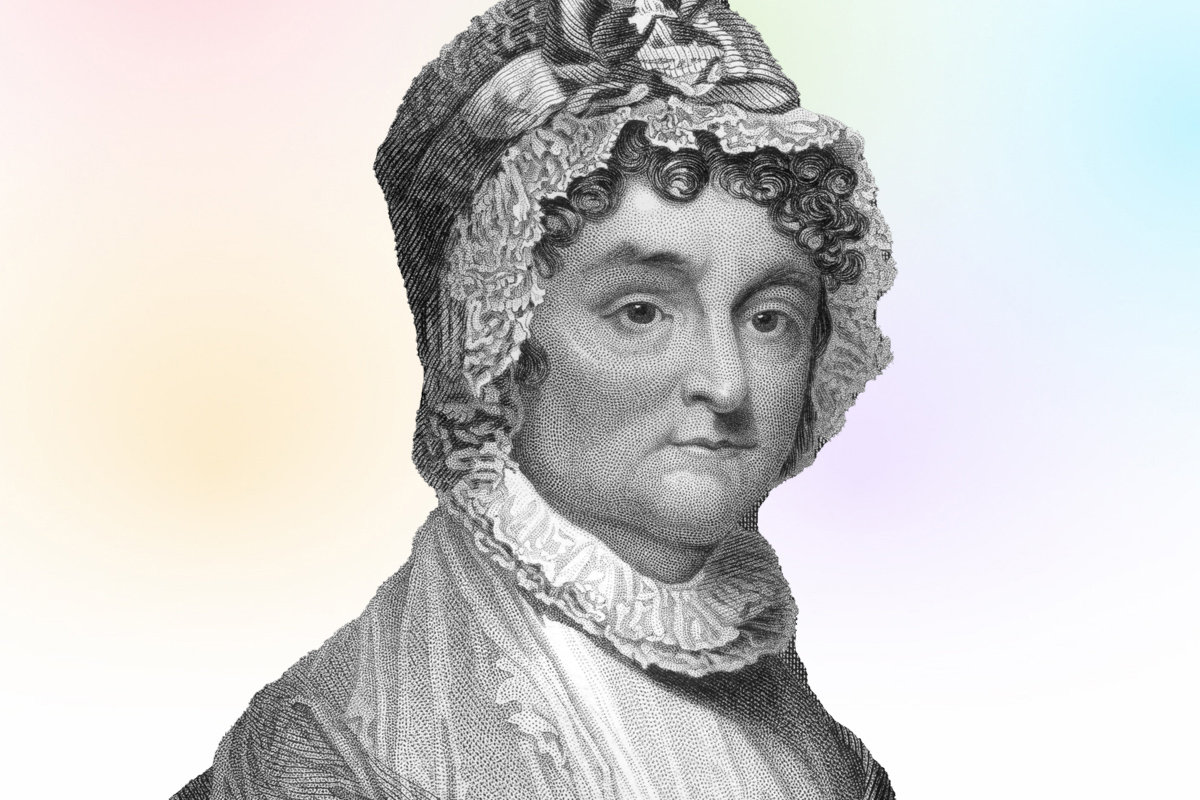
Abigail Adams was a powerhouse. Most people think of her as the "Remember the Ladies" lady or the wife of the second president, but she was basically the glue holding the Adams family together while John was off arguing in Philadelphia or Europe. She was tough, smart, and resilient. Then, in the autumn of 1818, she got sick. It wasn't a sudden, dramatic accident or a mysterious disappearance. When we look at how did Abigail Adams die, the answer is a sobering reminder of how fragile life was in the early 19th century, even for the elite.
She died of typhoid fever.
It’s a gritty, unpleasant way to go. Today, we’d just grab some antibiotics and be done with it. But in 1818? It was a death sentence for a woman in her 70s. Abigail was 73 when the fever took hold. She was at her home, Peacefield, in Quincy, Massachusetts. The house was full of family, memories, and the heavy, stagnant air of a sickroom.
The Final Days at Peacefield
Typhoid fever is nasty. It’s caused by Salmonella Typhi bacteria, usually spread through contaminated food or water. Honestly, even though the Adams family was well-off, hygiene in the 1800s was a total roll of the dice. Abigail started feeling poorly in early October. By the middle of the month, everyone knew it was serious.
John Adams was 82. He was devastated. Imagine being married to your best friend for 54 years and watching them slowly slip away while you’re powerless to stop it. He sat by her bed constantly. The records from the family, specifically letters from their son John Quincy Adams and grandchildren, paint a pretty grim picture of those last two weeks.
She had the classic symptoms:
- High, lingering fever that wouldn't break.
- Exhaustion that made talking a chore.
- Delirium.
- Stomach pain that grew worse by the hour.
It wasn't a quick exit. It was a slow, agonizing two-week decline. The "Portia" of the American Revolution—the woman who managed a farm alone during wartime and advised a president—was reduced to a frail shadow of herself.
Medical Limits in 1818
Doctors back then didn't know about bacteria. They didn't know about germ theory. If you ask how did Abigail Adams die from a medical perspective, you have to realize her doctors were basically guessing. They probably used "heroic medicine," which was anything but heroic. It often involved bloodletting or giving patients mercury-based laxatives like calomel.
These treatments usually made things worse. They dehydrated the patient and weakened their immune system right when they needed strength. While we don't have a minute-by-minute medical log, we know the standard of care for "bilious fevers" (as they often called it) was brutal. Abigail’s body just couldn't fight the infection and the "cures" at the same time.
By October 28, 1818, she was fading fast.
She died around 1:00 PM. It was a Wednesday. The weather in Quincy was reportedly beautiful—one of those crisp, gold-colored New England autumn days. John was there. He wrote to his son Thomas Boylston Adams that his "happiness has been passed." It’s heartbreaking. He actually outlived her by nearly eight years, but he was never the same.
Why Typhoid?
You might wonder why a woman of her status got a "poor man's disease." Typhoid doesn't care about your bank account. In 1818, Quincy didn't have a modern sewage system. Wells were often located too close to outhouses. Even the most meticulous housekeeper—and Abigail was famously organized—couldn't see microscopic bacteria in a glass of water or on a piece of fruit.
The Impact of Her Death on the Adams Legacy
When she passed, the news rippled through the country. This wasn't just a former First Lady dying; it was the loss of a political mind that had helped shape the Declaration of Independence. John Quincy Adams, who was serving as Secretary of State at the time, was absolutely crushed. He received the news via a letter from his father and noted in his diary how much he owed his mother for his own moral compass.
Abigail was buried in the First Parish Church in Quincy. If you go there today, you can see her crypt alongside John's. They are literally side-by-side for eternity.
- The Funeral: It was a massive affair for the time.
- The Mourning: John Adams famously stopped writing his voluminous letters for a while, lost in his grief.
- The Letters: After her death, her grandson Charles Francis Adams eventually published her correspondence, which is why we know so much about her today.
Most people don't realize that Abigail was actually the first woman to be both the wife of a president and the mother of a president, though she didn't live to see John Quincy take the oath. He was elected in 1824, six years after she died. It’s one of those "what if" moments in history—how much would she have influenced his presidency?
Misconceptions About Abigail's Passing
There are a few myths floating around that we should probably clear up. Some people think she died of old age or a "broken heart" after one of her children struggled. That's not true. While she had plenty of stress—her daughter Nabby had died of breast cancer a few years earlier, and her son Charles had died of alcoholism years before that—her cause of death was strictly biological.
It was an infection.
Others think she died in Washington D.C. Nope. She was a New Englander through and through. She died in the same town where she was born, surrounded by the rocky soil of Massachusetts that she had managed so well while John was away.
How to Explore Abigail’s Story Further
If you're interested in the reality of how did Abigail Adams die and want to see the place where it happened, you actually can. The National Park Service runs the Adams National Historical Park in Quincy.
- Visit Peacefield: You can walk through the rooms where she lived and died. The "Old House" still has many of the original furnishings.
- Read the Letters: Don't just take my word for it. Read My Dearest Friend, which is a collection of letters between John and Abigail. You can see her health and spirit in her own words.
- Check the Church: The United First Parish Church (Church of the Presidents) offers tours of the crypts.
Abigail Adams didn't go out in a blaze of glory on a battlefield. She died in a quiet bedroom, fighting a microscopic enemy that the world wouldn't understand for another sixty years. Her death marks the end of an era—the passing of the last of the truly great Revolutionary matriarchs.
Knowing the details of her death doesn't make her life any less impressive. If anything, it highlights the harsh reality of the world she helped build. She was a woman who faced the threat of smallpox, the dangers of wartime, and the pressures of the presidency, only to be taken down by a glass of water or a bit of tainted food.
To really honor her legacy, look into the Abigail Adams Historical Society. They do incredible work preserving her birthplace and keeping her letters accessible to the public. You can also support the Massachusetts Historical Society, which houses the massive collection of Adams family papers. Exploring these primary sources is the best way to move past the textbook version of history and understand the real, breathing woman who changed America.

.jpg)