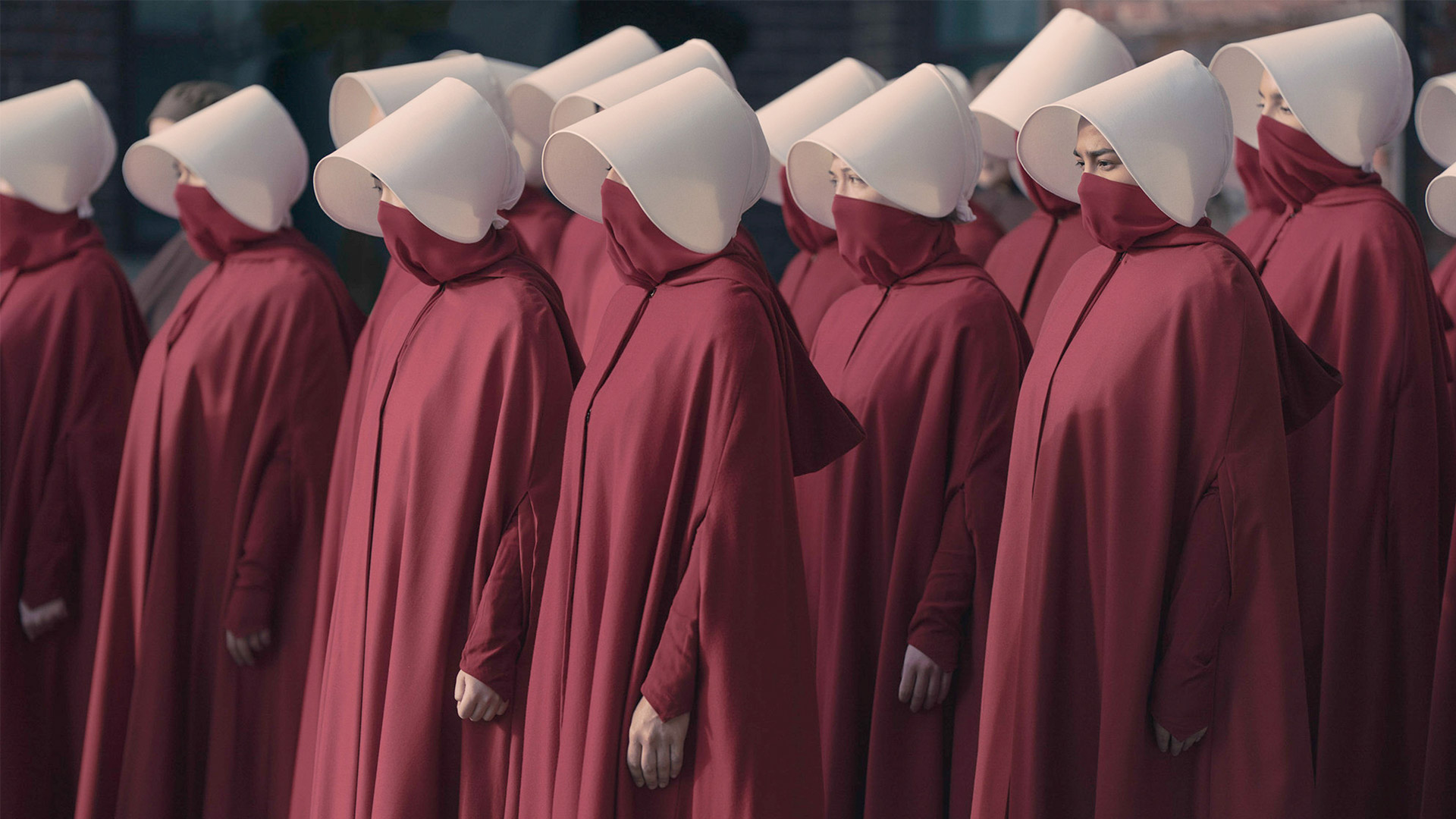
You’ve seen the red cloaks. You’ve heard the "Under His Eye" memes. But honestly, if you think you know how this ends because you watched Elisabeth Moss scream into a camera for five seasons, you're only getting half the story.
Margaret Atwood did something kind of wild in 2019. She dropped The Testaments, a sequel that takes place roughly 15 years after the original Handmaid’s Tale novel. It wasn't just a cash-in. It was a total structural shift. While the first book felt like a claustrophobic diary found in a locker, this one is a high-stakes spy thriller.
The Testaments: What Really Happens in the Sequel?
Basically, the story is told through three different perspectives. You’ve got Aunt Lydia (yes, that Aunt Lydia), a young girl in Gilead named Agnes Jemima, and a Canadian teenager named Daisy.
Their lives collide in a way that finally explains how a regime as tight as Gilead actually starts to rot from the inside. It’s not just about rebellion in the streets; it’s about the paperwork.
The biggest shocker? Aunt Lydia is a double agent. In the show, we see her as this brutal enforcer who truly believes in the "sanctity" of her work. But in The Testaments, we learn she’s been hoarding dirt on the Commanders for years. She’s essentially the J. Edgar Hoover of Ardua Hall. She knows who’s visiting the brothels and who’s skimming off the top. She’s not doing it because she’s a saint; she’s doing it because she’s a survivor who realized that the only way to stay safe in a patriarchy is to own the men who run it.
Who are Agnes and Daisy?
If you’ve followed the show, you know June has two daughters: Hannah and Nichole. In the book world of The Testaments, these are our two other narrators, though they don't know who they are at first.
- Agnes Jemima: This is Hannah. She’s grown up as a "Precious Girl" of Gilead. She doesn't remember June. She thinks her biological mother was a sinner and her adoptive mother, Tabitha, is the real deal. Her story is fascinating because it shows how indoctrination actually works on kids. She doesn't hate Gilead initially; she just fears the marriage market.
- Daisy: This is baby Nichole. She’s living in Toronto, wearing leather jackets, and protesting against Gilead at rallies. She has no idea she’s the most famous refugee in the world until her "parents" are blown up in a car bombing.
It turns out her parents were Mayday operatives. Suddenly, this ordinary teen is thrust into a mission to infiltrate Gilead as a "Pearl Girl"—essentially a missionary for the regime—to get Aunt Lydia's stolen intel out of the country.
Why the Timeline is Confusing Everyone
There is a lot of chatter about how the Hulu show is going to handle this. Bruce Miller, the showrunner, has basically been playing Tetris with the timeline.
In the original book, the gap is 15 years. In the TV world, we’ve already seen Hannah (Agnes) grow up quite a bit. Reports from late 2025 and early 2026 suggest the upcoming The Testaments series, set to premiere in April 2026, might tighten that gap to about five years to keep the actors from having to be aged up with too much CGI or recasting.
Hulu recently confirmed the cast for the spinoff:
- Ann Dowd is returning as Aunt Lydia (thank god).
- Chase Infiniti has been cast as Agnes.
- Lucy Halliday is playing Daisy.
The show has a massive hurdle, though. In the book, Hannah/Agnes has almost no memory of June. In the show, Hannah has seen June multiple times. She’s even stared her down from a glass cage. That change makes Agnes’s "indoctrination" arc in the TV version much more complicated. How do you believe in the "purity" of Gilead when you remember your mom fighting like hell to get you out?
Is the Ending Too "Easy"?
Some critics—and honestly, some hardcore fans—felt The Testaments was a bit too neat. The first book was famously ambiguous. We didn't know if Offred survived that van ride. We just had those "Historical Notes" at the end.
This sequel gives us answers. It gives us a reunion. It shows the literal collapse of the government.
Margaret Atwood has said her writing is always "rhyming" with history. She looked at how the Soviet Union fell, how the Berlin Wall came down. It usually isn't one big explosion; it’s a slow leak of secrets and a loss of faith by the people in charge.
Lydia’s "Testament" is a manuscript she’s writing to us, the future reader. She’s smug. She’s calculating. She knows she’s a monster, but she wants you to know she was the monster that bit the hand that fed her. It’s a messy, nuanced take on collaboration versus resistance.
What You Should Do Next
If you’re waiting for the April 2026 premiere, don't just re-watch the old episodes.
- Read the book: Seriously. The prose is different from the show. It’s snarkier.
- Listen to the audiobook: Ann Dowd actually narrates the Aunt Lydia sections. It’s chilling.
- Watch for the "Pearl Girls" in the final season of the main show: They are the key transition into the sequel.
The real value of The Testaments isn't just seeing Gilead fall. It's the realization that even in the most locked-down societies, someone is always keeping a record. Someone is always waiting for the wheel to turn.