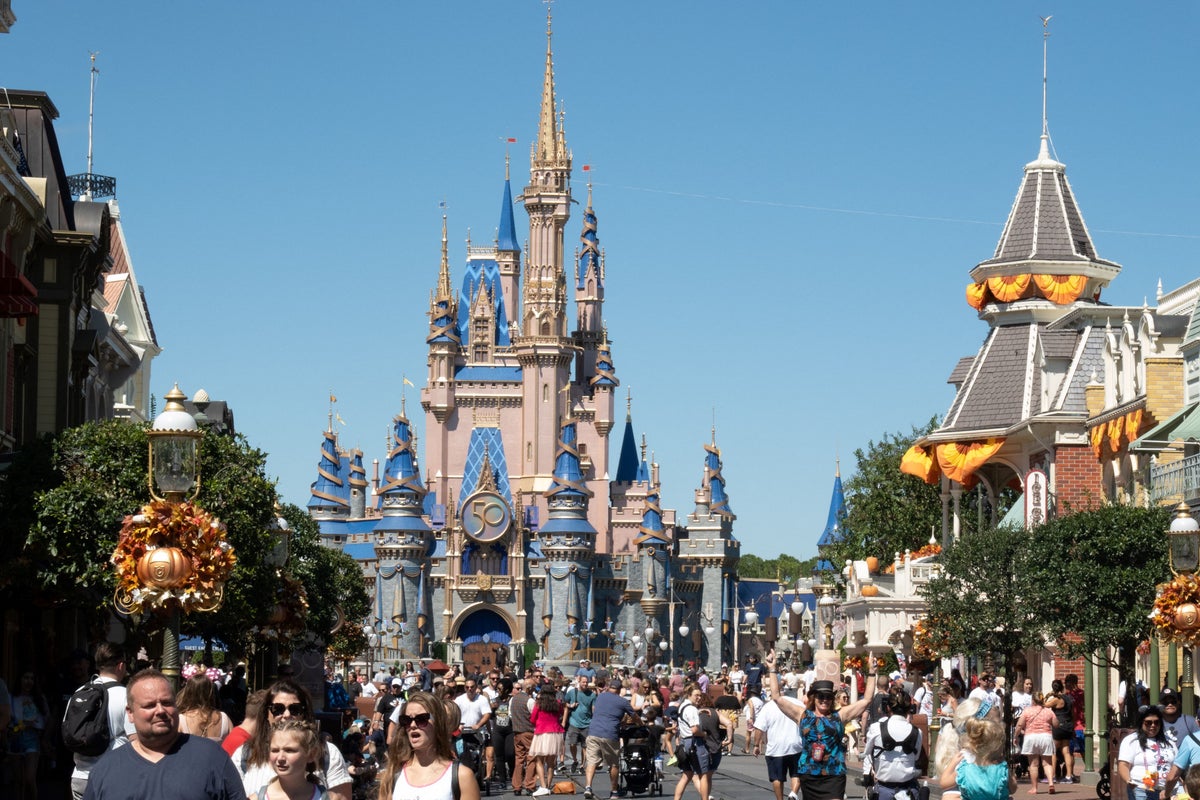
The internet loves a good multi-million-dollar meltdown. When a headline drops screaming about a fire on an iconic Disney World attraction, the collective reaction is as predictable as a Swiss watch. The public panics. The clickbait aggregators feast. The self-proclaimed safety experts crawl out of the woodwork to lecture the world on corporate negligence and crumbling infrastructure.
They are all missing the point.
The lazy consensus views an isolated theme park fire as a systemic failure. The reality is exactly the opposite. In a high-throughput, heavy-machinery environment, an incident that is contained quickly, leaves zero injuries, and results in minimal property damage isn’t a failure of safety protocol. It is absolute proof that the safety protocol worked exactly as designed.
We need to stop pretending that absolute zero risk exists in complex engineering, and start looking at how systems actually handle failure.
The illusion of the sterile environment
Theme parks are not static museums. They are massive, industrial complexes masked by paint, animatronics, and ambient audio. They operate high-voltage electrical systems, pneumatic pumps, hydraulic lines, and friction-heavy ride tracks for eighteen hours a day, 365 days a year.
To expect a machine with tens of thousands of moving parts to never experience a mechanical failure is a statistical fantasy.
When a small fire breaks out on a ride structure, the mainstream media treats it like an existential crisis for the operator. But if you talk to anyone who has spent decades managing industrial facilities or heavy infrastructure, they will tell you the truth: things break. Heat builds up. Components wear out.
The measure of a world-class operation is not the total absence of friction. It is the speed and efficacy of the mitigation.
When a sensor trips, the power cuts. When an suppression system activates, the flame dies. When an evacuation protocol triggers, guests walk away unharmed. That is not a disaster. That is a highly successful engineering intervention.
Dismantling the premise of park safety panic
Let us take a look at the questions people actually ask whenever these stories break, and tear down the flawed assumptions behind them.
Are theme park rides becoming more dangerous?
No. They are mathematically among the safest modes of transportation and entertainment on the planet. You face a higher statistical risk driving to your local grocery store than you do strapped into a modern roller coaster or riding through a dark ride.
The perception of rising danger is an artifact of the smartphone era, not an engineering reality. Decades ago, a small electrical short that caused smoke in a show building would be handled quietly, resolved by maintenance, and forgotten by the public. Today, every single guest is a walking broadcast studio. A puff of smoke becomes a viral video before the local fire department even receives the automated dispatch.
Why do these fires happen in the first place?
Because physics is non-negotiable.
Take a standard dark ride. You have heavy ride vehicles moving along a track continuously. You have dozens of projectors, theatrical lighting rigs, animatronic figures packed with servomotors, and audio equipment running constantly. All of these components generate heat. Combine that heat with dust, lubricants, and scenic materials, and you have a textbook triangle of fire.
The industry spends millions annually on preventative maintenance, thermal imaging, and flame-retardant materials. But mitigation is about reducing probability, not eliminating reality. The goal is to isolate the risk so that when a component fails, it fails safely without threatening human life.
The high price of the zero-risk fallacy
I have watched companies blow millions of dollars chasing the myth of absolute zero risk, only to destroy their operational efficiency and create new, unforeseen hazards in the process.
When a hyper-reactive management team demands a complete overhaul to guarantee an incident "never happens again," they usually end up over-engineering the system. They add redundant sensors that trigger false positives, leading to constant emergency stops. These abrupt stops cause more wear and tear on the braking systems and create a higher risk of minor guest injuries from sudden deceleration than the original issue ever posed.
Here is the brutal truth that nobody in corporate communications wants to say out loud: trading manageable, isolated operational risks for systemic paralysis is a bad business decision.
A company that shuts down a multi-million-dollar asset indefinitely over a minor, contained incident is letting public relations panic dictate engineering policy.
How to actually judge a safety culture
If you want to evaluate whether a theme park operator deserves your trust, ignore the sensationalist headlines about isolated incidents. Look at the metrics that actually matter.
- Response time to isolation: How quickly did the system detect the anomaly and cut power to the affected zone?
- Containment radius: Did the incident spread beyond the immediate mechanical housing, or did localized suppression stop it in its tracks?
- Evacuation velocity: How efficiently did the staff clear the area without causing panic or secondary injuries?
When you judge the recent Disney incident by these parameters, the performance was stellar. The fire was small, localized, quickly extinguished, and resulted in zero injuries. The system did its job.
Stop buying into the narrative of corporate negligence every time a machine acts like a machine. The next time you see a headline about a small fire at a major park, don't ask how it happened. Look at how quickly it was crushed, and realize you are looking at a masterclass in risk management.