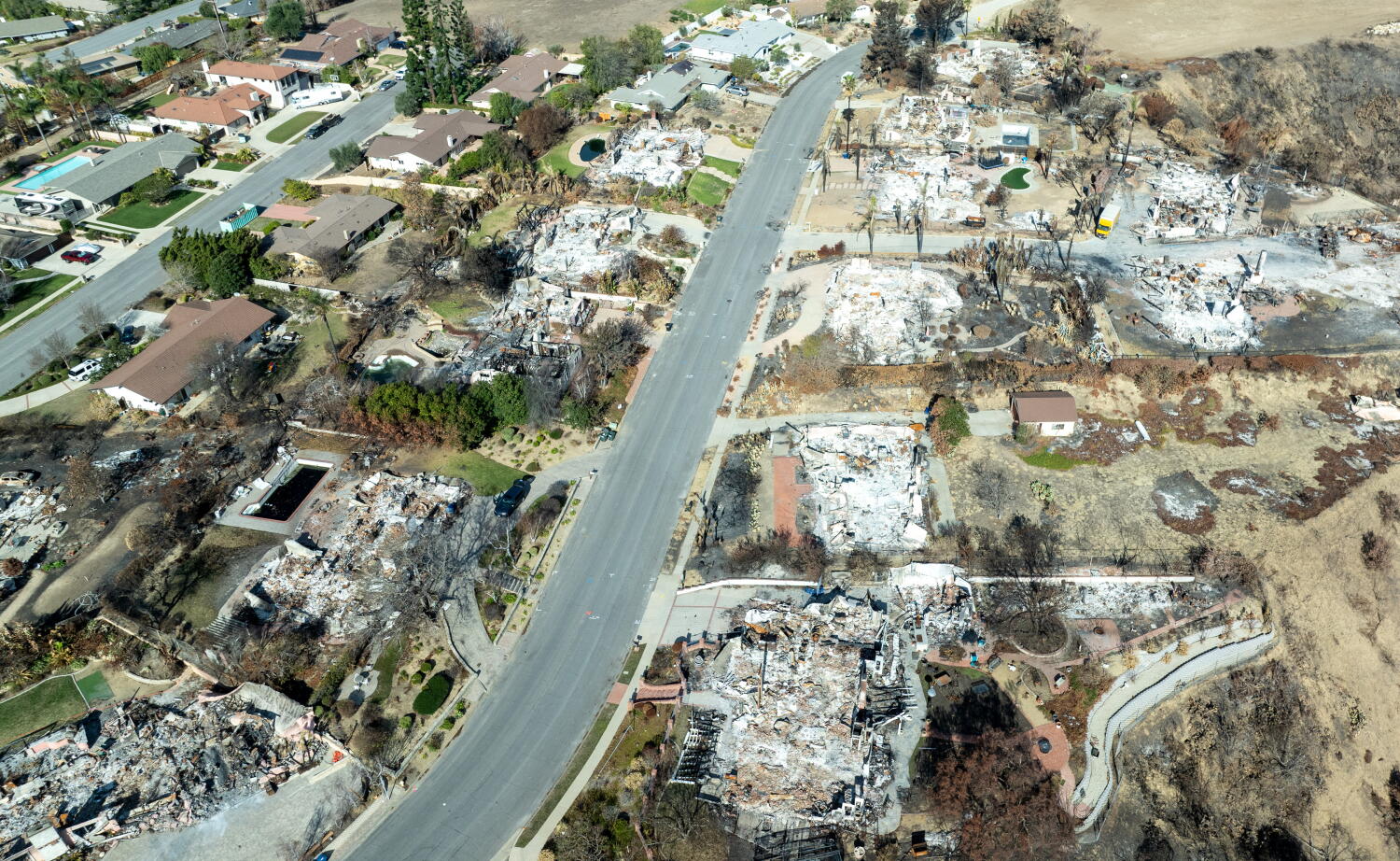
Southern California wildfire regimes are governed by a fragile arithmetic combining fuel abundance, atmospheric moisture, and synoptic pressure gradients. Popular discourse frequently treats meteorological phenomena like Santa Ana winds as isolated binary variables, assuming that a warming climate-induced reduction in wind frequency equates to proportional wildfire mitigation. This assumption misreads the thermodynamics of Mediterranean ecosystems.
Climate models project a gradual suppression of total Santa Ana wind days across the twenty-first century, predominantly during the shoulder seasons. Yet, this atmospheric adjustment does not neutralize wildfire risk. The structural driver of high-consequence burns has shifted from wind frequency to fuel aridity and Vapor Pressure Deficit. When meteorological extremes align with desiccation, the physical system retains extreme vulnerability.
The Thermodynamic Mechanics of Fuel Aridity
Wildfire propagation velocity and spatial extent are functions of energy release rates, which depend directly on moisture content within fine and coarse fuels. The regional ecology operates on a boom-and-bust cycle of vegetation growth driven by wet winters, followed by rapid desiccation during extended dry periods.
The primary physical variables dictating burn severity include:
- Vapor Pressure Deficit: The difference between the pressure exerted by water vapor at saturation and the actual vapor pressure of the air. Higher deficits strip moisture from chaparral and grasses at an accelerated rate.
- Precipitation Timing Anomalies: A delayed onset of autumn or winter precipitation extends the high-risk window, exposing dry biomass to seasonal high-pressure weather systems before seasonal rains can saturate the landscape.
- Cumulative Multi-Year Drought: Chronic water deficit reduces root-zone moisture, increasing dead fuel components within native brush ecosystems.
When seasonal rains fail to arrive on historical schedules, the landscape enters the high-pressure window with record levels of dry biomass. Under these conditions, even a diminished frequency of offshore wind events remains hazardous because the baseline combustibility of the vegetation has escalated.
Synoptic Forcing Versus Regional Topography
Santa Ana winds are born from large-scale high-pressure systems forming over the Great Basin, driving cold, dense air outward toward lower coastal elevations. As these air masses descend through mountain passes and canyons, they undergo dry adiabatic compression, simultaneously increasing in temperature and dropping in relative humidity.
While climate projections indicate a decline in overall wind event days, particularly in early autumn, the thermodynamic intensity of individual events during peak winter months remains largely undiminished. The core pressure gradient force required to generate severe gusts is sustained by cold interior continental air pooling against regional mountain barriers.
Consequently, evaluating risk through aggregate wind day counts obscures the nonlinear nature of fire spread. A single multi-day wind event occurring on a critically desiccated landscape can release more cumulative thermal energy and consume more acreage than an entire season of lower-intensity, fragmented weather patterns.
The Mismatch Between Wind Frequency and Fire Size
Empirical analyses of historical fire perimeters reveal a structural bifurcation in the drivers of Southern California wildfire behavior. Fires ignited on non-wind days correlate closely with multi-year drought indices and seasonal moisture stress. Conversely, the largest, most catastrophic fires—those exceeding tens of thousands of acres—are overwhelmingly driven by wind speed at the time of ignition and immediately following.
Because extreme wind events act as force multipliers, their interaction with parched biomass creates an asymmetrical hazard function. A reduction in wind frequency of ten or fifteen percent does not translate to a linear drop in catastrophic acreage. As long as structural fuel loads remain high and dry spells persist into peak wind windows, the system operates near critical thresholds.
Operational Forecast and Risk Management Adjustments
Mitigating regional exposure requires abandoning the premise that stabilizing atmospheric wind patterns will naturally suppress fire loss. Strategic deployment of capital and operational resources must shift toward structural hardening and landscape management.
- Vapor Pressure Monitoring Integration: Emergency response models must prioritize real-time localized Vapor Pressure Deficit tracking over historical wind calendars to anticipate extreme fire potential.
- Aggressive Ignition Control: Because human-caused ignitions serve as the primary trigger during high-pressure weather windows, structural hardening of electrical infrastructure and strict limitations on high-risk human activities in wildland-urban interfaces remain the most effective near-term dampening variables.
- Targeted Biomass Regulation: Fuel reduction strategies must account for the spatial continuity of invasive grasses and dense chaparral in proximity to vulnerable population centers, reducing the rate of lateral fire spread regardless of offshore wind velocities.