A light drizzle falls over Leeds. Inside a small terrace house, a feverish toddler wakes up crying, his forehead burning. The thermometer reads 39°C. The infant paracetamol bottle in the medicine cabinet is bone dry. The mother looks at her watch. It is 11:15 PM. Her partner is working a night shift, the car is in the shop, and the nearest 24-hour pharmacy is a three-mile trek through rain-slicked, empty streets.
Halfway across the world in Bengaluru, a severe thunderstorm breaks. The electricity grid blinks out, plunging an apartment into darkness just as a remote software engineer prepares for a critical midnight deployment. Her laptop battery is sitting at four percent. She realizes with a jolt of panic that her charging cable fractured in her backpack earlier that afternoon.
Two distinct lives. Two urgent crises separated by oceans, cultures, and time zones. Yet, both individuals are staring at the same glowing rectangle in the palms of their hands, gambling on a promise that sounds less like modern logistics and more like science fiction.
Thirty minutes.
Amazon is betting billions that it can bridge the gap between human desperation and physical fulfillment in less time than it takes to watch a sitcom. The tech giant is quietly expanding its ultra-fast drone and specialized courier delivery network into two major UK metropolitan hubs, while simultaneously laying the groundwork to scale this hyper-speed infrastructure across 100 cities in India.
To the casual observer, this looks like a corporate arms race, a numerical escalation from next-day to same-day to same-hour. But look closer. This is not about convenience. It is an aggressive, systemic rewiring of human behavior, consumer expectation, and the physical architecture of our global neighborhoods.
The Micro-Warehouse Next Door
The traditional model of e-commerce relies on patience. You click a button, a cardboard box moves across a continent over forty-eight hours, and it arrives on your doorstep. It is a marvel of the modern world, but it requires a psychological concession: the acceptance of delay.
To eradicate that delay entirely, the logistical math changes. You cannot ship a bottle of infant medicine or a USB-C cable from a million-square-foot fulfillment center located on a distant highway bypass if you only have thirty minutes. The product must already be sitting in your backyard.
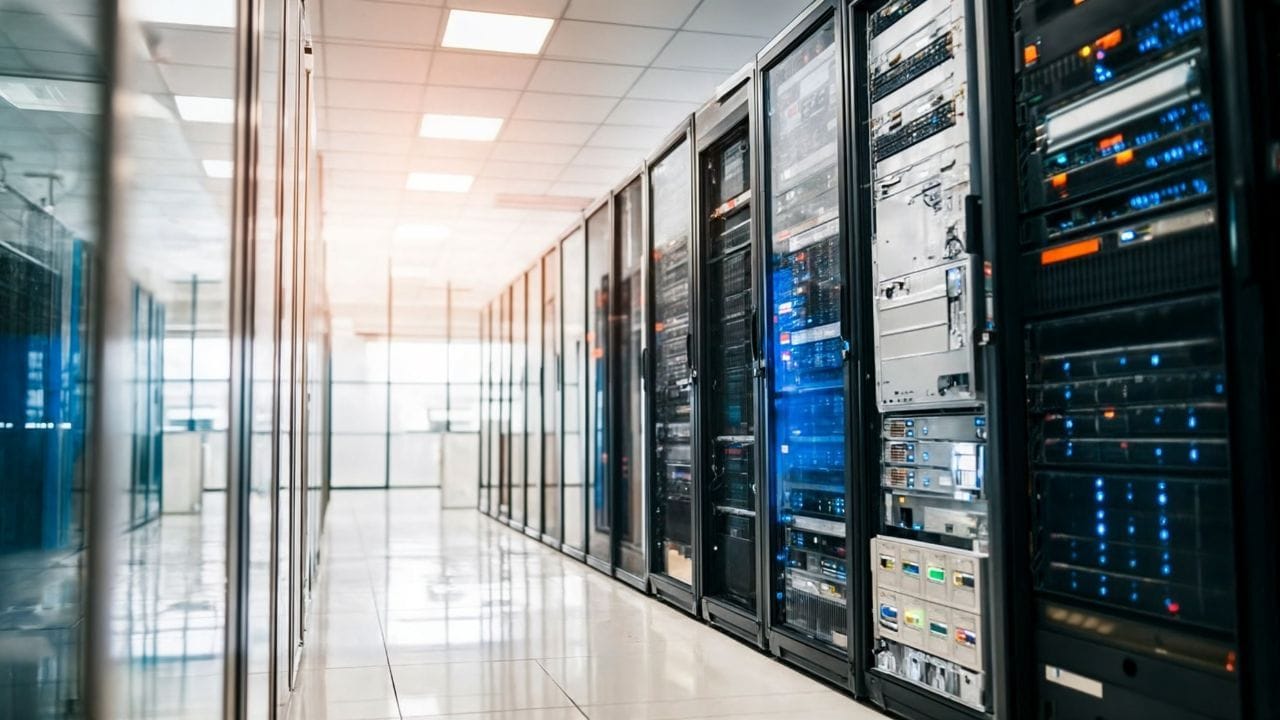
Consider how this works in practice. Amazon is transforming urban real estate into hyper-local fulfillment nodes. These are dark stores and micro-distribution centers tucked into existing retail spaces, industrial parks, and suburban fringes. They are dense, vertically packed hives of high-velocity inventory, curated entirely by predictive algorithms that know what a neighborhood needs before the neighborhood even knows it needs it.
If data shows a sudden drop in temperature in Yorkshire, the local micro-hub is quietly stocked with hot water bottles, cold remedies, and thermal socks. If a cricket tournament is trending in Mumbai, the local hubs swell with snacks and team jerseys.
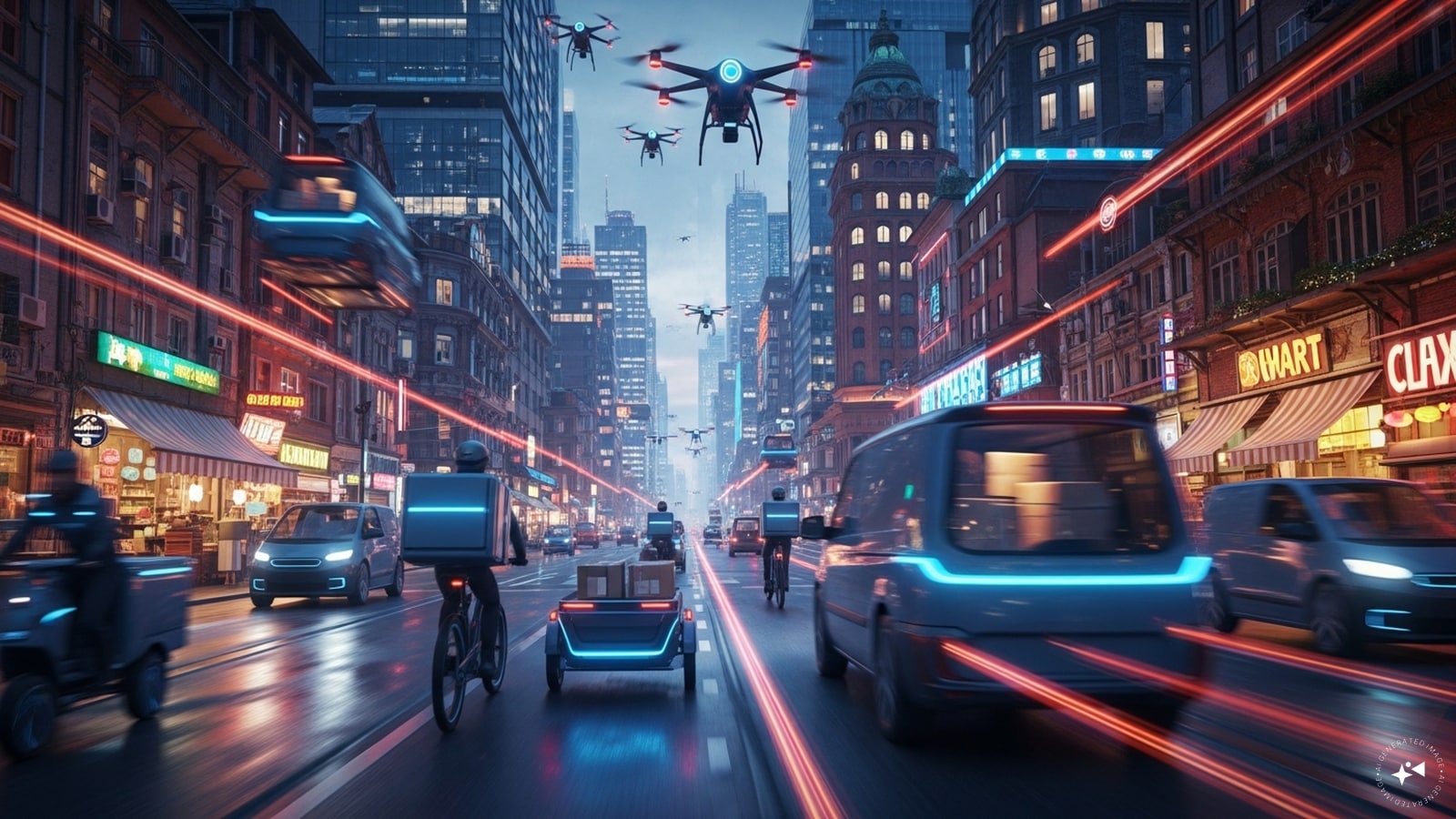
This is the phantom infrastructure rising around us. The drone pad on a suburban roof, the unmarked van idling near a city center, the courier navigating alleys on an electric scooter—they are all moving pieces in a massive chess game where the opponent is time itself.
The Tale of Two Urban Realities
The expansion into two UK cities serves as a Western testing ground for a highly structured, tightly regulated environment. Here, the challenge is navigating strict aviation laws for autonomous drones and dealing with historical, narrow street layouts designed for horses rather than rapid dispatch riders. It is a game of precision, where success is measured in meters and minutes, and the target demographic is a time-starved suburban population willing to pay a premium to reclaim their evening.
But the real complexity lies in the subcontinent.
Scaling this exact same thirty-minute promise across 100 cities in India is an entirely different logistical beast. Think about the sheer density of a city like Mumbai or Delhi. Monsoon seasons turn roads into rivers. Potholes, unpredictable traffic, and labyrinthine address systems defy standard GPS mapping.
To win in this environment, the technology must adapt to human chaos.
Instead of relying solely on automated drones or large delivery vehicles, the Indian expansion leans heavily on a sprawling army of localized two-wheeler couriers and gig-economy riders who understand the tribal knowledge of their specific zip codes. They know which security guard opens the gate without a hassle, which alleyway cuts three minutes off a route, and which apartment building has a broken elevator.
Amazon is essentially attempting to digitize the informal, hyper-local efficiency of the traditional kirana stores—the mom-and-pop shops that have anchored Indian neighborhoods for generations—and supercharge it with global supply chain muscle.
The Psychology of Instant Gratification
Why pursue this? The financial investment required to shaved twenty minutes off a delivery window is astronomical. The profit margins on a single grocery order or a bottle of shampoo are razor-thin, easily swallowed by the cost of paying a dedicated courier to sprint across town for a single item.
The answer lies in our brains.
We are creatures governed by friction. Every minute that passes between the spark of a desire and the fulfillment of that desire is an opportunity for contemplation. It is a moment where a consumer might think, Do I really need this? Can I live without it? Should I just walk down to the local shop tomorrow?
By shrinking the window to thirty minutes, Amazon eliminates the space where financial second-guessing occurs. The purchase becomes an impulse, as frictionless as flipping a light switch.
This creates a profound behavioral shift. When the friction of waiting disappears, our reliance on personal storage vanishes. Why keep a stocked pantry? Why buy a backup pair of headphones? Why plan ahead for a weekend dinner party when the ingredients can materialize on your counter while you are chopping the onions?
We are outsourcing our short-term memory and our domestic safety nets to a corporate cloud. The corporate entity becomes the collective pantry, the medicine cabinet, and the hardware drawer for millions of households.
The Human Friction in a Frictionless World
It is easy to get swept up in the magic of the technology. The idea of a drone dropping a package into a garden with a soft hum feels clean, sterile, and elegant.
But behind every frictionless transaction is an immense amount of human friction.
For a package to arrive at a doorstep in twenty-nine minutes, a picker in a micro-warehouse must receive an alert, locate the item, pack it, and hand it to a driver in under three minutes. The pressure is relentless. The metrics are unforgiving. The driver must then navigate real-world hazards—rain, aggressive traffic, angry pedestrians—while the countdown clock on their smartphone screen ticks down toward zero.
There is an inherent tension here. We, as consumers, demand absolute peace of mind and effortless convenience. Yet, that convenience is built on the backs of an invisible workforce operating under a state of perpetual urgency. The faster the delivery ecosystem becomes, the tighter the screws are turned on the individuals moving the goods.
This is the trade-off we are making, often without realizing it. We are trading the slow, communal interactions of local commerce for the isolated speed of digital fulfillment.
The Horizon of the Immediate
The rain in Leeds begins to clear. A soft knock sounds at the front door. The mother opens it to find a courier clad in reflective gear, holding a small brown paper bag containing the child's medicine.
In Bengaluru, a scooter swerves through the retreating thunderstorm, splashing through a puddle to hand a charging cable to a relieved engineer with two percent battery life remaining on her screen.
Crisis averted. The system worked perfectly.
This expansion is not merely an update to an app or a new corporate milestone. It is a quiet, permanent rewriting of the contract between human beings and the physical world. We are entering an era where distance is irrelevant, where geography is conquered by logistics, and where the phrase "I need it now" is no longer a expression of impatience, but a literal command executed by an invisible machine.
The thirty-minute world is here. It is fast, it is dazzling, and it is entirely unforgiving of a single wasted second.