At three in the morning in Edinburgh, the rain does not fall so much as it leans against the glass.
Picture a hypothetical lighting artist—let’s call her Clara—sitting in a darkened room, rubbing the bridge of her nose while two monitors bathe her face in the bruised violet of a simulated Florida dusk. She has spent the last eleven days adjusting the way humidity refracts neon light off a wet asphalt curb in a fictionalized Miami. Not a skyscraper. Not a high-speed car chase. A curb. One three-foot stretch of concrete that ninety-eight percent of players will speed past at ninety miles an hour without ever glancing down.
She tweaks a slider by a fraction of a decimal. The puddle deepens. The reflection of a distant pink flamingo sign blurs, stretches, and bleeds into the oil sheen on the street.
Multiply Clara by four thousand. Stretch that three-in-the-morning silence across more than a decade, across continents, across hundreds of millions of dollars, and through the quiet, grinding exhaustion of human obsession.
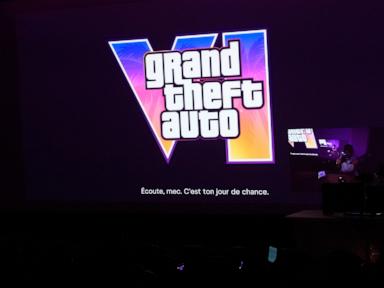
When people talk about Grand Theft Auto VI, they usually reach for numbers that numb the brain. Budgets rumored to north of a billion dollars. Trailer views that shatter internet records in twenty-four hours. Projected opening-week revenues that dwarf the biggest Hollywood blockbusters of the last century. Those figures make great headlines, sure, yet they also create a strange optical illusion. They make the game look like an inevitability—a corporate monolith dropped onto the world from orbit.
It isn't. It is a cathedral built out of keystrokes by mortal people who missed dinners, argued over the physics of palm fronds, and poured years of their finite lives into a digital mirror of modern America.
The Architecture of a Shared Hallucination
To understand why this single piece of software carries so much cultural gravity, you have to strip away the marketing and look at what a modern open-world video game actually is.
Think of a standard movie set. Everything you see is a facade—painted plywood propped up by two-by-fours, designed to look convincing from exactly one camera angle for forty-five seconds. If the actor walks through the front door, the illusion breaks. There is nothing behind the wall.
Now consider what Rockstar Games set out to build in the state of Leonida. In an interactive world of this scale, there is no single camera angle. The player is an unpredictable, chaotic director who might decide at any second to abandon a meticulously scripted heist, steal a rusty airboat, drive it into a swamp, climb onto the roof of a bait shop, and stare through binoculars at an airplane flying three miles overhead.
Every single thing that player sees has to hold up under scrutiny.
This is where the human cost and the human triumph collide. Years ago, while covering the aftermath of massive crunch cycles in the gaming industry, I spoke with veteran environment artists who described the bizarre psychological toll of building virtual cities. You walk down a real street in New York or Miami, and you stop seeing buildings. You start seeing polygon budgets, texture resolutions, and collision meshes. You look at a rusted chain-link fence and wonder how many hours it took someone to model the exact way the metal sags between the posts.
In Grand Theft Auto VI, that obsession reaches an almost incomprehensible density. Every storefront in Vice City isn't just a flat texture slapped onto a rectangle; it is a small piece of environmental storytelling. Someone had to design the typography on the soda cans in the gas station cooler. Someone else had to write the satirical radio commercials mocking wellness culture and crypto bros, hire voice actors, record them, mix the audio, and program the exact distance at which the bass from a passing convertible fades into the ambient hum of cicadas.
It is easy to dismiss a game about car theft and criminal ambition as lowbrow escapism. Critics have done it for twenty-five years. Yet when you step back and examine the sheer coordination required to synchronize artificial intelligence, fluid dynamics, facial micro-expressions, dynamic weather systems, and satirical writing into a single cohesive experience, the comparison stops being other video games. You start comparing it to the Apollo program or the construction of transcontinental railways—massive, messy human endeavors where thousands of specialists solve thousands of impossible micro-problems so that one person can experience a moment of seamless wonder.
Why We Keep Returning to the Satire
Wait. Let's be honest about the elephant in the room.
When Grand Theft Auto V launched back in 2013, the world was a fundamentally different place. Smartphones were still maturing, short-form algorithmic video didn't dictate the rhythms of daily culture, and political absurdity hadn't yet outpaced the writers' room. Over the last decade, a lingering question hung over the franchise like storm clouds over the Everglades: how do you satirize a reality that has already become a parody of itself?
I felt that skepticism myself. For years, watching the real-world news cycle grow louder, stranger, and more fragmented, I wondered if Rockstar's brand of biting Americana had finally run out of oxygen. If real headlines look like parodies, what is left for the comedians to exaggerate?
The answer, it turns out, lies in shifting the lens from shock value to intimacy.
Look closely at the shift in focus toward Lucia and Jason—the dual protagonists anchoring the narrative of Leonida. In earlier entries, protagonists were often larger-than-life archetypes: the ruthless immigrant chasing a hollow American Dream, the retired bank robber drowning in suburban midlife crisis, the unhinged agent of pure chaos. They were vehicles for the player's mayhem.
By centering a relationship—two people bound together by trust, desperation, and survival in a sun-drenched economy that chews up the working class—the human stakes change completely. Suddenly, the neon chaos of Vice City isn't just a playground; it is pressure. Every police siren isn't just a game mechanic resetting a wanted level; it is a threat to two people trying to keep their heads above water.
Here is how that works on a psychological level. When a game gives you infinite freedom, the biggest danger is emotional weightlessness—the feeling that nothing matters because you can always reload a save file. Grounding the story in a fragile human partnership creates an anchor. Even when you are driving a speedboat through a hurricane or scrolling through the game's hyper-accurate parody of social media livestreams, there is a heartbeat underneath the noise.
The Invisible Friction of Perfection
People often assume that bigger budgets and better hardware automatically make game development easier. The exact opposite is true.
Imagine trying to paint a portrait on the head of a pin, and every few years, someone hands you a sharper microscope. Instead of finishing faster, you suddenly realize you can see every microscopic flaw in your brushstrokes, so you start over.
That is the curse of modern triple-A game development. In the early 2000s, a character's hand was essentially a mitten with textures painted on it. Nobody complained because everyone's imagination filled in the gaps. Today, if a character picks up a coffee mug and their thumb clips two millimeters into the ceramic handle, millions of players will capture a screenshot, zoom in four hundred percent, and mock it online within minutes.
To prevent that illusion from breaking, armies of engineers and animators have to build systems on top of systems.
Consider how an artificial crowd behaves on a fictional beach. In older games, pedestrians walked in predetermined loops like wind-up toys. If it rained, they kept walking. If a car crashed nearby, they screamed in unison and ran in a straight line into a wall.
In the architecture of Leonida, non-player characters operate on layered behavioral trees. A beachgoer checks their phone, applies sunscreen, reacts dynamically to the tide coming in, films an altercation on their smartphone, argues with a friend, and remembers the player's presence if they linger too long. Creating that illusion requires motion-capture actors spending months in spandex suits covered in reflective markers, performing mundane gestures—leaning against a railing, shifting weight from one foot to the other, squinting against glare—thousands of times until the digital skeleton moves with the unmistakable weight of human bone and muscle.
And then there is the culture behind the curtain.
We cannot celebrate the monument without acknowledging the stonecutters who bled to raise it. For years, Rockstar Games was synonymous not only with uncompromising quality, but with punishing overtime—stories of developers sleeping under desks and sacrificing their health to meet impossible deadlines. Following the release of Red Dead Redemption 2, the studio underwent a painful, public reckoning. Leadership restructured production pipelines, overhauled management, and pushed release windows back to protect the human beings behind the code.
That matters. An artistic achievement built on human misery carries an asterisk that never quite fades. Seeing a studio of this magnitude attempt to balance staggering creative ambition with sustainable human dignity makes the final product more than a technical milestone; it turns it into a test case for whether massive art can still be made ethically in the twenty-first century.
The Mirror Held Up to Florida
Why Vice City? Why now?
Geographically, South Florida is the ultimate pressure cooker of the modern Western world. It is a place of dazzling wealth and precarious poverty, where billion-dollar glass towers rise a few miles away from ancient wetlands, and where rising sea levels and incoming storms remind everyone that nothing built on sand is permanent.
Culturally, it is the epicenter of internet-era performance. It is a landscape of hyper-visibility—where everyone is broadcasting, hustling, flexing, and reinventing themselves under relentless sunlight.
When those thousands of writers, scouts, photographers, and sound designers traveled down to Miami and the surrounding counties to capture reference material, they weren't just taking pictures of palm trees and Art Deco hotels. They were recording the specific cadence of Spanglish spoken at a midnight ventanita. They were studying the way afternoon thunderstorms turn the sky bruised purple in fifteen minutes flat, and how the steam rises off the pavement the exact second the sun breaks back through.
They were bottling a time and a place.
Think about the media we hold onto decades after it comes out. We don't remember The Godfather because of its film stock resolution, and we don't revisit Abbey Road because of the brand of mixing console used at EMI Studios. We return to them because they captured the unmistakable texture of a human era—its anxieties, its humor, its beauty, and its contradictions.
Interactive worlds have quietly become the dominant storytelling medium of our century, yet we still struggle to talk about them with the reverence we reserve for cinema or literature. We get distracted by frame rates and polygon counts. We argue about console wars and corporate mergers.
We forget the sheer audacity of what is happening on the screen.
Think back to Clara, our hypothetical lighting artist in Edinburgh, staring at that three-foot stretch of wet asphalt at three in the morning. When you finally boot up the game, step out of a safe house, and walk down that street, you will never know her name. You won't know the name of the audio engineer who recorded the distant hum of a highway overpass, or the junior programmer who spent six months fixing a bug where alligator tails clipped through wooden docks, or the writer who agonized over a single line of dialogue between Lucia and Jason in the front seat of a stolen sedan.
You will simply feel the heat coming off the pavement. You will hear the bass thumping from a passing car, watch the neon bleed into the puddle at your feet, and for a few hours, step completely inside a living world dreamt up, argued over, and painstakingly assembled by thousands of human minds working in concert.
Somewhere in a darkened studio, a monitor finally goes dark, leaving behind a city that never sleeps so the people who built it finally can.