The air on a military tarmac before dawn smells like unburned kerosene, wet asphalt, and cold steel.
If you have ever stood near the wingtip of a heavy strategic airlifter while its turbines spool up, you know the feeling is not merely auditory. It is physical. The low-frequency thrum starts in the soles of your boots, climbs past your knees, and settles directly behind your sternum, vibrating your ribs like the skin of a drum. You do not just hear a heavy transport aircraft. You endure it.
Now, picture a single stretch of Chinese airspace where that exact physical vibration is happening three times over, simultaneously, courtesy of three machines that were never meant to share the same sky as equals.
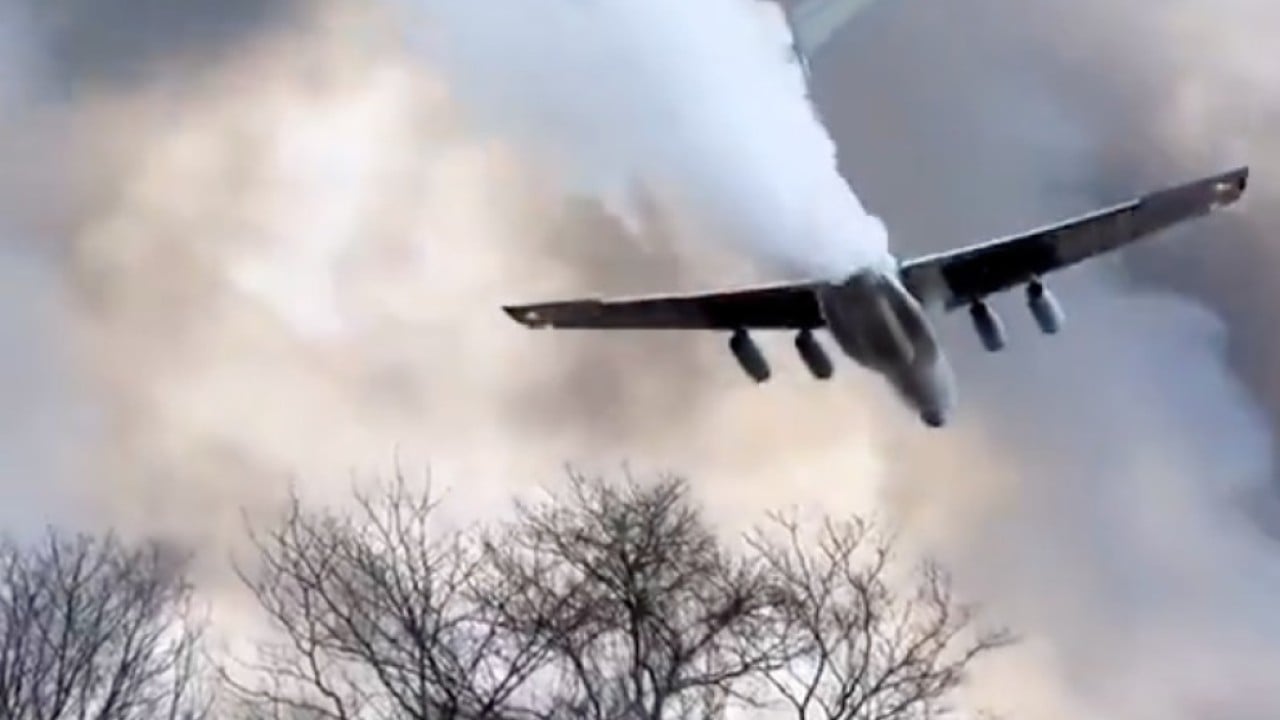
An American Boeing C-17 Globemaster III. A Russian Ilyushin Il-76. A Chinese Xi’an Y-20.
On a radar screen in an air traffic control tower, they appear as three nearly identical blips moving along parallel vectors. To a casual observer scrolling past a grainy telephoto shot on social media, it looks like an aviation curiosity—a rare family reunion of the world's heaviest airborne workhorses.
Look closer. That formation is not a coincidence, and it is certainly not a mere airshow parlor trick. It is the physical manifestation of a decades-long struggle over who gets to move armies, rescue nations, and project sheer, undeniable weight across the globe.
The Invisible Artery of Modern Power
Most people measure military strength by the things that explode. They count fighter jets, aircraft carriers, and hypersonic missiles. I used to think that way too, back when I first started covering defense logistics and watched diplomats argue over fighter-wing deployments while completely ignoring the dull, gray cargo haulers sitting on the edge of the ramp.
That blindness is a mistake.
Fighter jets win battles, yes, but heavy airlifters decide whether a battle can even be fought. Think of strategic airlift as the human circulatory system. Your fists—the strike fighters and armored brigades—are useless if the heart cannot pump oxygen and blood to the extremities. Without a massive cargo plane capable of swallowing a main battle tank whole and spitting it out four thousand miles away on a half-paved runway, an army is just a very expensive group of people standing around at home.
For thirty years, only two nations on Earth truly owned that capability at scale: the United States and Russia.
Consider a hypothetical scenario to understand what that monopoly actually felt like on the ground. Imagine a devastating earthquake strikes a remote mountainous region in Central Asia, wiping out every road and rail line within two hundred miles. Thousands of lives hang on a forty-eight-hour window. If you are the leader of that stricken nation, you do not call Paris, Tokyo, or New Delhi for heavy earthmoving equipment. You call Washington or Moscow. Because only the C-17 and the Il-76 possess the raw structural muscle to haul sixty-ton payloads into austere, damaged airfields at the edge of the world.
For decades, Beijing had to make that exact phone call—or worse, watch from the sidelines.
Ghosts of the Sichuan Rubble
To understand why seeing the Y-20 fly alongside its American and Russian counterparts makes Chinese aviation engineers weep openly, you have to go back to May 2008.
The Wenchuan earthquake tore through Sichuan province with a violence that flattened entire towns in seconds. Roads vanished beneath millions of tons of landslide debris. Bridges snapped like dry twigs. The only way in was from above, and the People’s Liberation Army Air Force suddenly faced a humiliating, agonizing reality.
They did not have enough heavy transport planes.
Chinese troops had to march on foot over shattered mountain passes, carrying shovels and medical kits on their backs while helicopters too small for heavy machinery buzzed helplessly overhead. Meanwhile, foreign heavy airlifters—including Russian Il-76s and American C-17s—flew in relief supplies, highlighting a capability gap that felt like a physical wound to a rising superpower. Beijing possessed the cash, the manpower, and the ambition to act as a global heavyweight, yet its air force lacked the literal heavy lifting power to rescue its own citizens in its own backyard.
I remember speaking with a retired aerospace analyst in Singapore years later who described the post-2008 mood in Xi’an—the heart of China’s aircraft manufacturing industry—as borderline obsessive. The mandate handed down from Beijing was blunt: build a domestic heavy airlifter, and do not stop until it can stand shoulder-to-shoulder with the best machines in Washington and Moscow.
Three Philosophies in Aluminum and Titanium
When the C-17, the Il-76, and the Y-20 share the sky, you are not looking at three copies of the same blueprint. You are looking at three wildly different national philosophies forged in cold metal.
Start with the elder statesman, the Ilyushin Il-76. Born in the Soviet Union during the late 1960s, the Il-76 looks exactly like what it is: a brutal, uncompromising machine built to survive a nuclear winter in Siberia. It wears a glazed glass nose so a navigator can literally look down at the frozen tundra when electronic guidance fails. Its landing gear is an over-engineered spiderweb of twenty wheels designed to slam onto gravel, ice, or mud without snapping. It is loud, smoky, and thirsty, built on the Soviet doctrine that perfection is the enemy of ruggedness.
Then there is the Boeing C-17 Globemaster III, the undisputed gold standard of Western airlift since the mid-1990s. If the Il-76 is a sledgehammer, the C-17 is a surgical scalpel that happens to weigh 280,000 pounds empty. Using blown flaps—an ingenious system where engine exhaust is directed straight onto the wing flaps to generate massive extra lift—the C-17 can drop out of the sky at a steep angle, land on a runway barely 3,500 feet long, and back itself up using thrust reversers. It blends tactical agility with strategic reach, capable of carrying roughly 77 metric tons of cargo across oceans while being flown by just three crew members in a glass cockpit.
And finally, there is the newcomer, the Xi’an Y-20, affectionately dubbed "Chubby Girl" by Chinese aviation enthusiasts for its wide, muscular fuselage.
When the Y-20 first flew in 2013, Western critics dismissed it as a derivative patchwork—a fuselage inspired by the C-17 mated to the T-tail and older Russian Soloviev D-30KP-2 engines of the Il-76. That criticism was fair, at first. Early Y-20s were underpowered, constrained by the exact same Soviet-era engine limitations that held back China's broader aviation sector for decades.
Wait. That is no longer the plane flying over China today.
Over the past few years, the Y-20B has quietly entered service, shedding its Russian-made turbines for domestically produced WS-20 high-bypass turbofans. Those thicker, wider engine nacelles hanging under its swept wings tell a story that press releases never could. With a maximum payload hovering around 66 metric tons—surpassing the standard Il-76 and nipping closely at the heels of the C-17—the Y-20 has graduated from an ambitious prototype into a fully realized strategic workhorse.
The Anatomy of an Equal
Why does this convergence matter so much right now? Why does seeing these three silhouettes together signal a permanent change in how the world works?
Because the physics of flight do not care about political propaganda.
You can fake a stealth fighter's radar cross-section in a carefully staged photo. You can exaggerate the range of a missile on a state television broadcast. You cannot fake the lift-to-drag ratio required to haul sixty-five tons of armored vehicles over the Himalayas. Aerodynamics is an unforgiving judge; either the wings hold the weight, or the plane stays on the ground.
By bringing the Y-20 to parity with the C-17 and Il-76, China has solved one of the hardest engineering puzzles in modern industry: high-thrust metallurgy, heavy composite wing structures, and digital fly-by-wire flight controls working in harmony under extreme stress.
Think about what this means in practice, beyond the dry numbers on a specification sheet.
In recent years, fleets of Y-20s have touched down in Serbia to deliver air defense systems, flown relief supplies across the Pacific to Tonga after a volcanic eruption, and ferried troops and equipment into high-altitude plateaus near the Indian border. Every single one of those flights is a rehearsal. Every touchdown proves that Beijing no longer needs to rent Ukrainian Antonovs or rely on aging Russian airframes to move heavy gear across continents.
The Burden of Reach
Yet, achieving equality in the sky brings a quiet, heavy burden that every superpower eventually confronts.
I often think of the C-17 crews I met years ago at Ramstein Air Base in Germany. They were exhausted, their eyes rimmed with red after flying thirty-hour rotations between Europe, the Middle East, and Africa. One loadmaster—a soft-spoken sergeant from Ohio who knew the exact center-of-gravity math for every pallet in the American arsenal—told me something I have never forgotten. "Once people know you have the truck," he said, tapping the aluminum bulkhead beside him, "they never stop asking you to move their furniture."
Strategic airlift is addictive for politicians. When a leader possesses a fleet of heavy transports, every crisis suddenly looks solvable by flying something in. Diplomatic disasters, natural catastrophes, distant proxy wars—all of them begin calling for the big gray planes.
The United States built 279 C-17s before shutting down the production line in 2015, creating an unmatched global network that still circles the Earth every single hour of the day. Russia maintains a massive, battle-hardened fleet of Il-76s, constantly modernizing them into the Il-76MD-90A variant to keep its vast Eurasian territory stitched together. And China, with its industrial assembly lines running hot, is churning out Y-20s at a pace that suggests it intends to build a fleet numbering well into the hundreds, including aerial refueling tankers and airborne early warning variants built on the same airframe.
Let us be honest about the uncertainty this creates. Having three nations capable of projecting massive weight anywhere on the map within twenty-four hours does not automatically make the world safer. In fact, it compresses reaction times to a razor's edge. When crises erupt in the South China Sea, Eastern Europe, or the Middle East, reinforcements no longer take weeks to arrive by slow-moving cargo ships. They arrive overnight, descending out of the clouds on four roaring turbofans.
What Remains in the Wake
There is a moment right after a heavy airlifter lifts off—whether it carries the star-and-bars of the U.S. Air Force, the red star of the Russian Aerospace Forces, or the winged emblem of the PLAAF—when the runway goes dead silent.
The visual spectacle vanishes into the haze. The eighty-foot-tall T-tail shrinks to a dark speck against the clouds. All that remains behind on the concrete are two invisible, swirling tornadoes of wake turbulence—violent vortices of spinning air shed from the wingtips that can flip a smaller aircraft upside down if it dares to follow too closely.
Air traffic controllers enforce strict separation rules because of that invisible wake. You cannot ignore the physics left behind by a giant, even after it is out of sight.
Look up at that formation over China one last time. Three nations. Three distinct histories of trial, failure, and relentless engineering. Three machines carved from titanium and aluminum, all arriving at the exact same aerodynamic truth because the laws of gravity offer no shortcuts to anyone. The monopoly on the upper sky is over, and the air behind them is churning.