To understand why a Chinese electric vehicle giant is building a pint-sized box for the narrow alleyways of Tokyo, you have to stand on a residential street in Kyoto where the eaves of wooden houses almost touch overhead.
Cars here do not cruise; they negotiate. They squeeze past bicycle baskets and brush against low-hanging shrubbery, driven by people who treat spatial efficiency as a moral virtue. For generations, domestic titans like Honda, Suzuki, and Daihatsu held a monopoly over this specific geometry. They owned the kei car class—those strict, government-regulated micro-vehicles constrained by exact dimensions and modest power caps that make up roughly forty percent of all new vehicle sales in Japan. Foreign automakers looked at these tight specifications, shrugged, and stayed away. The margins were too narrow. The local loyalty was too fierce.
Then came the Racco.
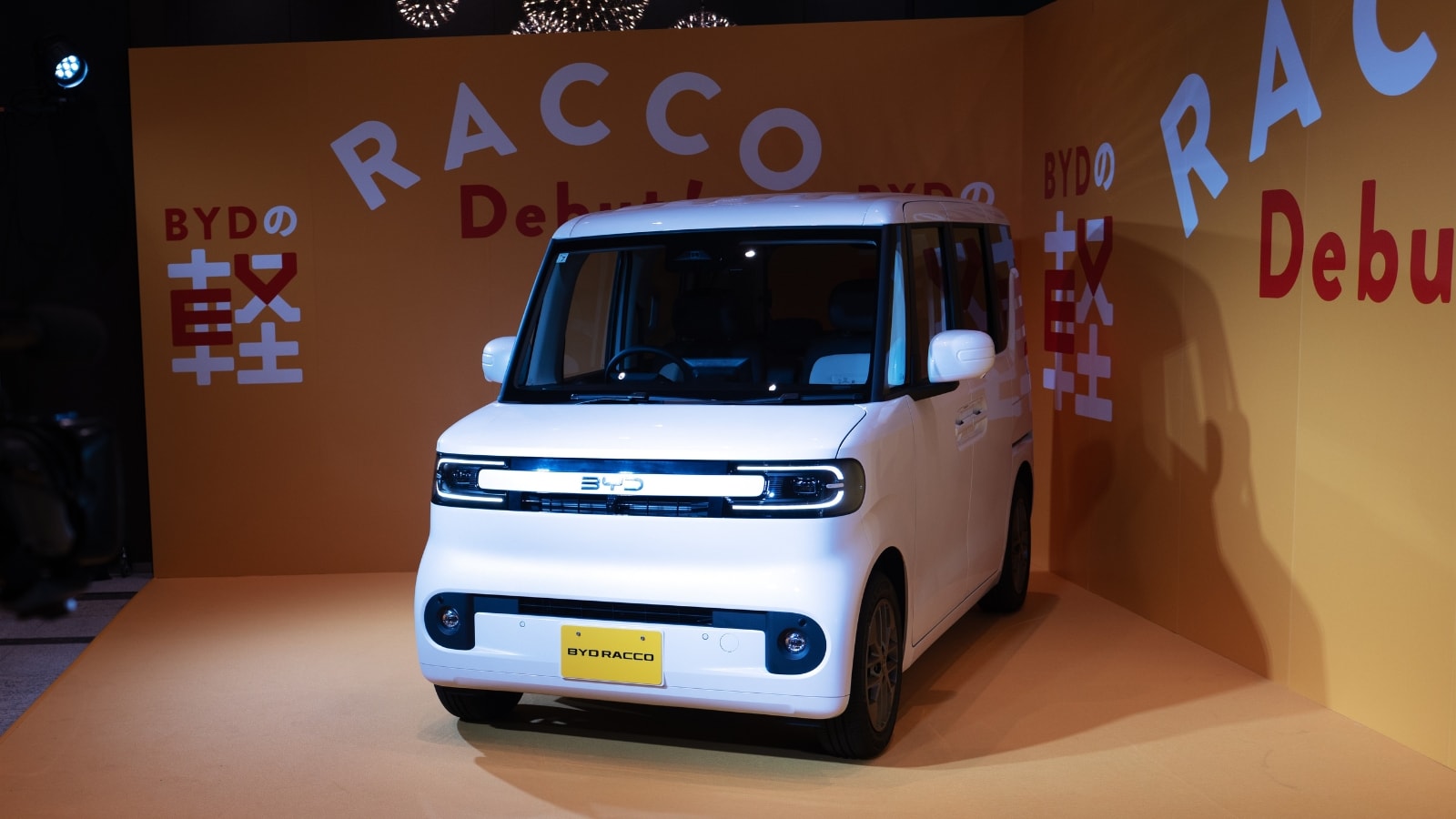
Named after the Japanese word for sea otter, BYD's new micro-EV arrives with a deliberate design philosophy that refuses to treat the kei car as an afterthought. Measuring just under 3.4 meters long and 1.48 meters wide, it obeys every millimeter of Japan's strict light-vehicle regulations. Yet under its roof, which stretches 1.8 meters high to maximize headroom, a quiet structural chess match is underway.
Consider what happens when an outsider tries to crack an insular fortress. Until now, foreign entries into the kei space were non-existent or clumsy adaptations. BYD approached the problem by studying the rituals of everyday domestic life. They integrated power sliding doors activated by kick sensors—a segment first for an electric kei car—recognizing that groceries are often hauled by parents whose hands are entirely full in cramped parking spots. They built it around a choice of lithium iron phosphate Blade batteries, offering a 20 kWh entry pack and a larger 30 kWh configuration that pushes driving range past the 300-kilometer mark on the WLTP cycle.
The pricing strategy is equally calculated. With a retail starting price around 1.95 million yen before subsidies, it directly undercuts the base sticker price of Nissan's popular Sakura EV. By bringing the cost down below the crucial two-million-yen psychological threshold after local incentives, BYD is attempting to solve the biggest hurdle it faced since entering the Japanese passenger car market: invisibility.
For the past three years, despite establishing dozens of dealerships across the country, sales figures for the Shenzhen-based manufacturer remained modest in a market loyal to domestic heritage. A sprawling luxury SUV or a sleek sedan will turn heads in Shanghai or Berlin, but it becomes an expensive liability on a narrow provincial lane in Honshu. To win here, you cannot force your design language onto the customer. You must shrink down, listen to the constraints, and build within the box.
Local giants are watching closely. Companies like Suzuki and Daihatsu command the grassroots loyalty of rural towns and congested cities alike, relying on decades of deep-rooted trust. Alice Hirose grins from billboards across Tokyo in the Racco's marketing campaign, a sign that BYD is trying to wrap its global industrial might in familiar cultural packaging.
The vehicle is assembled overseas and imported, yet it feels entirely shaped by local municipal codes. It relies on a modest 20 kW front motor for the base variant, prioritizing daily efficiency over highway bravado because the typical owner is driving short hops between the local market, the train station, and home.
This is not just about moving units or capturing a target of ten thousand orders. It is about proving that an external challenger can decode an automotive culture that has protected its domestic flank for nearly a century.
The otter has entered the pond. The water is already beginning to ripple.