Toronto City Councillor Michael Thompson has confirmed he is the subject of an active police investigation, a development that sends tremors through the highest levels of municipal governance. Thompson, a long-serving representative for Scarborough Centre, issued a brief statement acknowledging the probe but stopped short of detailing the specific allegations or the nature of the inquiry. The investigation, spearheaded by the Toronto Police Service, marks a significant moment of scrutiny for a politician who has spent nearly two decades positioning himself as a champion of economic development and public safety.
The revelation does not just affect Thompson’s personal career; it threatens to stall the momentum of several key committees where his influence is felt most. As a former deputy mayor under John Tory and a current member of the influential Economic and Community Development Committee, Thompson occupies a space where public policy meets private sector investment. When a figure of this stature enters the crosshairs of law enforcement, the machinery of City Hall begins to grind with a specific kind of friction.
The Weight of the Investigation
Public officials in Toronto are no strangers to controversy, yet the formalization of a police investigation carries a different weight than mere political theater. Unlike a standard integrity commissioner report or a breach of the code of conduct, a criminal probe implies that investigators believe there is a standard of evidence that warrants a deep dive into personal or professional conduct. Thompson has retained legal counsel and maintains that he will cooperate fully with the authorities, a move that is as much about legal strategy as it is about public relations.
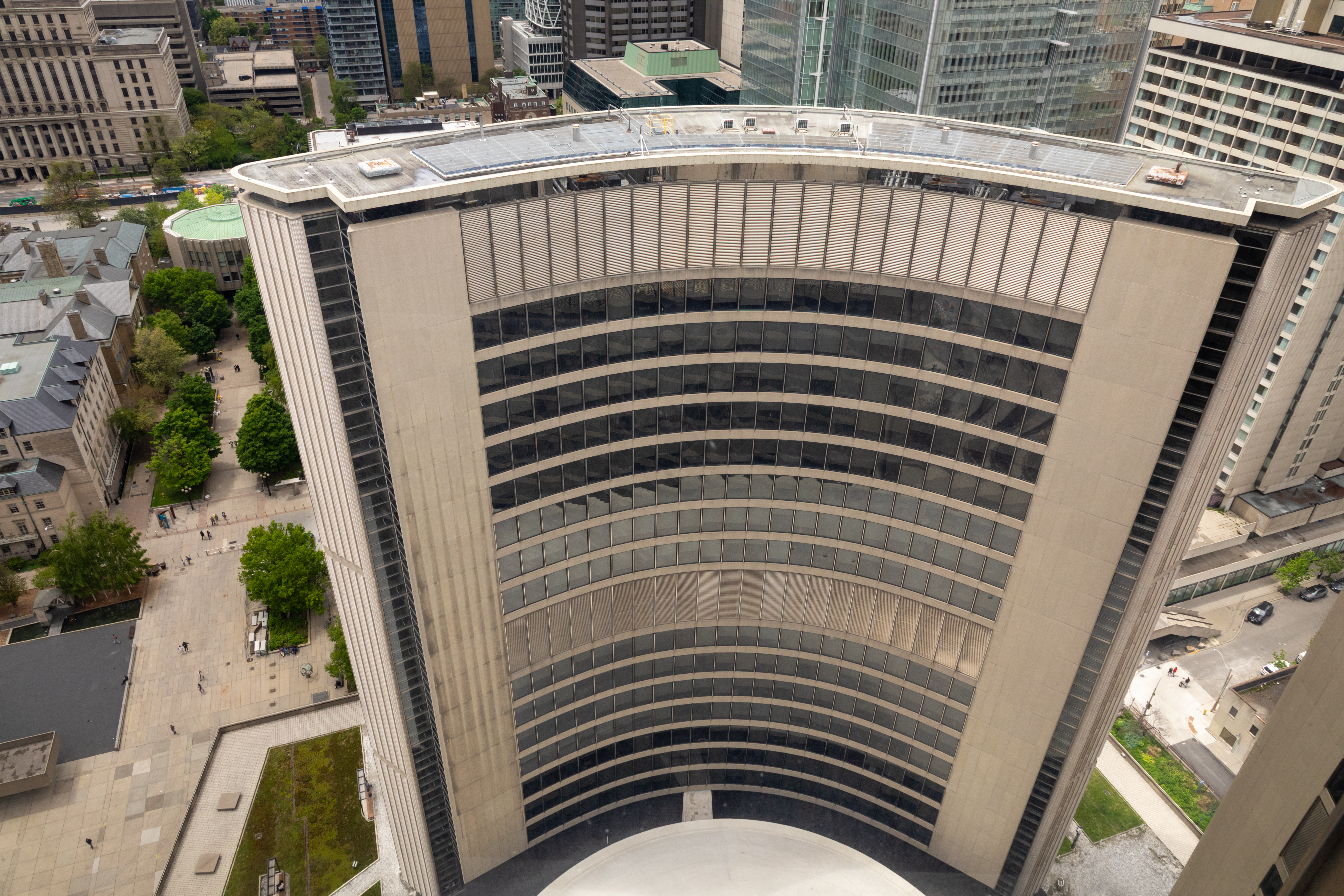
In the hallways of 100 Queen Street West, the atmosphere has shifted from collaborative to cautious. Colleagues who once stood shoulder-to-shoulder with Thompson on various initiatives are now distancing themselves, waiting for the other shoe to drop. This is the brutal reality of municipal power. Loyalty is a finite resource, and it evaporates the moment a badge appears at the door. The investigation remains in its early stages, at least as far as the public record is concerned, but the shadow it casts is already lengthening over the current legislative session.
A Career Defined by Scarborough and Influence
To understand the impact of this investigation, one must look at Thompson’s trajectory. He was first elected in 2003, making him one of the longest-serving members of the current council. Over twenty years, he built a reputation as a moderate who could bridge the gap between the progressive core and the more conservative suburbs. He was the "jobs guy," frequently traveling on international trade missions to sell Toronto to the global market.
His work on the Toronto Police Services Board gave him a unique perspective on law enforcement, which makes the current situation particularly ironic. Thompson often pushed for modernization within the force, advocating for better resource allocation and community policing. Now, the very institution he helped oversee is the one scrutinizing his actions. This creates a complex conflict of interest that will likely force him to recuse himself from any files related to police budgeting or oversight for the duration of the probe.
The Legal and Political Fallout
The process of a high-profile investigation is rarely swift. It involves the painstaking review of digital records, financial statements, and witness testimonies. For a sitting councillor, the pressure is two-fold. There is the legal defense, which requires a narrow focus on facts and statutes. Then there is the political defense, which requires maintaining the trust of a constituency that expects results.
Scarborough Centre is a ward with diverse needs, from transit infrastructure to affordable housing. If Thompson is preoccupied with a legal battle, the residents of his ward may find their voice muffled in the chamber. Historically, when councillors face such investigations, the "lame duck" effect takes hold. Even if no charges are eventually laid, the mere existence of a file with his name on it at police headquarters acts as a barrier to his legislative effectiveness.
Precedent for Municipal Accountability
Toronto has seen this play out before. From the tumultuous years of the Ford era to more recent ethics scandals, the city’s governance structure is frequently tested by the conduct of its elected members. However, the system for removing a councillor is remarkably rigid. Under the City of Toronto Act, a member only loses their seat if they are convicted of an indictable offense and sentenced to imprisonment, or if they miss meetings for three straight months without authorization.
This means that barring a resignation, Thompson will likely remain in his seat while the investigation unfolds. This creates a period of prolonged uncertainty. Staffers in his office are left in a state of limbo, and the projects he championed are suddenly radioactive. It is a slow-motion crisis that forces the Mayor’s office to decide whether to strip him of committee assignments or allow him to remain in his roles under a cloud of suspicion.
The Mechanism of the Probe
While the police have not confirmed the specific unit handling the case, investigations into public officials typically fall under the purview of specialized divisions like the Financial Crimes Unit or the Anti-Corruption Unit. These teams operate with a level of autonomy designed to prevent political interference. They are looking for patterns—discrepancies in filings, unexplained meetings, or the misuse of municipal resources.
In many cases, these investigations are triggered by a whistleblower or a secondary discovery during an unrelated audit. Once the process starts, it is nearly impossible to stop until every lead is exhausted. The challenge for Thompson is that he cannot defend himself against rumors without potentially compromising his legal position. He is forced into a defensive crouch, issuing carefully worded statements through a lawyer while the public waits for clarity.
The Scarborough Factor
Scarborough has often felt like an afterthought in the grand scheme of Toronto politics. Thompson’s seniority was a bulwark against that perception. He was a powerhouse who could command attention for his ward’s specific needs. If his influence is neutralized, the power balance of the council shifts. The suburban voting bloc loses a seasoned negotiator, and the Mayor’s office loses a key ally who could deliver votes on contentious issues.
The constituents in Scarborough Centre are now faced with a representative whose primary focus is no longer on the pothole on their street or the development of the local community center. The focus is on a file in a detective's drawer. It is a disservice to the democratic process when a representative becomes the story rather than the storyteller.
Transparency and Public Trust
The core issue here is not just whether Michael Thompson did something wrong, but whether the institutions of Toronto can survive the erosion of trust that comes with these headlines. Every time a headline links "City Hall" with "Police Investigation," the average citizen becomes a little more cynical about the people they elect. Transparency is the only antidote, yet it is the one thing investigators cannot provide while a case is active.
The City of Toronto has robust systems for ethical oversight, but those systems are often reactive rather than proactive. They deal with the aftermath of a scandal rather than preventing the conditions that allow one to occur. As this investigation proceeds, there will be calls for tighter controls on how councillors interact with lobbyists and how their travel expenses are vetted. These are necessary conversations, but they are cold comfort to a public that wants to believe their leaders are beyond reproach.
The Road Ahead for Council
As the next council meeting approaches, all eyes will be on the seating chart. Thompson’s presence will be a distraction, and his absence would be a statement. The legislative agenda continues, but the narrative has been hijacked. Important debates on the budget and the housing crisis will now be viewed through the lens of this internal instability.
The Toronto Police Service is under no obligation to provide updates on their timeline. This could take months, or even years, to resolve. During that time, the city must figure out how to function with a core member of its leadership sidelined by a legal shadow. It is a test of the city's resilience and its commitment to the principle that no one, regardless of their tenure or their title, is above the law.
The residents of Toronto, and specifically Scarborough, deserve a full accounting of why their representative is being investigated. Until that happens, the business of the city will be conducted under a heavy veil of skepticism. The focus now shifts to the evidence, the witnesses, and the eventual conclusion of a process that has only just begun to reveal its true scope. Thompson’s career is at a crossroads, and the direction he takes will be determined by facts that are currently known only to a few.
The city waits for those facts to surface. In the meantime, the work of government continues, however awkwardly, in the face of an uncertain future. Identify the conflict, isolate the variables, and wait for the system to deliver its verdict. That is the only path left for a city hall in crisis. Thompson must now navigate a landscape where his reputation is no longer his to manage, but is instead in the hands of the very legal system he once sought to improve.
Thompson's legal team will likely seek to move the conversation away from the public eye, emphasizing the presumption of innocence. This is a fundamental right, yet in the court of public opinion, the presumption of innocence is often a luxury that politicians cannot afford. Every vote he casts and every speech he makes from this point forward will be scrutinized for hidden motives or signs of strain. The political cost is already being paid, regardless of the eventual legal outcome.
The focus must remain on the integrity of the office. If the investigation reveals systemic issues within how councillors operate, then the city must be prepared to overhaul its internal policies. If this is an isolated incident, then the fallout will be contained to one man's career. Either way, the standard for municipal governance in Toronto has been challenged, and the response from the Mayor and the rest of council will define the city’s political culture for years to come.
Hold the line on accountability. Ensure that the investigation is allowed to proceed without interference. This is the only way to restore the trust that has been so publicly fractured. The next few months will be a masterclass in crisis management and legal maneuvering, played out in the most public forum possible. Thompson has survived political battles before, but a police investigation is a different breed of conflict altogether. It is precise, it is indifferent to political standing, and it is relentless. Thompson’s long tenure at City Hall has given him many allies, but in a criminal probe, allies are often the first people to be interviewed. The circle of trust is shrinking, and the walls of the council chamber are closing in.